Wine tasting etiquette in Italy is simpler than many visitors fear. Book ahead, arrive on time, listen to the person pouring, spit or leave wine in the glass when you want to, and buy a bottle if you liked what you tasted. Nobody expects you to know the vocabulary; they do expect you to treat the visit as a visit, not a bar.
The main difference from many US tasting rooms is the format. Most Italian estates, from Chianti Classico to Montalcino and Bolgheri, receive visitors by appointment. You are a guest of a working farm and often of a family, and the visit has a host, a route and a pace. Once you understand that, the rest follows naturally.
Booking a visit: appointments, not walk-ins
Walking in unannounced rarely works in Italian wine country. Many estates have no tasting room open to passers-by, and those that do may be fully booked with groups. The normal route is an email or a booking form some weeks ahead, longer for spring, autumn and the harvest. In some areas the producers’ consortium helps: the Bolgheri consortium, for example, has a form that sends your request directly to the estates you choose.
When you book, say how many people are coming, whether anyone has dietary needs if food is involved, and which language you prefer. If you are planning two visits in a day, leave real time between them; Tuscan country roads are slower than they look, and running late for the second estate is the most common way to start badly.
If your plans change, write as early as you can. A small estate may have set aside the owner’s afternoon for you, and a cancellation at the last minute is felt.
Wine tasting etiquette in Italy, step by step
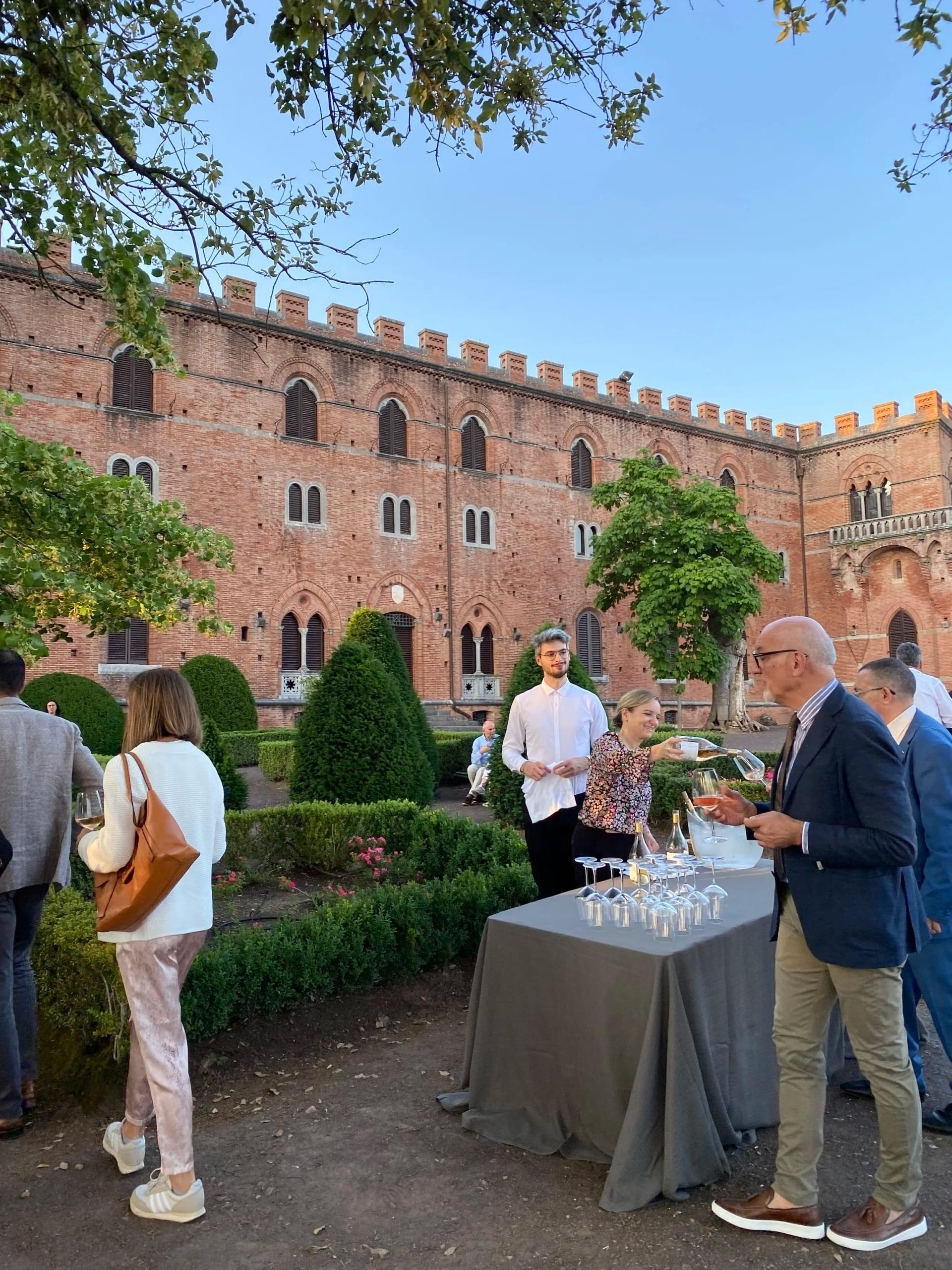
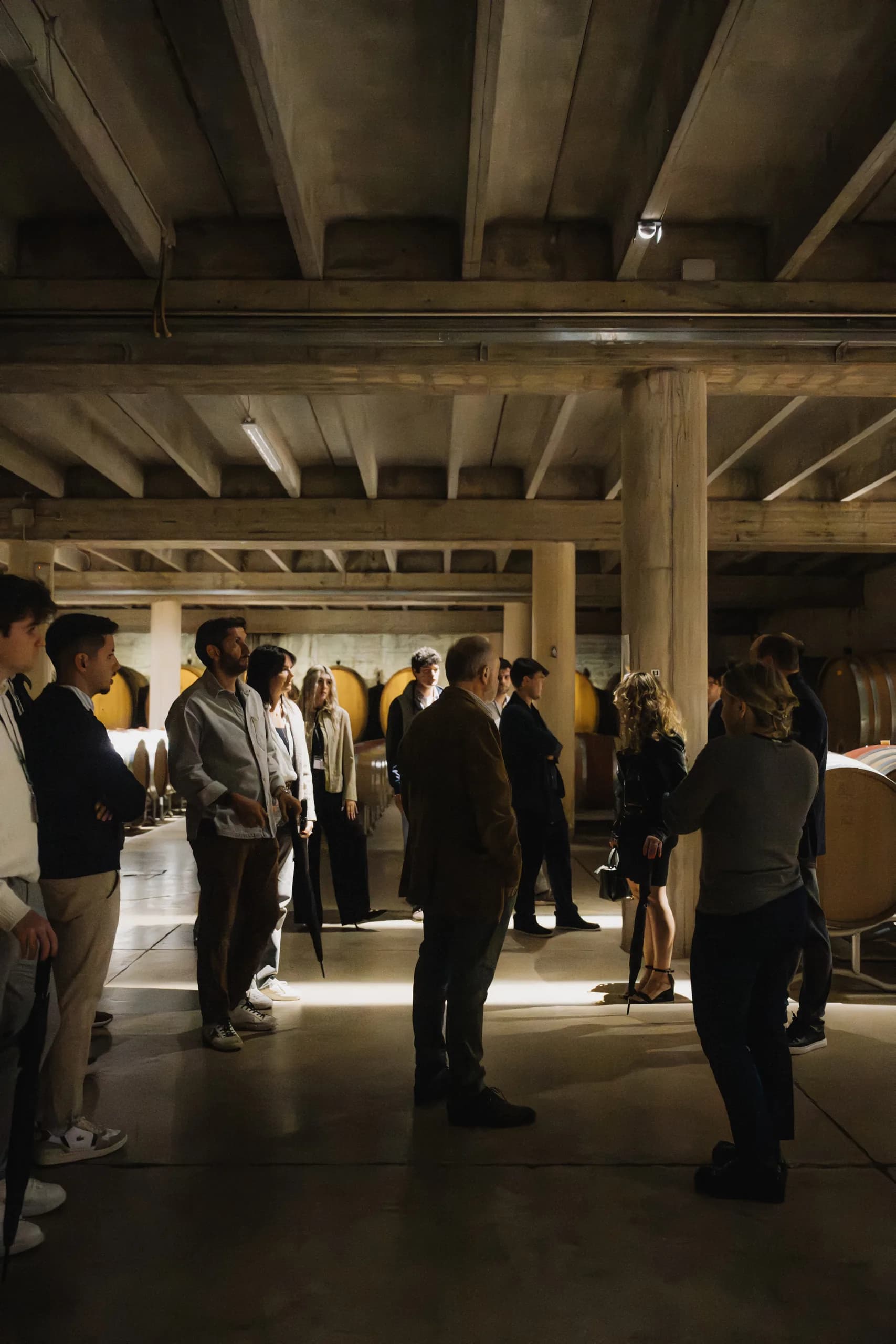
A typical visit starts outside, in the vineyard or at the cellar door, moves through the winery and ends at a table. Let the host lead. Questions are welcome at every stage, and the visit is usually better for them: how the vintage went, why the barrels are that size, what the estate does differently from its neighbors.
Arrive on time, not early
Ten minutes early can mean catching the team mid-preparation; very late can push the whole visit. If you are delayed on the road, call. A short message is always appreciated.
Spitting is normal
At a serious estate, spitting or leaving wine in the glass is not rude. Spittoons are there to be used, especially if you are tasting several wines or visiting more than one estate. If you prefer not to spit, simply ask for a smaller pour.
Taste in order
Wines are poured in a planned sequence, usually lighter to fuller, younger to older. Do not ask to skip ahead to the top wine; it is coming, and it shows better in context.
Keep perfume light
A strong fragrance travels across a tasting table and gets in the way of the wine, for you and for the people next to you.
Buying wine and tipping
There is no obligation to buy, but buying a bottle or two is the clearest way to thank a small estate for its time. If you cannot carry wine home, ask whether the estate ships; many do, and they will tell you how it works for the United States. Do not feel pressured by a large group buying cases; buy what you will drink.
Tipping at wineries is not a fixed custom in Italy, and the person pouring is often an owner, a winemaker or a member of the family. A warm thank-you, buying wine and a good review afterwards are the gestures most estates value. If a guide or host went well beyond the visit you booked, a tip is a kind gesture, not an expectation.
Children, photos and the small things
Children are often welcome on estate visits, especially at family-run wineries, but ask when you book. Cellars can be cold and the floors uneven, and a long tasting is a lot to ask of a young child. Some estates offer juice or grape must at the table; others are better suited to adults only. A clear question in advance avoids an awkward arrival.
Photos are generally fine in the vineyard and the cellar, but ask before photographing people at work, and before posting anything that shows the inside of a private home. During the tasting itself, keep the phone down for a while. You will remember the wines better.
Let the host know if you are not drinking. Designated drivers, pregnant guests and non-drinkers are common at tastings, and you will often be offered a smaller pour or something else to taste.
Drinking and driving on a wine day
This is the one rule that is not about manners. Italy’s legal blood alcohol limit for most drivers is 0.5 grams per liter, stricter than the usual US limit, and it is zero for drivers who have held their license for less than three years. A full tasting followed by a glass at lunch can put an ordinary visitor over the limit.
If wine is the reason for the day, someone else should drive. That can be a member of your group who does not drink, or a private driver. Either way, decide before the first glass, not after the second estate.
Tasting without the logistics
If you would rather leave the bookings and the driving to someone else, Rocca d’Italia organizes private chauffeur wine days: two estates of Chianti Classico at Castello di Brolio and Castello di Radda, from Florence or Siena, or Boscarelli and the Vino Nobile of Montepulciano, from Siena. Each day is for your group only, and we reply with a proposal and the estimate within about 48 hours.
Questions about wine tasting etiquette in Italy
Do you need a reservation for wine tasting in Italy?
Usually yes. Most Italian estates receive visitors by appointment, especially in Chianti Classico, Montalcino and Bolgheri. Book by email or booking form a few weeks ahead, and earlier for spring, autumn and the harvest.
Is it rude to spit at a wine tasting in Italy?
No. At a serious estate, spitting or leaving wine in the glass is normal, and spittoons are there to be used. It is the sensible choice if you are tasting many wines or visiting more than one estate.
Should you tip at an Italian winery?
Tipping is not a fixed custom at Italian wineries. Buying a bottle, a sincere thank-you and a good review are the gestures estates value most. A tip is a kind extra if a host went well beyond the visit you booked.
Can you bring children to a winery in Italy?
Often yes, especially at family-run estates, but ask when you book. Cellars can be cold and visits long, and some estates are better suited to adults. A question in advance avoids surprises.
Do you have to buy wine after a tasting in Italy?
No. There is no obligation, but buying a bottle or two is a good way to thank a small estate. Many wineries can ship, so ask about delivery to the United States.
Can you drive after a wine tasting in Italy?
Be careful. Italy’s blood alcohol limit for most drivers is 0.5 grams per liter, and zero for drivers in their first three years with a license. On a wine day, plan for a driver who does not drink.