Vin Santo is Tuscany's traditional dessert wine: an amber, often sweet wine made from grapes dried for weeks or months after the harvest, then fermented and aged slowly in small wooden casks called caratelli. In Tuscany it closes a meal, usually poured in a small glass with cantucci, the hard almond biscuits that people dip into it.
This guide explains how Vin Santo is made, what the main styles are, how it is served, and where travelers usually taste it in Tuscany.
What is Vin Santo made from?
Most Vin Santo is made from white grapes. For Vin Santo del Chianti DOC, Trebbiano Toscano and Malvasia must together make up at least 70 percent of the grapes, with other local varieties allowed for the rest. The result is a wine that ranges from gold to deep amber as it ages.
There is also a rarer pink-to-copper style called Occhio di Pernice, partridge's eye, made mainly from the red Sangiovese grape. It is produced in smaller quantities and is worth trying if you see it on a list.
Vin Santo is made across much of Tuscany. The Vin Santo del Chianti DOC covers areas in the provinces of Arezzo, Florence, Pisa, Pistoia, Prato and Siena, and there are separate denominations, such as Vin Santo del Chianti Classico, with their own rules.
How Vin Santo is made: drying and caratelli
After the harvest, the best bunches are set aside to dry rather than being pressed. Traditionally they are laid on straw or cane mats, or hung from beams, in a ventilated room under the roof, the vinsantaia. Over the following weeks or months the grapes lose much of their water and their sugars concentrate. This drying process is called appassimento.
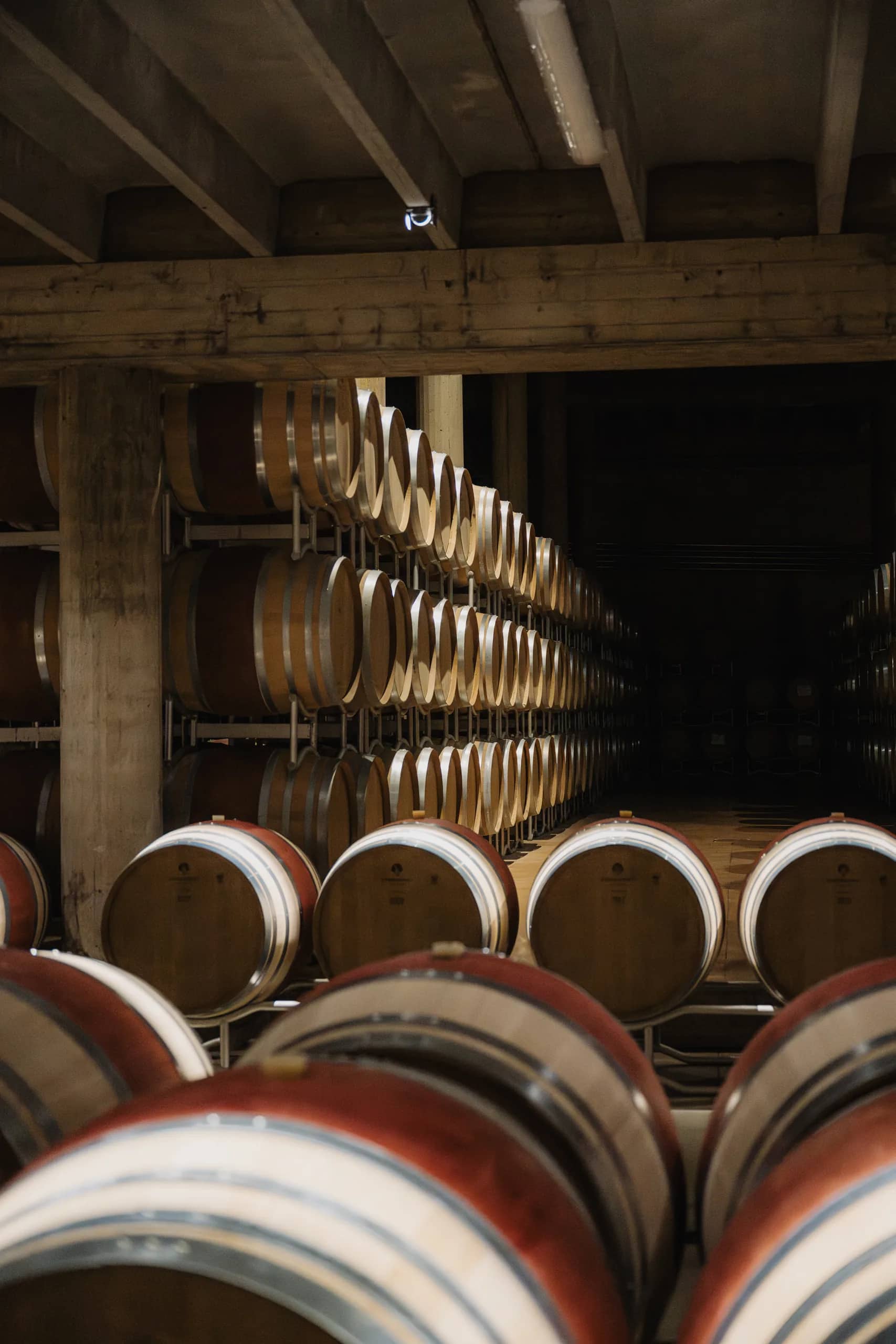
The dried grapes are then pressed, and the thick, sweet must goes into caratelli, small barrels of oak or sometimes chestnut, much smaller than ordinary wine barrels. Some producers add a little of the madre, the sediment from previous batches, to start fermentation; others prefer not to, and the question is still debated among winemakers.
The casks are traditionally kept in the vinsantaia, where the wine lives through hot summers and cold winters. Fermentation is slow and can stop and start with the seasons, which is why Vin Santo can be dry, off-dry or sweet depending on the producer and the year.
Years of patience
The rules require Vin Santo del Chianti to age for years before release, and the Riserva for longer still. Many producers age theirs well beyond the minimum.
Vin Santo and cantucci: how it is served
In Tuscany, Vin Santo belongs to the end of the meal. It is served with dry biscuits and pastries, and cantucci are the classic pairing. Cantucci are twice-baked almond biscuits associated with Prato, hard enough to be dipped.
The custom is to dip a biscuit briefly in the glass, eat it, and repeat; whatever wine is left is sipped on its own. A more attentive way to enjoy a fine Vin Santo is to taste it first without the biscuit, slightly cool, in a small glass, so that you notice its aromas of dried fruit, honey and nuts.
Serve it in a small glass rather than a large wine glass, and do not pour too much: a little goes a long way. Once opened, a bottle of Vin Santo keeps better than most table wines thanks to its sugar and concentration, but it is still best finished within a reasonable time.
Older and drier styles are also served with aged cheeses, and some Tuscans offer a glass simply as a gesture of welcome.
The name and the legend
Santo means holy, and there are several stories about the name. One Tuscan legend tells of a Sienese friar in 1348 who gave the sick a wine his brothers used for Mass, and its reputation for healing earned it the name. Other theories link it to the wine's use at Mass or to the time of year when it was traditionally made. No single explanation is proven, and Tuscans enjoy telling all of them.
Where travelers taste Vin Santo
The most natural place is at the end of a meal in a Tuscan trattoria or restaurant, where it is often offered with cantucci. Many wine estates also make a small amount and pour it at the end of a tasting, especially in Chianti and around Montepulciano.
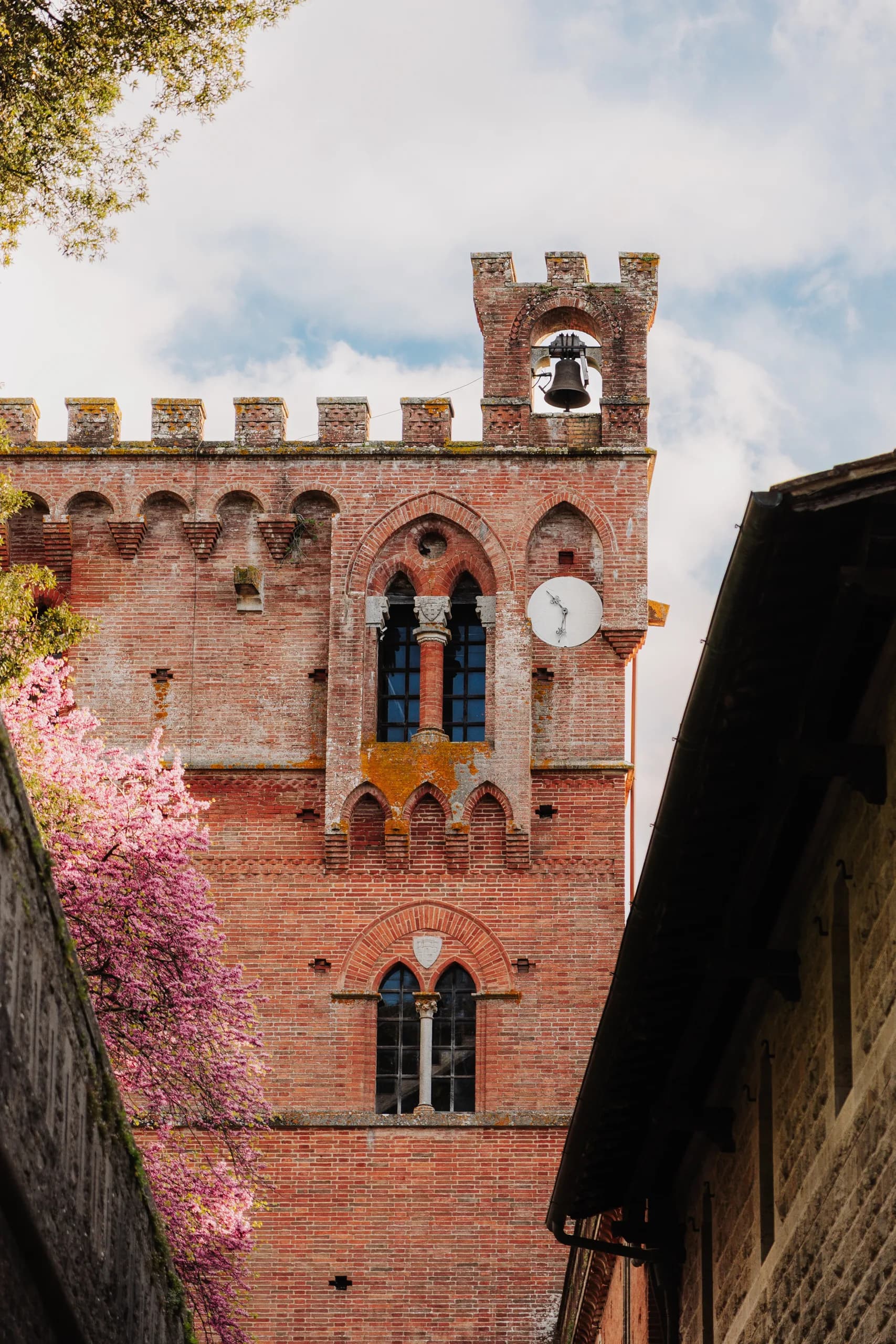
In Chianti Classico, many of the historic estates make their own Vin Santo del Chianti Classico, a separate denomination whose rules require the wine to be made and aged in wooden caratelli. Castello di Brolio, the Ricasoli estate near Gaiole, is one of them.
Vin Santo is produced in small quantities and sold in small bottles, so it is a good wine to buy at the estate. Ask the producer how long it was aged and whether it is sweet or dry; the answer varies more than with almost any other Tuscan wine.
Tasting Vin Santo at the source
On a private chauffeur wine tour, Vin Santo often arrives at the end of the day, after the reds. Rocca d'Italia's Brolio Castle & Chianti Classico day, with tasting and lunch at Castello di Brolio, and the Boscarelli & Vino Nobile day near Montepulciano both take you to estates where Tuscan wine traditions are part of the visit.
Questions about Vin Santo
What is Vin Santo?
Vin Santo is a Tuscan dessert wine made from grapes dried after the harvest, then fermented and aged in small wooden casks called caratelli. It is usually amber and sweet, though drier styles exist.
What grapes are used in Vin Santo?
Mostly Trebbiano Toscano and Malvasia, which must make up at least 70 percent of Vin Santo del Chianti. The Occhio di Pernice style is made mainly from Sangiovese.
How do you drink Vin Santo?
Traditionally at the end of a meal, in a small glass, with cantucci almond biscuits to dip. Fine examples are worth tasting first on their own.
What are cantucci?
Cantucci are twice-baked almond biscuits associated with the Tuscan city of Prato. They are hard and dry, which is why they are traditionally dipped in a glass of Vin Santo at the end of a meal.
Is Vin Santo sweet?
Usually, but not always. Because fermentation in the small casks is slow and irregular, Vin Santo can range from dry to very sweet, depending on the producer and the year.
Is Tuscan Vin Santo the same as Vinsanto from Santorini?
No. They share a name but are different wines. Tuscan Vin Santo is made mainly from Trebbiano and Malvasia in Tuscany, while Vinsanto is a sweet wine from the Greek island of Santorini, made from its own local grapes.
How long is Vin Santo aged?
Several years. The Vin Santo del Chianti rules require years of aging before release, more for the Riserva, and many producers age it well beyond the minimum.