Sangiovese is the red grape behind most of Tuscany's great wines, from Chianti Classico to Brunello di Montalcino and Vino Nobile di Montepulciano. It makes medium-bodied reds with high acidity, firm tannins and flavors of red cherry, plum, dried herbs and earth. It is Tuscany's most planted and most important red grape, and most of the region's best-known certified wines are built on it.
If you have ordered a Tuscan red in a restaurant, you have almost certainly drunk Sangiovese, even if the label never said so. Italian wines are usually named after the place, not the grape. Knowing what Sangiovese is, and how it changes with place and winemaking, is the key to reading a Tuscan wine list.
What is Sangiovese, and where does the name come from?
Sangiovese is a red wine grape native to central Italy and grown widely across Tuscany. It ripens late, has thin skins and naturally high acidity, and it is sensitive to its site: the same vine planted on two hillsides a few miles apart can give noticeably different wines.
The origin of the name is debated. The explanation most often repeated is the Latin sanguis Jovis, the blood of Jupiter, but it has never been proven, and other theories exist. What is certain is that the grape has many local names, which is one reason it can be confusing on a label.
Brunello
In Montalcino, Sangiovese is traditionally called Brunello. Brunello di Montalcino is made from it alone.
Prugnolo Gentile
In Montepulciano, the local name is Prugnolo Gentile. It is the main grape of Vino Nobile di Montepulciano, which must contain at least 70 percent of it.
Morellino
In the hills around Scansano, in the Maremma, the grape is called Morellino. Morellino di Scansano must contain at least 85 percent Sangiovese.
What Sangiovese tastes like
In the glass, young Sangiovese is bright and savory rather than sweet and fruity. Expect sour and red cherry, raspberry, violets, tomato leaf and dried herbs, with a fresh acidity that makes the wine feel lively and keeps it close to food. The tannins are firm, sometimes a little rustic when young.
With age, the fruit turns toward dried cherry and plum, and tertiary notes appear: leather, tobacco, forest floor, balsamic hints. This is why Tuscans pair it with almost anything savory, from tomato-based pasta to grilled meat, and why it rarely shines with sweet or very spicy food.
Why the same grape makes different wines
Three things change Sangiovese more than anything else: where it grows, how it is blended and how long it is aged. In the cooler, higher hills of Chianti Classico, between Florence and Siena, it tends to give fragrant, firm wines with lively acidity. The Chianti Classico rules allow from 80 to 100 percent Sangiovese, and many producers now use it on its own.
Further south and closer to the sea, the climate is warmer and the wines generally riper and rounder. Montalcino, around its hilltop town, produces Brunello, made only from Sangiovese and aged for years before release, which gives one of Italy's most structured and long-lived reds. In Montepulciano the Vino Nobile can include other local grapes alongside Prugnolo Gentile, and in the Maremma Morellino di Scansano is usually softer and more approachable young.
Labels add one more layer of confusion. Chianti and Chianti Classico are both Sangiovese-based, but they are separate DOCGs with different production areas, rules and consortia: Chianti Classico comes only from the historic hills between Florence and Siena, while Chianti DOCG covers a much wider area of Tuscany. Vino Nobile di Montepulciano and Brunello di Montalcino, in turn, were among the very first Italian wines to receive DOCG status, in 1980.
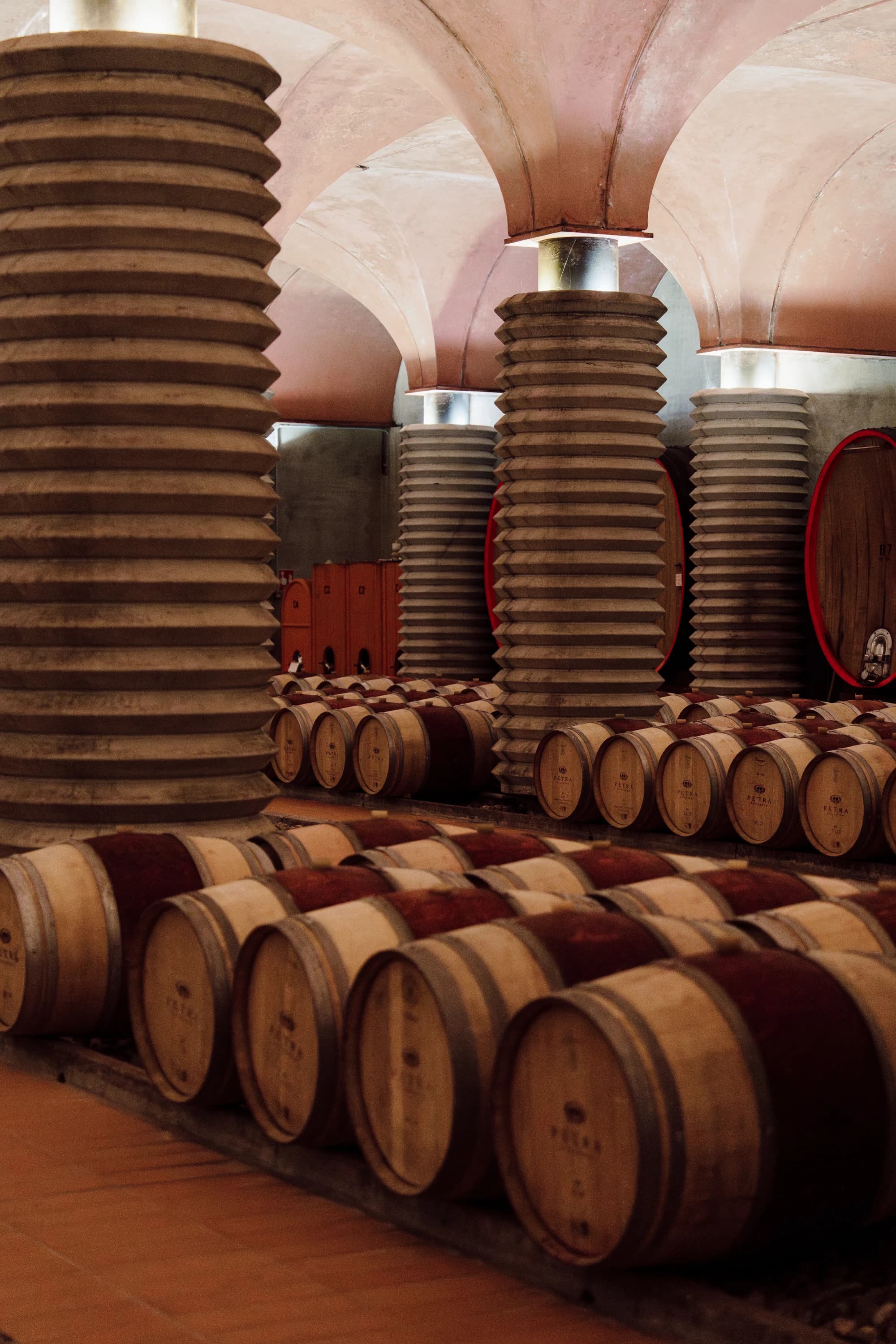
Winemaking adds the rest. Large old casks tend to keep the grape's floral, red-fruited side; smaller new barrels add spice, vanilla and a rounder texture. Some estates blend Sangiovese with Cabernet Sauvignon or Merlot, the approach that gave rise to many of the wines known as Super Tuscans.
How to choose a Sangiovese wine
For an easy, fresh bottle, look at a young Chianti Classico or a Rosso di Montalcino or Rosso di Montepulciano, the younger wines of those two towns. For more depth and aging potential, move to a Chianti Classico Riserva, a Vino Nobile or a Brunello. Serve all of them slightly cool rather than warm, and with food. Because the grape is so sensitive to vintage, a quick look at how the year went in that area is worth more than any rule about which denomination is best.
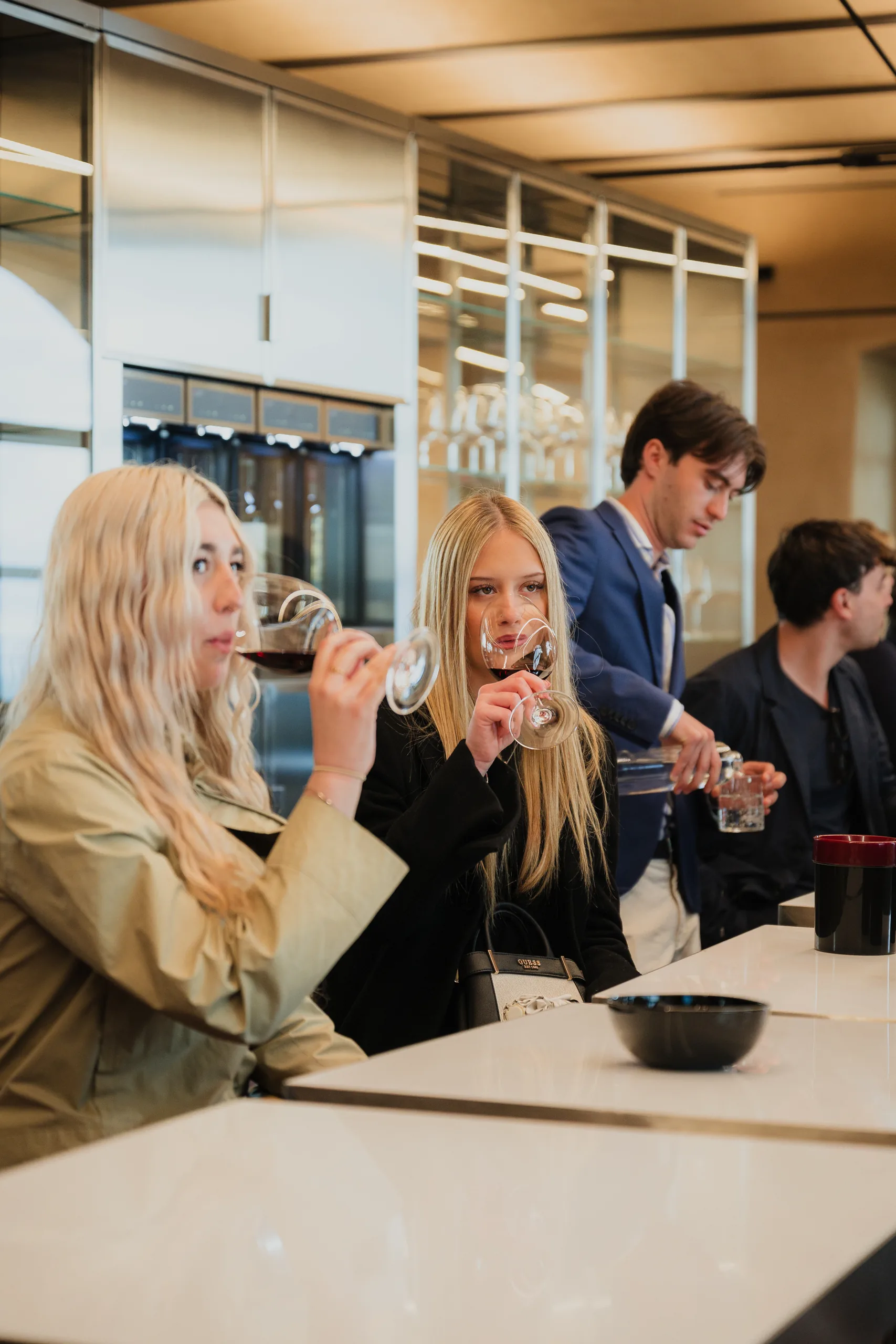
The most useful habit is to taste Sangiovese from two places side by side. A glass from Chianti and a glass from Montalcino or Montepulciano, poured on the same day, show the difference that soil, altitude and climate make far better than any description.
Tasting Sangiovese across Tuscany
Sangiovese is easiest to understand at the source, where you can see the vineyards that shape each wine. Two areas make a natural pair for a comparison: the Chianti Classico hills and the slopes around Montepulciano.
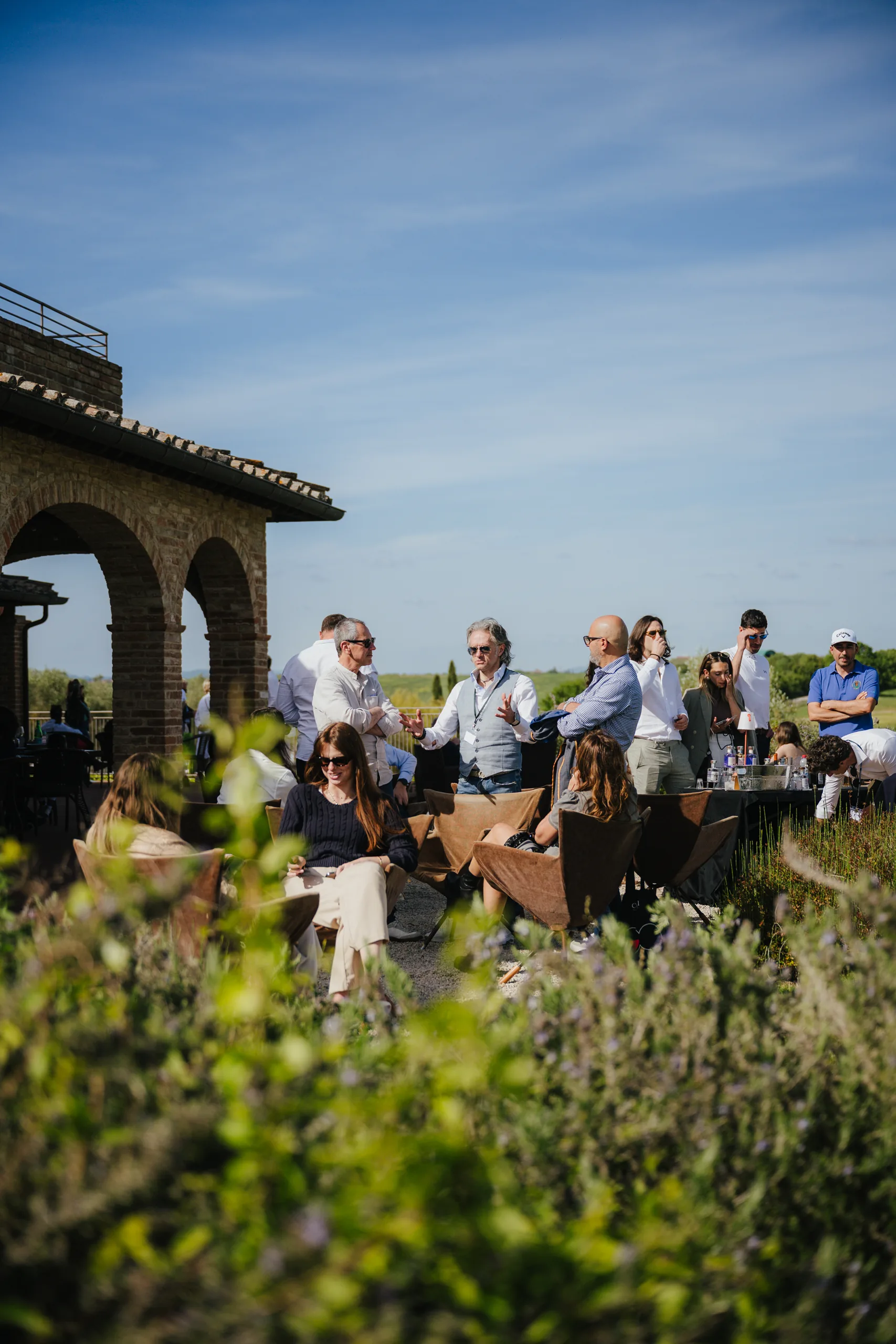
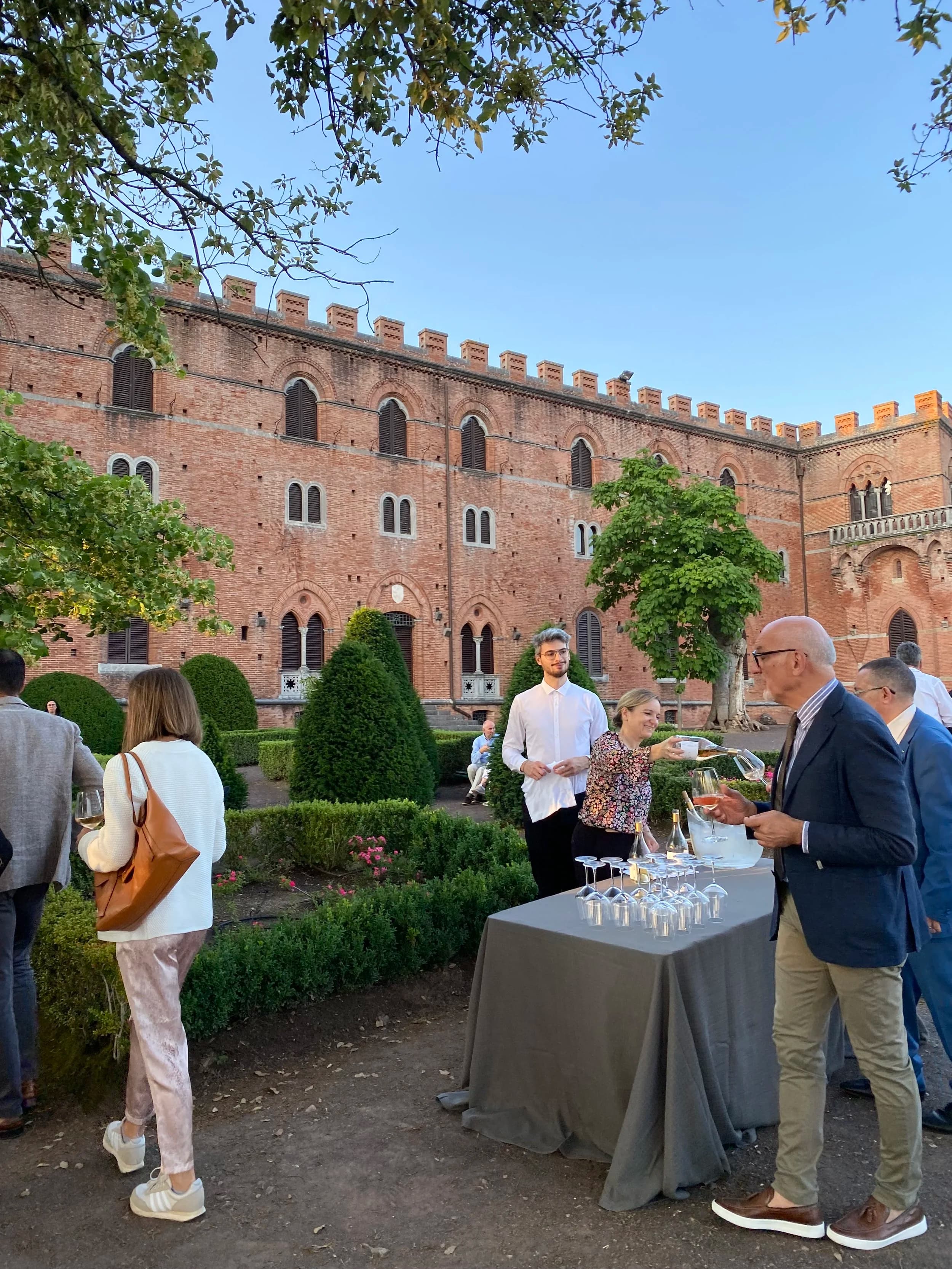
Rocca d'Italia organizes private wine days with a chauffeur for both: Two Estates of Chianti Classico, at Castello di Brolio and Castello di Radda, and Boscarelli and Vino Nobile, at the Boscarelli estate near Montepulciano. Each day is for your group only, and we reply with a proposal within about 48 hours.
Questions about Sangiovese
What is Sangiovese wine?
It is red wine made mainly or entirely from the Sangiovese grape, Tuscany's most important red variety. Chianti Classico, Brunello di Montalcino, Vino Nobile di Montepulciano and Morellino di Scansano are all Sangiovese-based.
Is Chianti a Sangiovese?
Yes. Chianti and Chianti Classico are both based on Sangiovese. Chianti Classico must contain at least 80 percent, and many producers use 100 percent.
Is Brunello the same as Sangiovese?
Brunello is the local name for Sangiovese in Montalcino. Brunello di Montalcino, the wine, is made only from this grape and grown within the municipality of Montalcino.
What does Sangiovese taste like?
Red and sour cherry, plum, violet, dried herbs and earth, with high acidity and firm tannins. With age it develops notes of leather, tobacco and dried fruit.
What food goes with Sangiovese?
Savory food: tomato-based pasta, pizza, grilled and roasted meats, mushrooms and aged cheeses such as pecorino. Its acidity makes it a natural match for Italian cooking.