Brunello di Montalcino is a red wine made only from Sangiovese grapes grown inside the municipality of Montalcino, a hill town south of Siena. It is a DOCG wine, the top tier of Italian appellations, and it cannot leave the winery until several years after the harvest, which is a large part of why it tastes the way it does.
If you have seen the name on a wine list in New York or Chicago and wondered what sets it apart from Chianti or a generic Tuscan red, this guide answers the basics: what is in the bottle, which rules shape it, where the name comes from, and how to taste it on a visit to Tuscany.
What is Brunello di Montalcino made from?
One grape, and one grape only: Sangiovese. In Montalcino the local form of Sangiovese was traditionally called Brunello, roughly “the little brown one”, and the wine took its name from the grape. Unlike many Tuscan reds, Brunello cannot be blended with other varieties. Every bottle labeled Brunello di Montalcino is 100 percent Sangiovese.
The second rule is place. The grapes must come from vineyards within the boundaries of the municipality of Montalcino. The area is larger than the town suggests, running from the slopes near the Orcia river in the south to the woods and hills toward Buonconvento in the north, so soils, altitude and exposure change a lot from one side of the hill to the other.
That variety within a single appellation is one of the most interesting things about Brunello. Estates on the warmer southern slopes, around Castelnuovo dell’Abate and Sant’Angelo in Colle, tend to make fuller, riper wines. Vineyards higher up and to the north often give more perfumed, tighter wines. Tasting two estates from different sides of the hill is the easiest way to understand it.
The DOCG rules: why Brunello takes so long
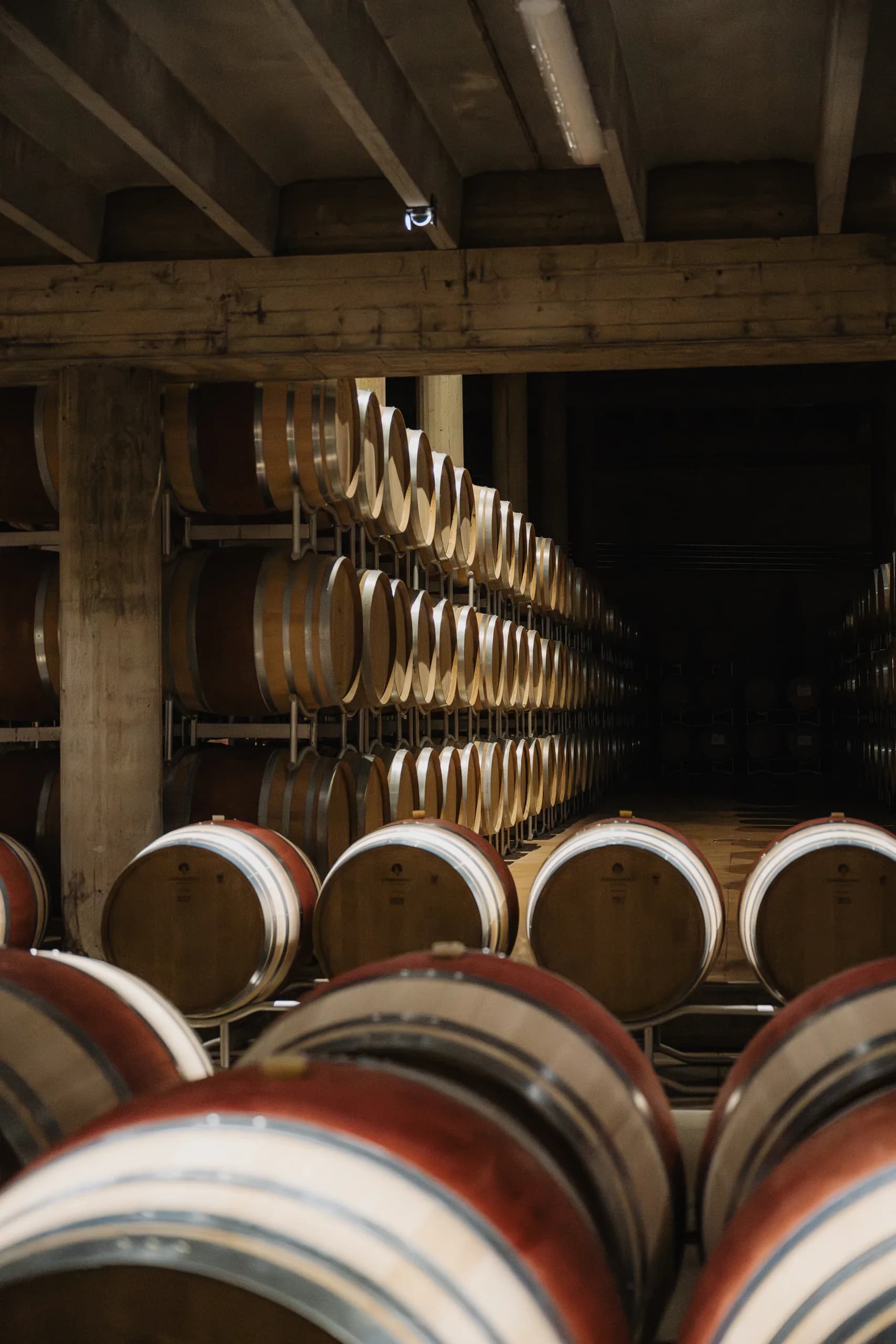
Brunello di Montalcino has some of the longest minimum aging requirements in Italy. According to the regulations summarized by the producers’ consortium, the wine must spend at least two years in oak and at least four months in bottle, and it cannot be released before the first of January of the fifth year after the harvest. A wine from a given autumn therefore reaches the market more than four years later.
The Riserva goes further. The oak minimum stays the same, but the wine needs at least six months in bottle and is released from the first of January of the sixth year after the harvest. Estates usually reserve the Riserva for their best vineyards or the best years.
The rules set minimums and leave the style to the producer. Some estates age in large casks of Slavonian or French oak, which add little flavor of their own. Others use smaller barrels, which give more noticeable notes of spice and vanilla. Neither is the “real” Brunello; it is a question of taste, and a good reason to ask about the cellar when you visit.
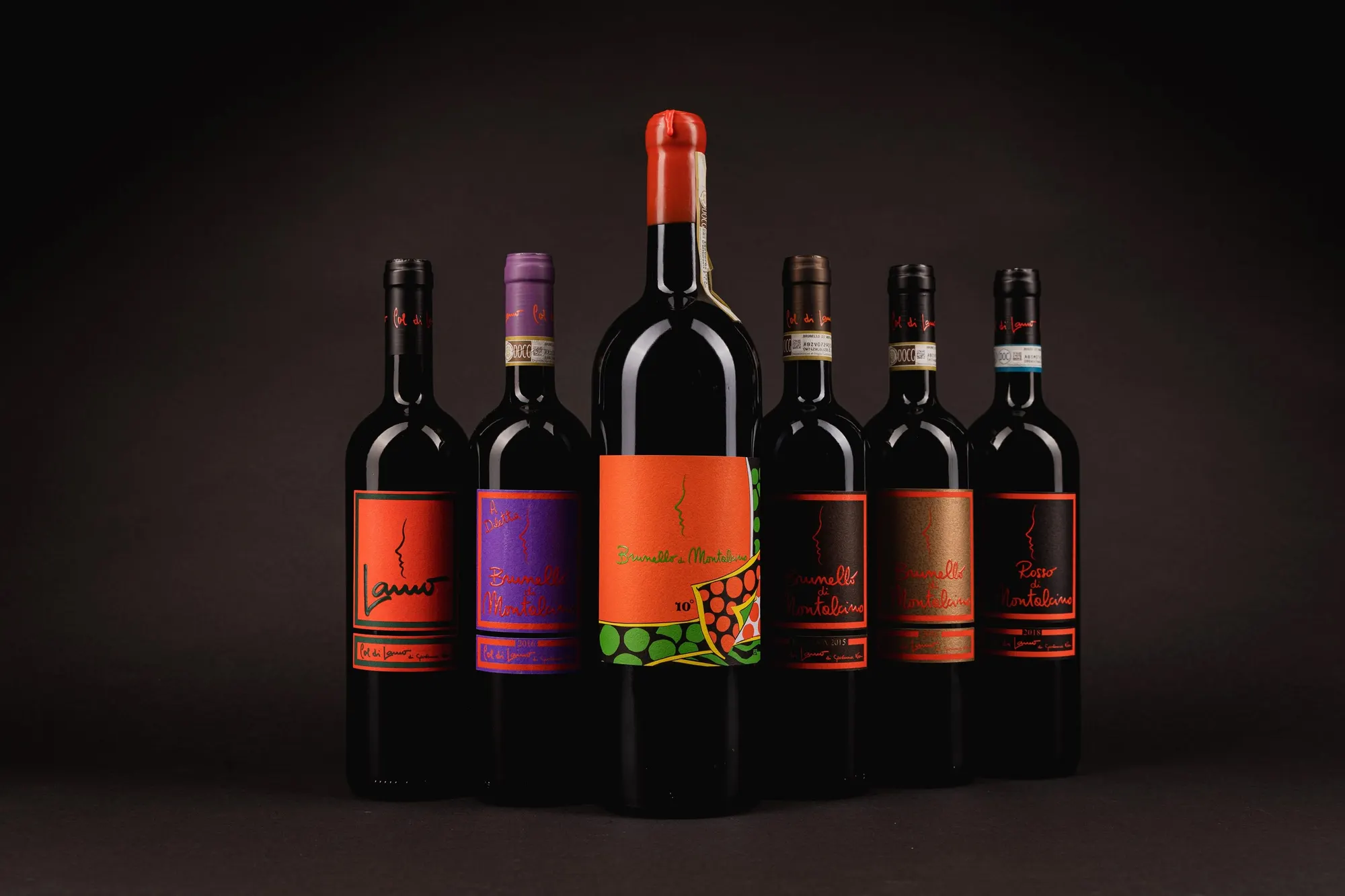
Rosso di Montalcino
The same grape from the same area, released much younger and with lighter aging. It is often the first wine poured at a tasting and a good everyday introduction to the estate’s style.
A short history of the appellation
Brunello is younger than its reputation suggests. In the second half of the nineteenth century the Santi family, and above all Ferruccio Biondi-Santi, began to select Sangiovese vines and make a pure Sangiovese wine meant for long aging. The 1888 vintage is generally cited as the first wine bottled under the name Brunello di Montalcino.
For decades it remained a wine made by a handful of families. Recognition came after the Second World War. Brunello became a DOC in 1966, and a year later the producers founded their consortium. In 1980 it was among the very first Italian wines to receive the DOCG, the highest level of the classification, which brought stricter controls, including official checks and tasting of the wine before release.
The number of estates grew quickly from the 1970s onward, and today Montalcino is one of the most visited wine areas in Italy. Despite that growth, the core rules have stayed the same: one grape, one municipality and a long wait before release.
What does Brunello taste like?
Expect a medium-colored red, often with a garnet edge as it ages, rather than a deep purple. Sangiovese is not a dark grape. On the nose, young Brunello tends toward red and dark cherry, dried herbs and earth; with age, notes of leather, tobacco and dried flowers appear.
In the mouth, Brunello is defined by fresh acidity and firm tannins. That structure is why it pairs so well with food, from grilled meat to aged pecorino and dishes with wild boar or porcini, and why good bottles keep for many years. A young Brunello can feel austere on its own; with a plate of food it makes sense at once.
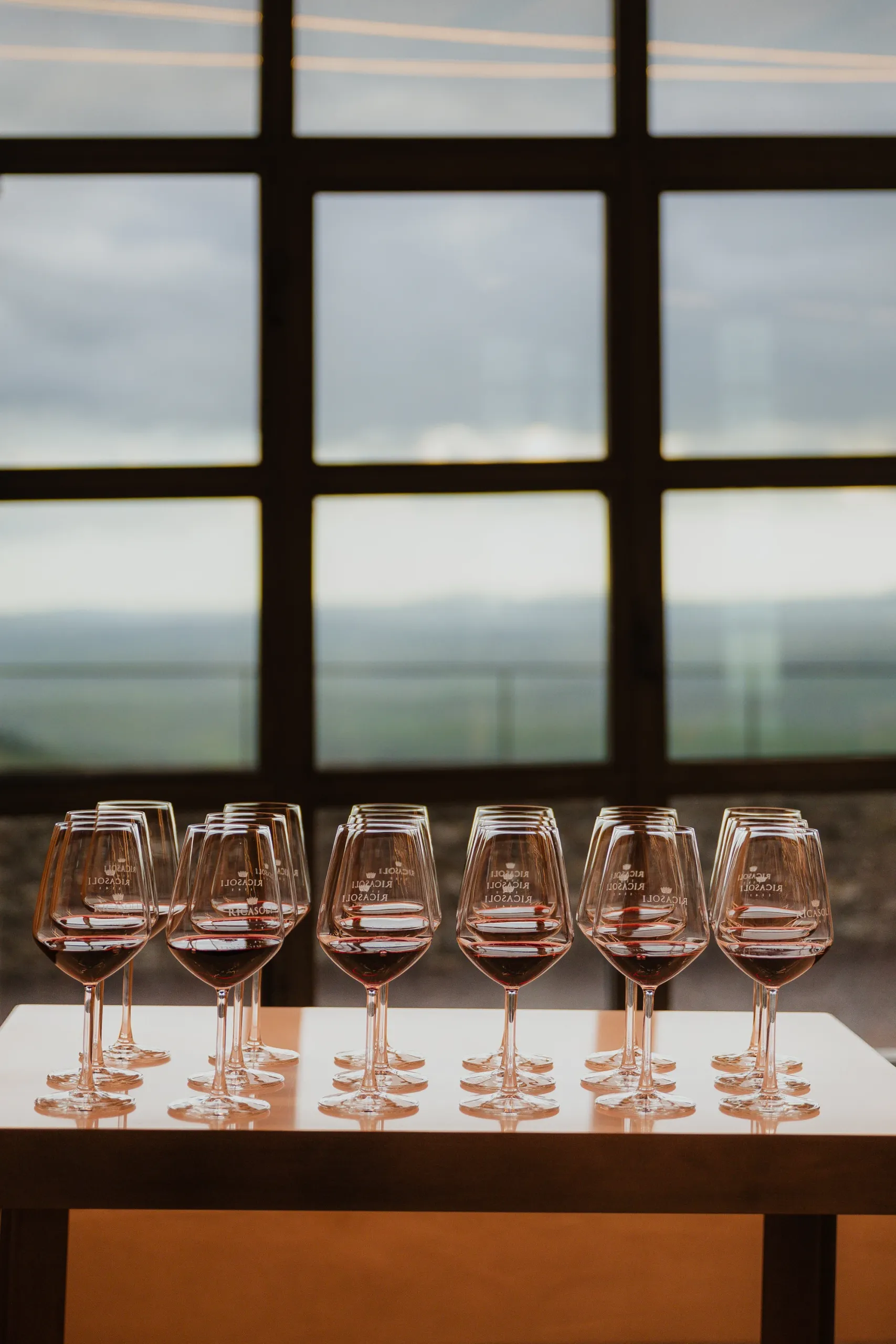
How to taste Brunello in Montalcino
Most estates receive visitors by appointment only, so book ahead, especially in spring and during the harvest in autumn. A typical visit includes a walk through the vineyard or cellar and a tasting of Rosso di Montalcino, Brunello and sometimes the Riserva. Two estates in a day, with a long lunch between them, is plenty.
Plan who drives. The roads around Montalcino are narrow and winding, and Italian drink-driving limits are strict. Many visitors hire a driver for wine days for exactly that reason. In the town itself, the fortress and the wine shops make a good hour or two, and the abbey of Sant’Antimo is a short drive south.
Check each estate’s own site for visiting days and opening times, as they vary through the year and some close during the harvest.
Tasting Brunello without the logistics
If you would rather leave the planning and the driving to someone else, Rocca d’Italia organizes private wine days from Siena with a chauffeur: one centered on Casanova di Neri, and one that pairs Col di Lamo and Casanova di Neri to show two different expressions of the same wine. Each day is for your group only, and we reply with a proposal and an estimate within about 48 hours.
Questions about Brunello di Montalcino
What grape is Brunello di Montalcino?
Brunello di Montalcino is made entirely from Sangiovese. Blending with other grapes is not allowed, and the grapes must be grown within the municipality of Montalcino.
How long is Brunello aged?
At least two years in oak and four months in bottle, with release no earlier than the first of January of the fifth year after the harvest. The Riserva needs six months in bottle and is released a year later.
Is Brunello the same as Chianti?
No. Both are based on Sangiovese, but Brunello comes only from Montalcino, must be pure Sangiovese and ages much longer. Chianti and Chianti Classico come from different areas further north and follow their own rules.
What is the difference between Brunello and Rosso di Montalcino?
They come from the same grape and the same area. Rosso di Montalcino is released younger with lighter aging, so it is fresher and more approachable; Brunello is aged longer and built to last.
When did Brunello di Montalcino become DOCG?
Brunello became a DOC in 1966 and a DOCG in 1980, when it was among the first Italian wines to receive the top classification.
Can you visit Brunello wineries without a reservation?
Rarely. Most estates in Montalcino receive visitors by appointment, so book in advance and check each estate’s site for visiting days.