A Super Tuscan wine is a high-quality red from Tuscany made outside the traditional appellation rules of its time, usually with international grapes such as Cabernet Sauvignon and Merlot, alone or blended with Sangiovese. The term is not a legal category and you will not find it on an official label. It is a nickname, born in the 1970s and 1980s, for wines that were released as simple table wine yet were among the best in Italy.
Today most Super Tuscans are labeled Toscana IGT or carry a coastal DOC such as Bolgheri. Understanding where the name came from makes the labels much easier to read, and it explains why a trip to the Tuscan coast tastes so different from a day in Chianti.
What is a Super Tuscan wine, and why the rules mattered
In the 1960s and 1970s, Italian appellation rules told producers exactly which grapes they could use. Chianti, for example, was required to include white grapes in its blend. A producer who wanted to make a pure Sangiovese, or to add Cabernet Sauvignon, or to age the wine in small French barrels, could still do it, but the wine lost its appellation and had to be sold as vino da tavola, the humblest category.
A few estates decided that quality mattered more than the label. Their table wines were soon sought after by collectors abroad, and the gap between the modest classification and the reputation of the wine is exactly what the nickname Super Tuscan describes.
The wines that started it
Two names come up in every history of the category, and both estates tell their own stories on their official sites.
Sassicaia, Bolgheri
Marquis Mario Incisa della Rocchetta planted his first Cabernet Sauvignon vineyard at Tenuta San Guido, near Bolgheri, in 1944. For more than twenty years the wine stayed private, poured for family and friends. The estate dates its first commercial release to 1971, with the 1968 vintage. In 1978 a comparative tasting of Cabernets published by Decanter placed it first, and the world took notice of the Tuscan coast.
Tignanello, Chianti Classico
Antinori first made the wine from a single vineyard in 1970, still labeled as a Chianti Classico Riserva. In 1971 it left the appellation and became a Tuscan red table wine called Tignanello. Antinori describes it as the first Sangiovese aged in barriques and the first contemporary red of the area blended with untraditional varieties such as Cabernet; white grapes left the blend for good with the 1975 vintage.
How the labels changed: IGT, Bolgheri and Sassicaia
The success of these wines pushed the law to catch up. The Toscana IGT classification, introduced in the early 1990s, gave producers a regional category with freer rules on grapes and aging. Most of the wines people call Super Tuscans now carry it, including Tignanello.
On the coast, Bolgheri became a red-wine appellation in its own right, and Sassicaia, first a sub-zone of it, became a separate DOC in 2013: Bolgheri Sassicaia, a denomination that belongs to a single estate. Chianti Classico, for its part, dropped the obligation to use white grapes. The result is that some wines once sold as rebels would now qualify for the appellation they left.
So when you ask what a Super Tuscan wine is today, the practical answer is this: a premium Tuscan red, often but not always with Bordeaux varieties, labeled Toscana IGT or Bolgheri DOC, made in a style that owes more to the estate's vision than to local tradition.
Where the style lives: the Etruscan Coast
Super Tuscans are made all over the region, but their heartland is the coast south of Livorno. The Bolgheri DOC covers vineyards in the municipality of Castagneto Carducci, between the low hills and the sea. The road into the village is the Viale dei Cipressi, a straight avenue of about five kilometers lined with cypress trees, made famous by the poet Giosuè Carducci.
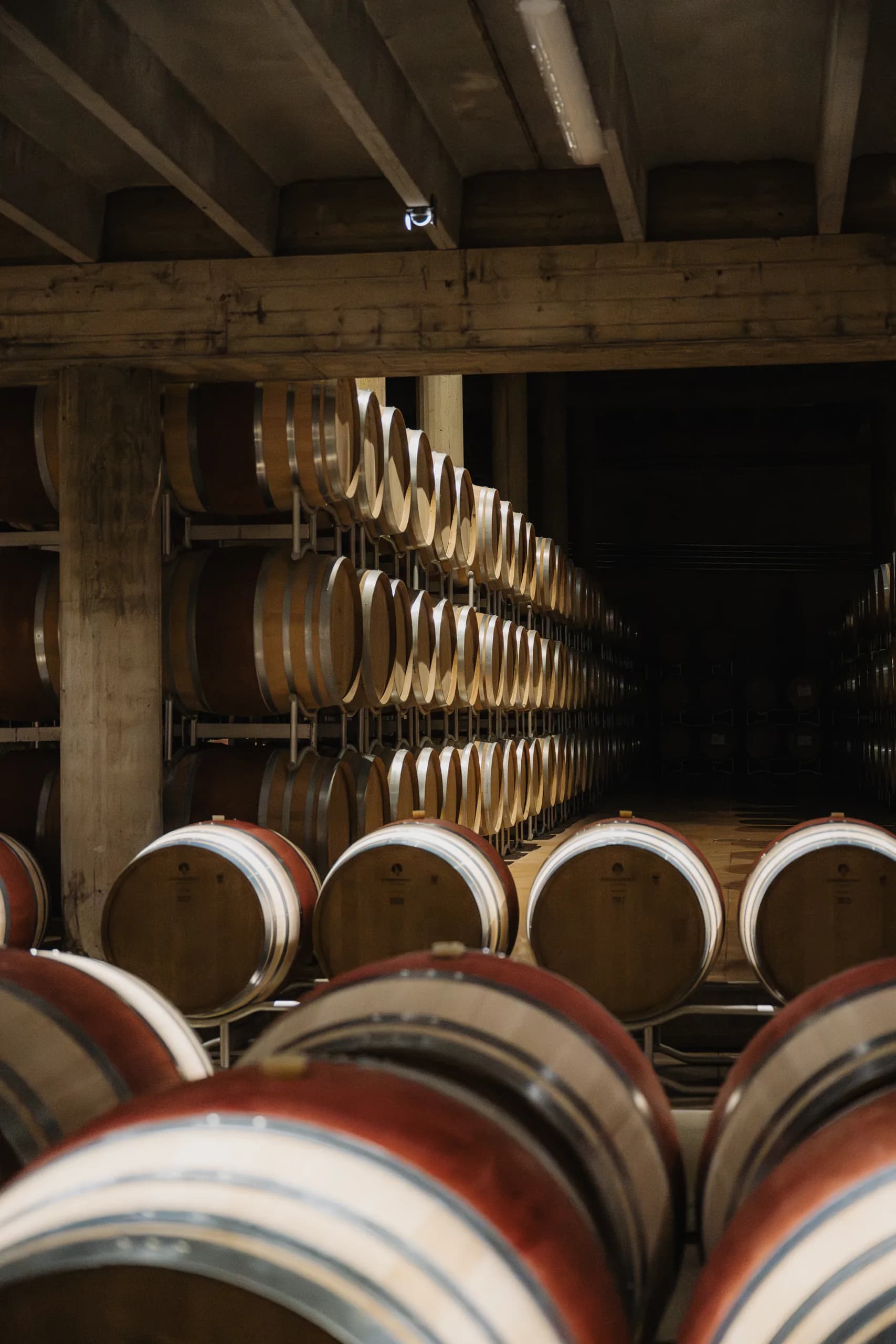
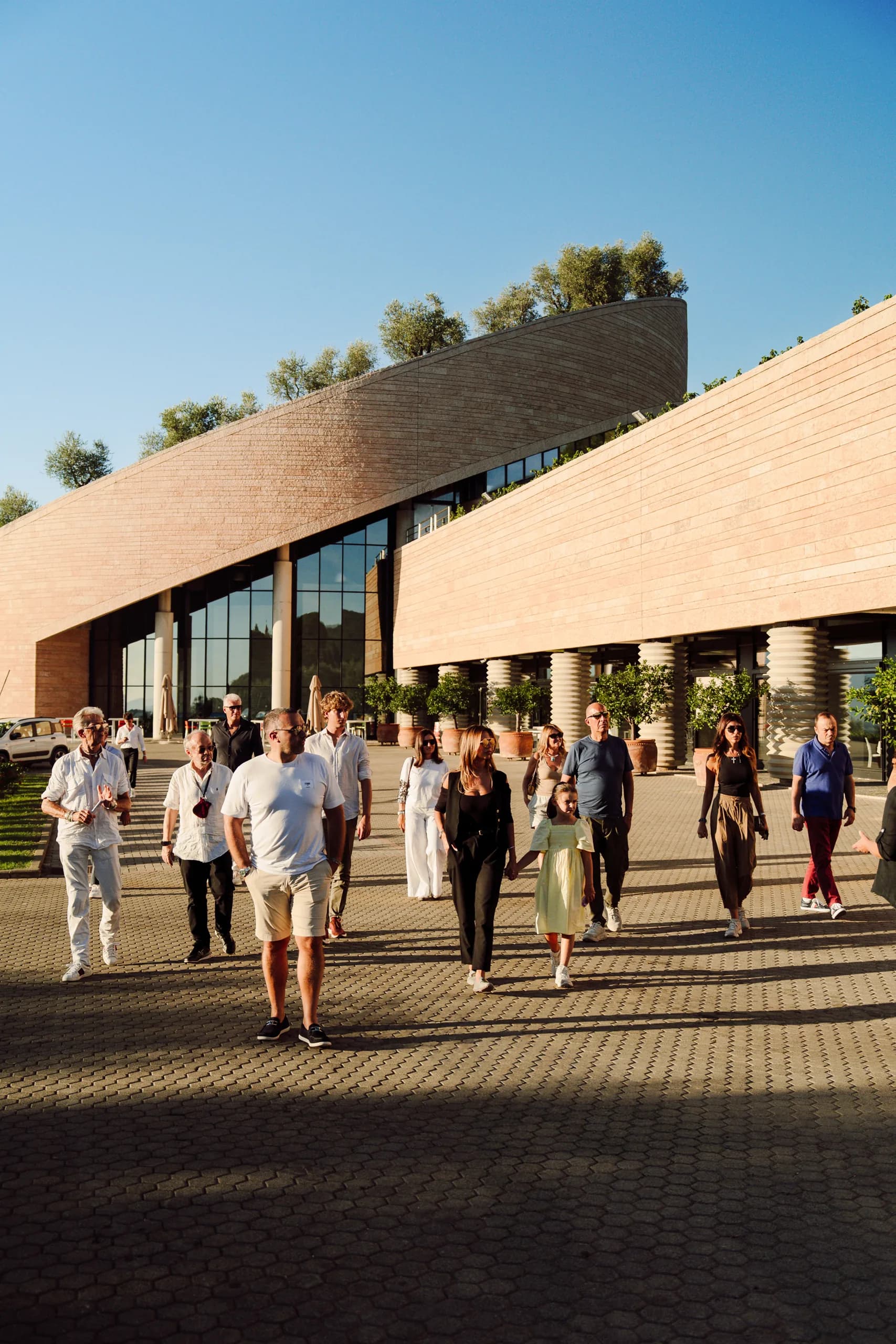
Further south, around the medieval village of Suvereto in the Val di Cornia, the same grapes find different soils. The Petra estate, owned by the Moretti family, makes wines from Bordeaux varieties such as Cabernet Sauvignon and Merlot. Its cellar, designed by the Swiss architect Mario Botta, is cut into the hillside, with a cylindrical volume at its center and tunnels for barrels running into the hill.
How to taste Super Tuscans on a trip
The most rewarding way is to taste them where they are made, at the estate, by appointment. Most coastal wineries do not take walk-ins, and the famous names receive few visitors, so plan ahead and be flexible about which estate you visit. A good tasting often moves from a younger wine to the estate's flagship, which shows you how the same grapes change with time in barrel and bottle.
Remember the distances. Bolgheri and Suvereto are on the coast, a long way from Florence and Siena by Tuscan standards, which makes them a full day out rather than an afternoon. And if you are tasting, leave the driving to someone else: Italy's alcohol limits are strict and the coast roads are no place to test them.
A Super Tuscan day on the coast
If you want to taste the style at its source, Rocca d'Italia's Petra and Bolgheri day leaves from Florence or Siena with a private chauffeur, visits the Petra estate at Suvereto and continues to Bolgheri. It is private to your group, and the proposal with the estimate arrives within about 48 hours of your request.
Questions about Super Tuscan wine
What makes a wine a Super Tuscan?
A Super Tuscan is a premium Tuscan red made outside the traditional appellation rules of its time, often with Cabernet Sauvignon or Merlot. The term is informal: it does not appear as an official category on the label.
Is a Super Tuscan a DOCG wine?
Usually not. Most Super Tuscans are labeled Toscana IGT, and many coastal ones are Bolgheri DOC. Sassicaia has its own single-estate denomination, Bolgheri Sassicaia DOC, since 2013.
What was the first Super Tuscan?
Sassicaia and Tignanello are the two wines usually named as the pioneers. Sassicaia's 1968 vintage was first sold in 1971, and Tignanello left the Chianti Classico appellation to become a table wine in 1971.
What grapes are in a Super Tuscan?
There is no fixed recipe. Many are blends of Cabernet Sauvignon, Merlot or Cabernet Franc, some include Sangiovese, and some are made from a single variety.
Where can I taste Super Tuscan wines in Tuscany?
The heartland is the coast: Bolgheri, in the municipality of Castagneto Carducci, and Suvereto in the Val di Cornia. Estates generally receive visitors by appointment only, so book ahead.