Sant'Antimo abbey is a twelfth-century Romanesque church standing on its own in a small valley below the village of Castelnuovo dell'Abate, about ten kilometers south of Montalcino. It is one of the finest Romanesque buildings in Tuscany, still a working monastery, and easy to combine with a morning or afternoon in Montalcino.
Most people come for the setting: pale stone, a square bell tower, olive trees and cypresses on the slope behind. The inside is quieter and more sober than the photographs suggest, and that is part of its appeal. Here is what to know before you go.
A short history of Sant'Antimo abbey
Legend credits Charlemagne with founding the abbey in 781. The story says his army, returning from Rome, was struck by an illness, and the emperor promised to found a monastery if his men recovered. Like many founding legends, it cannot be proved.
What can be documented starts a few decades later. A charter of 814 from Louis the Pious, Charlemagne's son, grants the abbey gifts and privileges, so the monastery already existed by then. Over the following centuries it grew rich and powerful, owning land across the area, and the church you see today was built in the twelfth century, in its period of greatest wealth.
Its fortunes then declined. In 1462 Pope Pius II, the Sienese pope who rebuilt Pienza, suppressed the abbey as an independent institution and joined it to the new diocese of Montalcino and Pienza. For a long time the buildings were neglected. A religious community returned in the twentieth century, and the abbey is once again home to monks who live and pray there.
What to see inside and out
The church is built in local travertine. Some of the stone, quarried near Castelnuovo dell'Abate, has a veined, translucent quality that people often describe as alabaster or onyx, and in low sun it seems to glow from within. Walk around the outside first: the apse with its radiating chapels, unusual in Tuscany, shows the influence of French Romanesque architecture.
Inside, the nave is tall and bare, divided from the aisles by columns with carved capitals. The most famous is the second capital on the right, showing Daniel in the lions' den, attributed to the sculptor known as the Master of Cabestany, who worked in southern France and Catalonia.
Parts of the earlier church survive in the crypt and in the so-called Carolingian chapel. Access to these areas is not always possible, so ask on site. The monastic community celebrates the liturgy in the church through the day; if you want to attend part of it, check the times on the abbey's own site before you go.
Visiting etiquette
This is a working church. Dress modestly, keep your voice low, and do not walk around during services.
Getting there and the roads around it
By car, take the road south from Montalcino toward Castelnuovo dell'Abate. Just before the village a signed road on the right leads down to the abbey and its parking area. The drive is short, about a quarter of an hour, through vineyards and woods on a narrow, winding road.
The roads around Sant'Antimo are among the most pleasant in the Brunello area: quiet, curving, with views across the Orcia valley toward Monte Amiata. From the abbey you can continue east and down toward the Val d'Orcia rather than going back the same way.
From Siena, allow a little over an hour to reach the abbey by car, heading south past Buonconvento and climbing to Montalcino before dropping down to Castelnuovo dell'Abate. From Pienza or San Quirico d'Orcia, roads across the valley make it a drive of well under an hour.
Walkers can reach the abbey on foot from Montalcino on a well-known path of about ten kilometers through woods and vineyards. It is a half-day walk with some climbing, so plan how you will get back.
Combining Sant'Antimo with Montalcino
The natural pairing is Montalcino in the morning, with its fortress and its streets of wine shops, then lunch, then Sant'Antimo in the afternoon, when the light on the stone is at its warmest. The opposite order works too if you prefer the abbey in the quiet of the morning.
Castelnuovo dell'Abate itself is a small village inside the Brunello di Montalcino production area, and the slopes around it are planted with vines. A tasting at an estate nearby fits easily into the same day, as long as someone else is driving.
Before you go
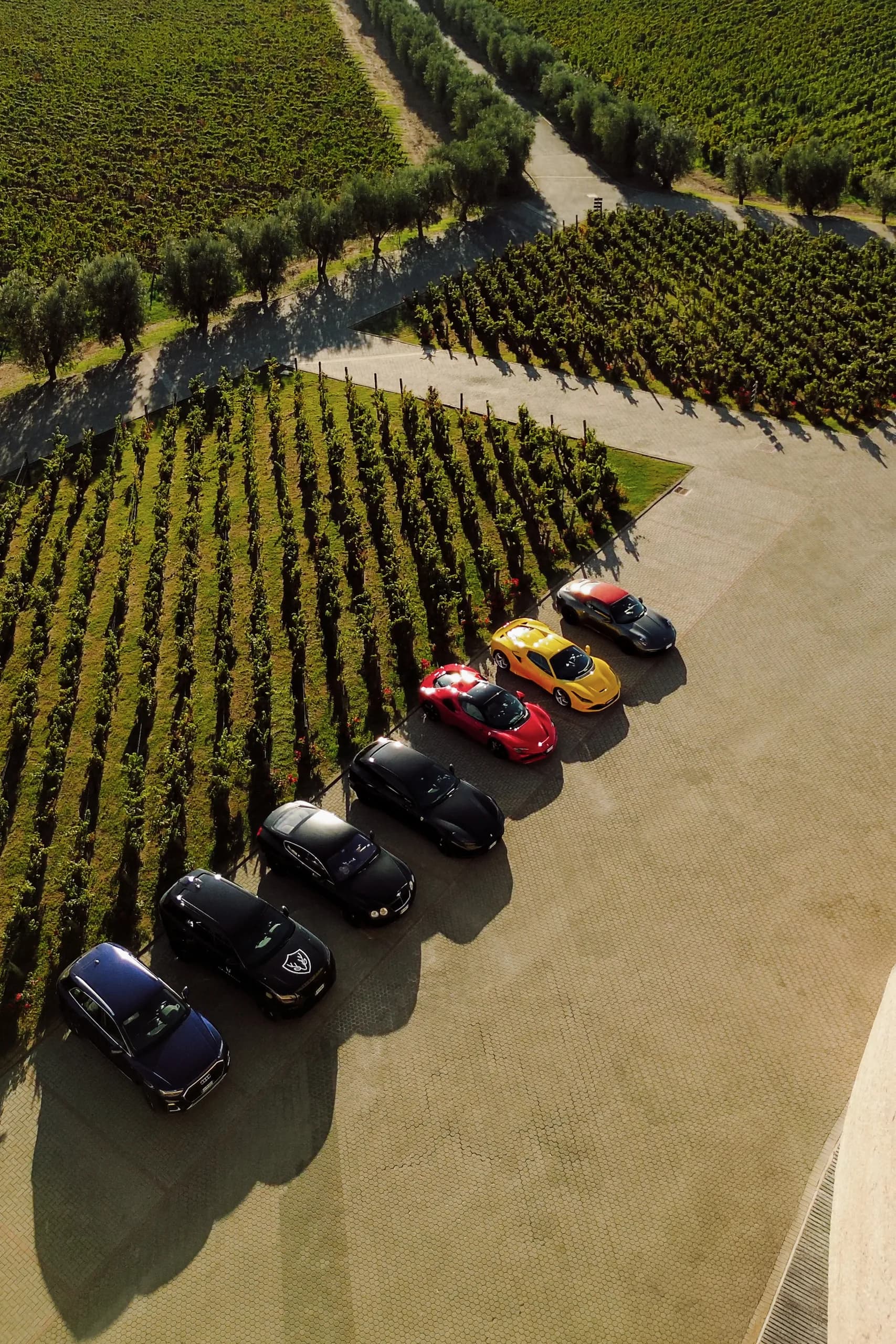
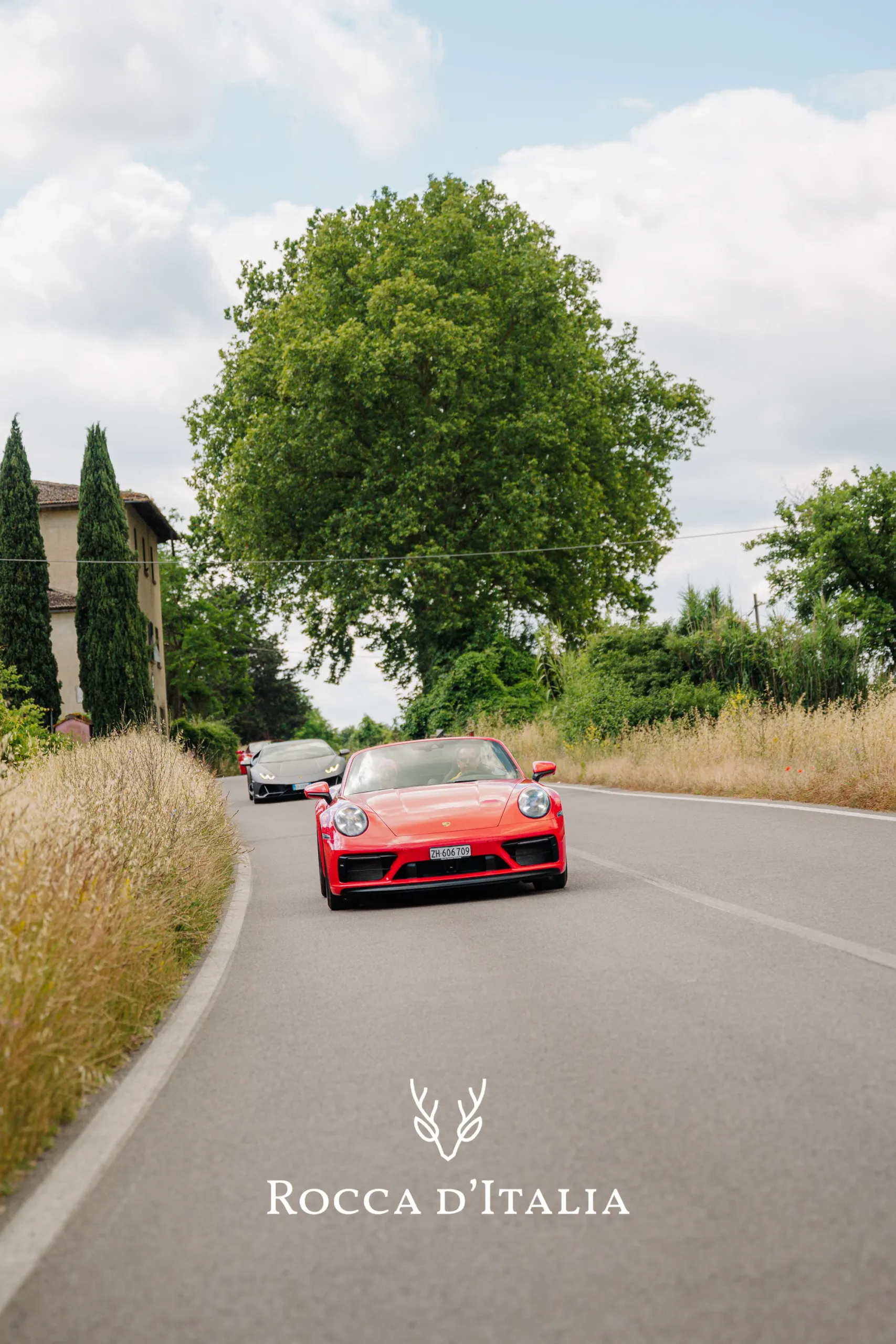
Check the abbey's official site for opening times and the times of the services, since both can change with the season and with church holidays. Allow at least an hour on site, more if you want to sit through part of a service. And if you would rather drive the roads around Sant'Antimo yourself in something memorable, Rocca d'Italia's The Brunello Road day leaves from Siena and takes you by supercar to Montalcino, Casanova di Neri and the roads around the abbey.
Questions about Sant'Antimo abbey
How far is Sant'Antimo abbey from Montalcino?
About ten kilometers south of Montalcino, just below the village of Castelnuovo dell'Abate. The drive takes around a quarter of an hour on a narrow country road.
Can you attend a service at Sant'Antimo?
Yes. The resident monastic community celebrates the liturgy in the church, and visitors may attend quietly. Times change, so check the abbey's official site before planning your visit around it.
Who founded Sant'Antimo abbey?
Legend says Charlemagne founded it in 781. The first reliable document is a charter of 814 from his son, Louis the Pious, and the present church dates from the twelfth century.
Can you walk from Montalcino to Sant'Antimo?
Yes, on a path of about ten kilometers through woods and vineyards. It takes most of half a day; arrange transport back or allow time for the climb up.
Is there a dress code at Sant'Antimo?
It is a working church, so dress as you would for any church in Italy: shoulders and knees covered, hats off inside. Keep your voice low, and avoid walking around while a service is in progress.
Is Sant'Antimo abbey worth visiting?
If you are in Montalcino, yes. It is one of the finest Romanesque churches in Tuscany, in a quiet setting, and it needs only an hour or two.