The best things to do in Tuscany fall into a few clear areas: Florence for Renaissance art, Siena and the hill towns around it for the Middle Ages, Chianti and the Val d'Orcia for wine and countryside, and the coast for Lucca, Bolgheri and the islands. You cannot see all of it in one trip, and you should not try. Pick two or three areas, base yourself well, and give each one real time.
This guide goes area by area, with the facts that help you choose: what each place is, what to book ahead, and how long it takes to get there. It is written for travelers who would rather see a few places properly than many places through a car window.
Things to do in Tuscany: how to plan them
Tuscany is larger than most visitors expect. Florence and Siena are about an hour apart by car, the Val d'Orcia is roughly another hour south of Siena, and the coast is on the other side of the region. Every move between areas costs half a day, so a week with one change of base is more relaxing than a week with four.
Two bases cover most first trips. Florence, or a hotel in the hills nearby, works for the city itself, Chianti, San Gimignano and Lucca. Siena, or the countryside south of it, works for Siena, Monteriggioni, the Val d'Orcia, Montalcino and Montepulciano. Trains link Florence, Pisa, Lucca and Siena, but the countryside is car country: the villages, estates and scenic roads are poorly served by public transport.
If you drive, keep two rules in mind. Many historic centers are limited traffic zones (ZTL) that fine cars without a permit, so park outside the walls and walk in. And if you plan to taste wine, someone else should drive: the legal limit in Italy is 0.5 grams of alcohol per liter of blood, lower than many visitors expect.
Season matters as much as place. Spring and fall are the most comfortable times for walking towns and driving country roads; midsummer is hot and the best-known sites are at their busiest. In the wine areas the grape harvest usually runs through September and October, a lively time to visit estates, though some are busier and less available then.
Florence: the Renaissance city
Florence is the obvious first stop, and it earns it. Its historic center has been a UNESCO World Heritage Site since 1982, recognized as a symbol of the Renaissance under the early Medici. Most of what you came to see is within walking distance: the cathedral of Santa Maria del Fiore and its baptistery, Piazza della Signoria, the Uffizi, the Ponte Vecchio and, across the river, the Pitti Palace and the Boboli Gardens.
Book the major sites in advance, especially from spring to early fall. Climbing Brunelleschi's dome requires a timed reservation, made through the cathedral's official site, and photo ID at the entrance; the climb is long and there is no elevator. Check the official sites for opening times and current rules before you go, since they change by season.
Give Florence at least two full days if it is your first visit. One day lets you see the inside of a museum or two; the second lets you walk without a plan, which is when the city is at its best.
Siena, San Gimignano and Monteriggioni
South of Florence, the medieval towns are the counterpoint to the Renaissance. Siena is the anchor, and San Gimignano and Monteriggioni are close enough to combine with it on a well-planned day.
Siena
Siena's historic center has been on the UNESCO list since 1995. Start in Piazza del Campo, the fan-shaped square at the heart of the city, then walk up to the cathedral, with its striped marble and its inlaid floor. Twice a year, on July 2 and August 16, the Campo hosts the Palio, a bareback horse race between the city's districts, the contrade. It is a remarkable event if you plan for it and a crowded one if you do not.
San Gimignano
In the Middle Ages San Gimignano's leading families built some seventy towers; a little over a dozen survive, and the skyline they make is one of the most recognizable in Italy. The historic center has been a UNESCO site since 1990. The local white wine, Vernaccia di San Gimignano, was the first Italian wine to receive the DOC, in 1966. Arrive early or stay into the evening: the town is small and the middle of the day is its busiest time.
Monteriggioni
Monteriggioni is a tiny walled village on a hill north of Siena. The Sienese built its ring of walls between 1213 and 1219 as an outpost against Florence, and Dante compared its towers to giants in the Inferno. It takes an hour to see, which makes it an easy stop between Siena and San Gimignano.

Chianti: wine roads between Florence and Siena
Chianti is the hill country between Florence and Siena, and the simplest way to see it is to drive the SR 222, the Chiantigiana, through Greve, Panzano and Castellina. To the east, Radda and Gaiole sit among woods and vineyards on smaller, quieter roads. The landscape is more wooded and more intimate than the open farmland further south.
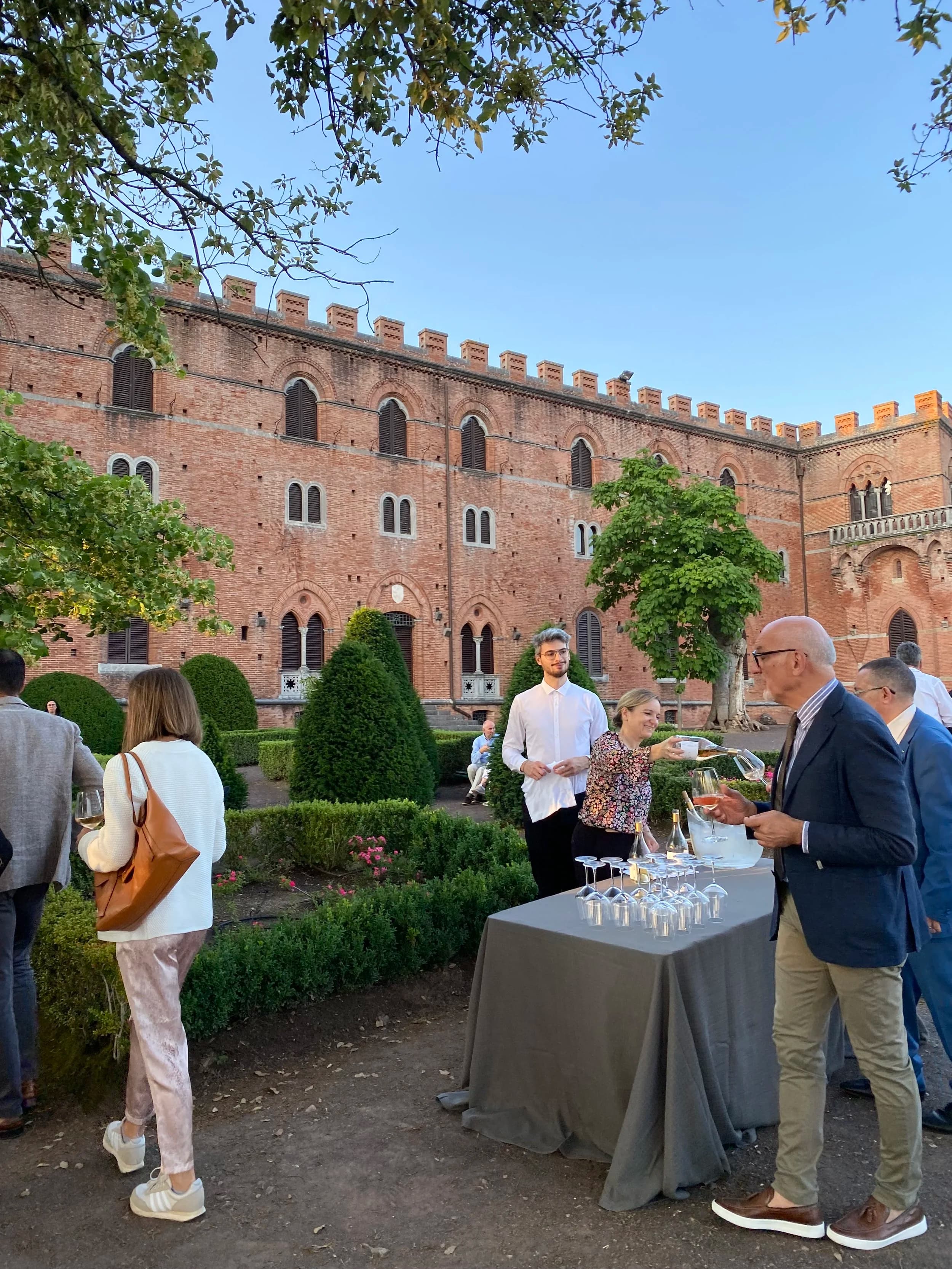
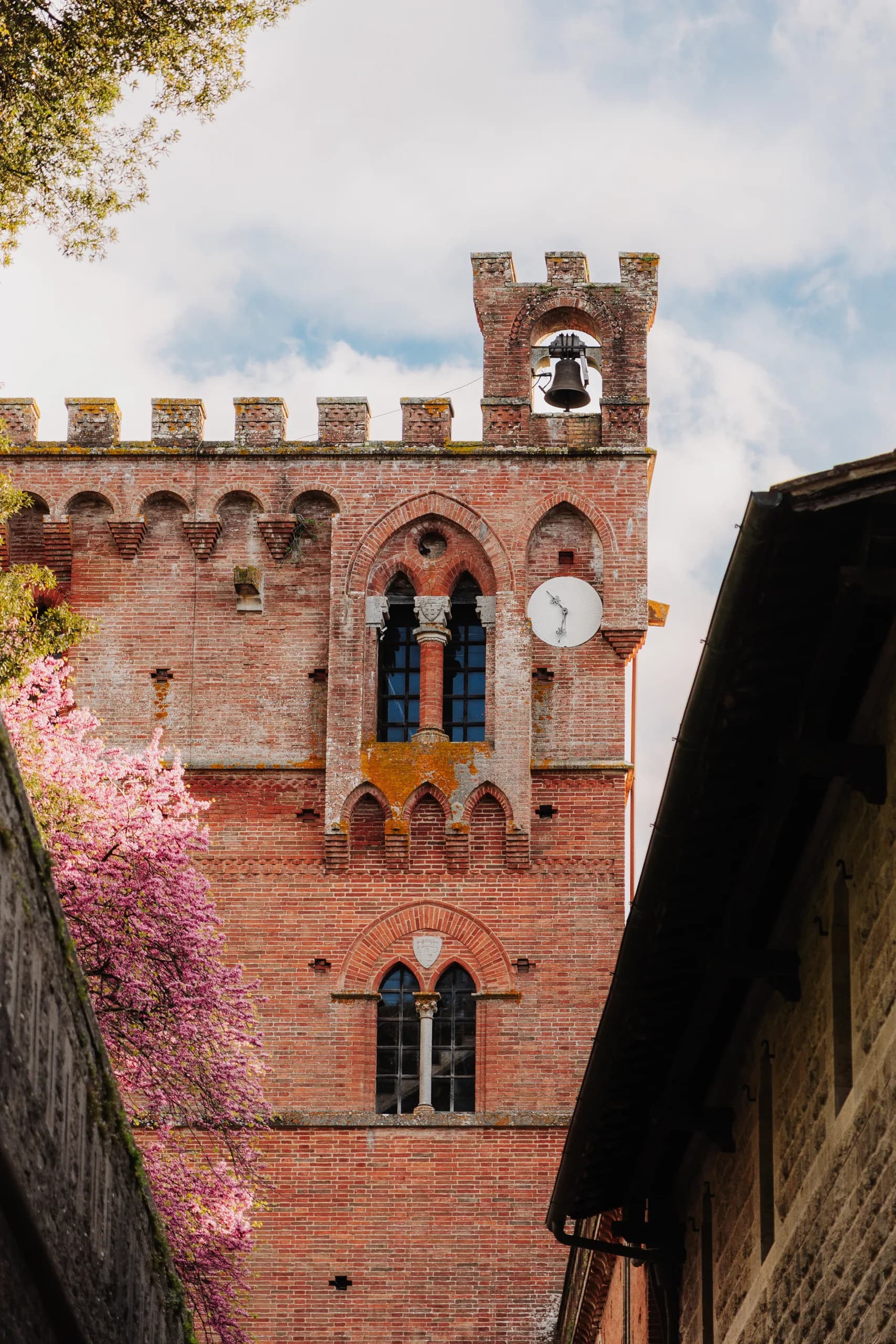
Chianti Classico is a DOCG in its own right, recognized by the black rooster on its bottles, and it is different from the wider Chianti appellation. Its history runs through Castello di Brolio, near Gaiole, the seat of the Ricasoli family. In an 1872 letter Baron Bettino Ricasoli described an early formula for Chianti wine, based mostly on Sangiovese.
Most estates receive visitors by appointment, so plan your tastings rather than hoping to walk in. Two or three visits in a day is plenty, and the same rule about drinking and driving applies here as everywhere in Italy.
The Val d'Orcia, Montalcino and Montepulciano
South of Siena the landscape opens into the Tuscany of the photographs: bare ridges, cypress lines, isolated farmhouses. The Val d'Orcia was inscribed by UNESCO in 2004 as a cultural landscape shaped by Renaissance ideas of how good countryside should look. It is best seen slowly, with stops in a few small towns rather than many.
A good day here follows one road and visits two or three places, with a long lunch in between. The light is softest early and late in the day, which is when the cypress lines and the ridges look most like the pictures, and when the towns are quietest.
Pienza and San Quirico d'Orcia
Pope Pius II had his birthplace rebuilt as an ideal Renaissance town in the fifteenth century, and Pienza's historic center has been a UNESCO site since 1996. Walk the lane along its southern walls for one of the widest views over the valley. San Quirico d'Orcia, a few minutes away, has a Romanesque collegiate church and quiet formal gardens.
Bagno Vignoni
In Bagno Vignoni the main square, Piazza delle Sorgenti, is a large stone pool of thermal water. It is there to be looked at, not bathed in; on cool days the steam rising from it is the reason to come. Bathing is possible in the thermal facilities around the village.
Montalcino and Montepulciano
Two hill towns, two great Sangiovese wines. Brunello di Montalcino became a DOC in 1966 and a DOCG in 1980; south of the town, the Romanesque abbey of Sant'Antimo, built in the twelfth century, sits alone in an olive-covered valley. Montepulciano, on the eastern edge of the valley, makes Vino Nobile and has cellars dug beneath its palaces. Each deserves its own day.

The coast, Lucca and the islands
Western Tuscany is a different trip, and it is closer to Pisa than to Florence. Lucca is a calm, flat city enclosed by Renaissance walls; the path on top of them runs for about four kilometers, free of cars, and you can walk or cycle the whole circuit. Pisa's Piazza dei Miracoli, with the cathedral, baptistery and leaning tower, is a short train ride away.
Lucca is also the birthplace of the composer Giacomo Puccini, and its streets of churches, towers and small squares are best seen on foot, without a list. If you are flying into Pisa, Lucca makes an easy first or last night, and it is a more relaxed base than Florence for exploring the west of the region.
Further south, the Bolgheri wine area is known for its Viale dei Cipressi, an avenue of about five kilometers lined with cypresses between the oratory of San Guido and the village, made famous by the poet Giosuè Carducci. Offshore, the Tuscan Archipelago National Park protects seven main islands, among them Elba, Giglio and Capraia. Some, like Montecristo, can be visited only with a permit, so check the park's rules before planning a crossing.
Drive the roads yourself
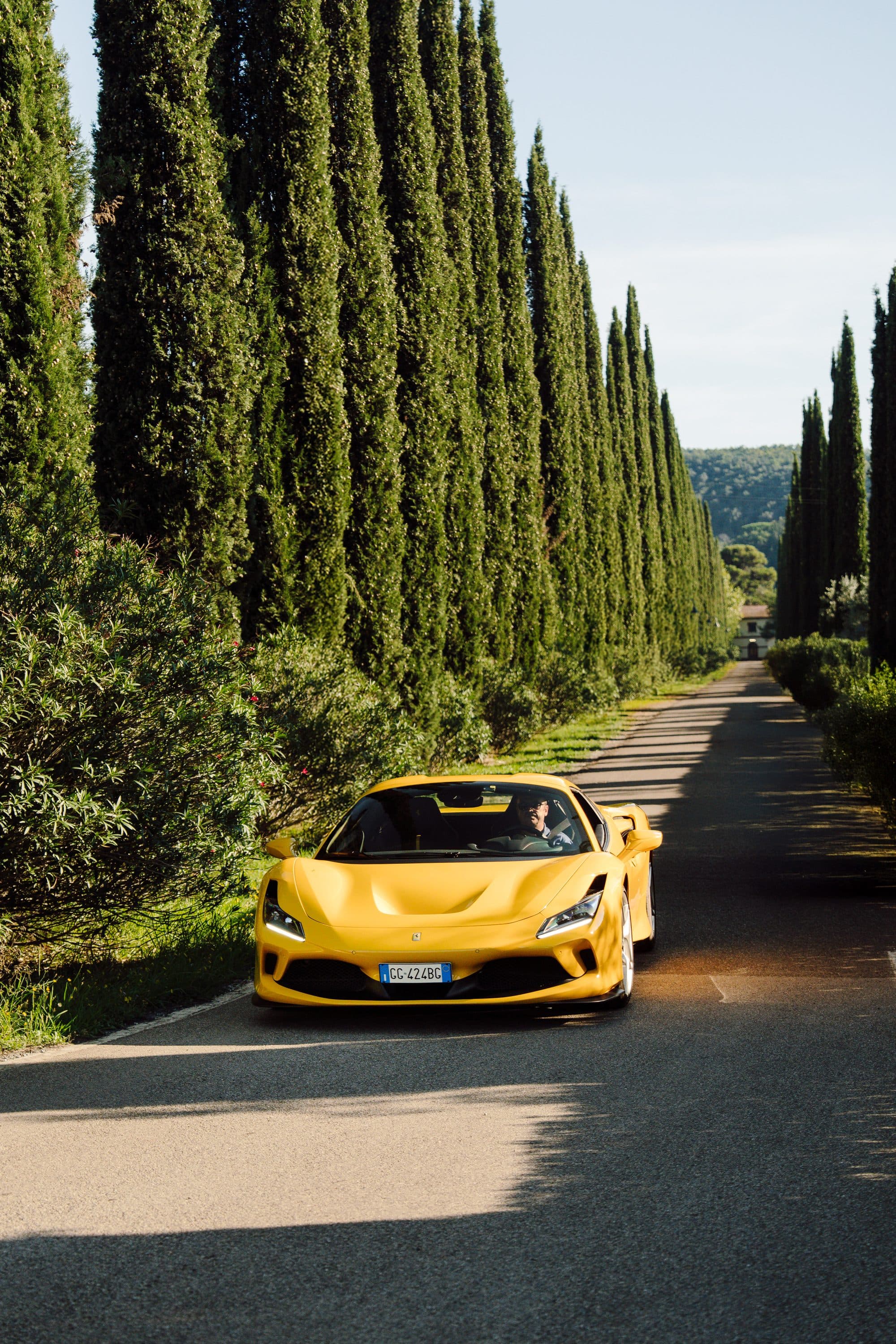
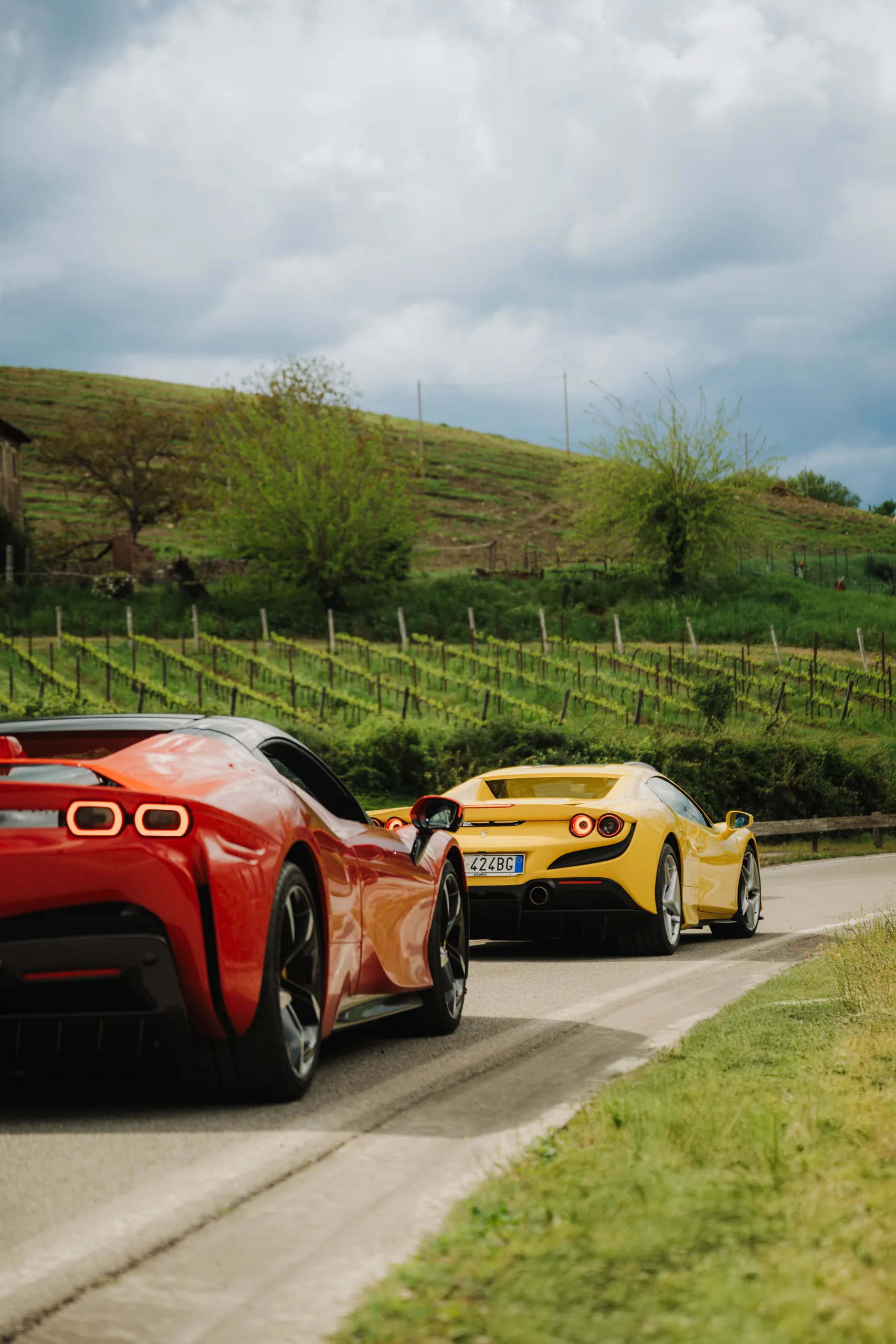
For many visitors the most memorable thing to do in Tuscany is simply to drive: the Chiantigiana through the vineyards, the road from San Quirico to Pienza across the Val d'Orcia, the climb to Montalcino. These are ordinary regional roads, narrow and winding, and they reward a car that is pleasant to drive and a day without a schedule.
Rocca d'Italia organizes private days on these roads, at the wheel of a supercar or a classic car, from Siena or from Florence, and wine days with a private chauffeur for those who would rather taste than drive. If you plan to drive yourself and hold a license from outside the EU, carry an International Driving Permit with it.
A simple way to put it together
For a first week: two or three nights in Florence, then four or five in the countryside near Siena, with one day in Chianti, one in the Val d'Orcia, one for Siena itself and one for San Gimignano and Monteriggioni. Leave the coast and the islands for a second trip, or swap them in if you are flying into Pisa.
If you would like help shaping the days, Rocca d'Italia replies with a private proposal and an estimate within about 48 hours. Either way, choose fewer places and stay longer in each: that is the part of Tuscany that cannot be rushed.
Questions about things to do in Tuscany
What is the number one thing to do in Tuscany?
For a first trip, Florence is the essential stop: its historic center has been a UNESCO World Heritage Site since 1982 and holds the core of Renaissance art. For the countryside, a slow day in the Val d'Orcia, south of Siena, is the experience most visitors remember.
How many days do you need in Tuscany?
A week is enough for Florence and one or two countryside areas without rushing. With four or five days, choose Florence plus either Chianti or the Siena and Val d'Orcia area, not both.
Do you need a car in Tuscany?
Not for the cities: trains link Florence, Pisa, Lucca and Siena. For Chianti, the Val d'Orcia and the wine estates, a car or a private driver makes the day far easier, because public transport to the villages is limited.
What is the best area to stay in Tuscany?
Florence for the city and the north, including Chianti and Lucca; Siena or the countryside south of it for the medieval towns, the Val d'Orcia, Montalcino and Montepulciano. Many travelers split the week between the two.
What are free things to do in Tuscany?
Walking Piazza del Campo in Siena, the walls of Lucca and the lanes of Pienza costs nothing, and driving the Chiantigiana or the roads of the Val d'Orcia is one of the best experiences in the region. Bagno Vignoni's thermal square is also open to look at.
Can you visit Tuscany as a day trip from Rome?
You can, but it is a long day, and the parts of Tuscany closest to Rome are in the south of the region, such as the Val d'Orcia and Montepulciano. Tuscany is better experienced with at least a few nights based in Florence or near Siena.