The best things to do in Siena fit inside a small, steep medieval city: stand in Piazza del Campo, see the frescoes of the Palazzo Pubblico or climb the Torre del Mangia, spend a long visit in the cathedral complex, and then walk the streets of the contrade, the seventeen districts that still run the city's life and its horse race, the Palio. Give the center at least one full day, ideally two, and keep another day for the countryside that starts right outside the walls.
Siena's historic center has been a UNESCO World Heritage Site since 1995, as one of the most complete medieval cities in Europe. It is compact and almost entirely closed to traffic, so everything below is on foot. The order matters more than the list: the big sights are busiest in the middle of the day, and the city is at its best early and late.
Piazza del Campo and the Palazzo Pubblico
Start in Piazza del Campo, ideally before the day visitors arrive. The square slopes down like an open shell toward the Palazzo Pubblico, the town hall, and its brick paving is divided by lines of white stone into nine sections, traditionally linked to the Government of the Nine that ruled Siena in its medieval golden age. It is free, it is open at all times, and sitting on the warm brick is exactly what the Sienese do.
At the top of the square stands the Fonte Gaia. The marble fountain you see is a copy; the original panels by Jacopo della Quercia, finished in 1419, are kept indoors at Santa Maria della Scala, near the cathedral.
Book the Torre del Mangia and the civic museum ahead in high season, and check the official site of the Comune di Siena for opening times, which change with the seasons. The cafés around the edge of the square are pleasant, but you pay for the view; sitting on the paving costs nothing and is perfectly normal. Wear shoes with grip: Siena's streets are steep, and the stone can be slippery after rain.
Museo Civico
Inside the Palazzo Pubblico, the civic museum holds two of the great paintings of medieval Italy. In the Sala della Pace, Ambrogio Lorenzetti's frescoes of Good and Bad Government, painted in the late 1330s, show a well-run city and its countryside next to a ruined one. In the Sala del Mappamondo, Simone Martini's Maestà covers an entire wall. Allow at least an hour.
Torre del Mangia
The palace tower, built in the fourteenth century, rises close to 90 meters above the square. The climb is long and narrow, with no elevator, a limited number of people at a time and closures in bad weather. From the top you see the whole city and the hills beyond. If you only have one morning, choose either the tower or the museum: doing both takes most of it.
The cathedral complex: give it half a day
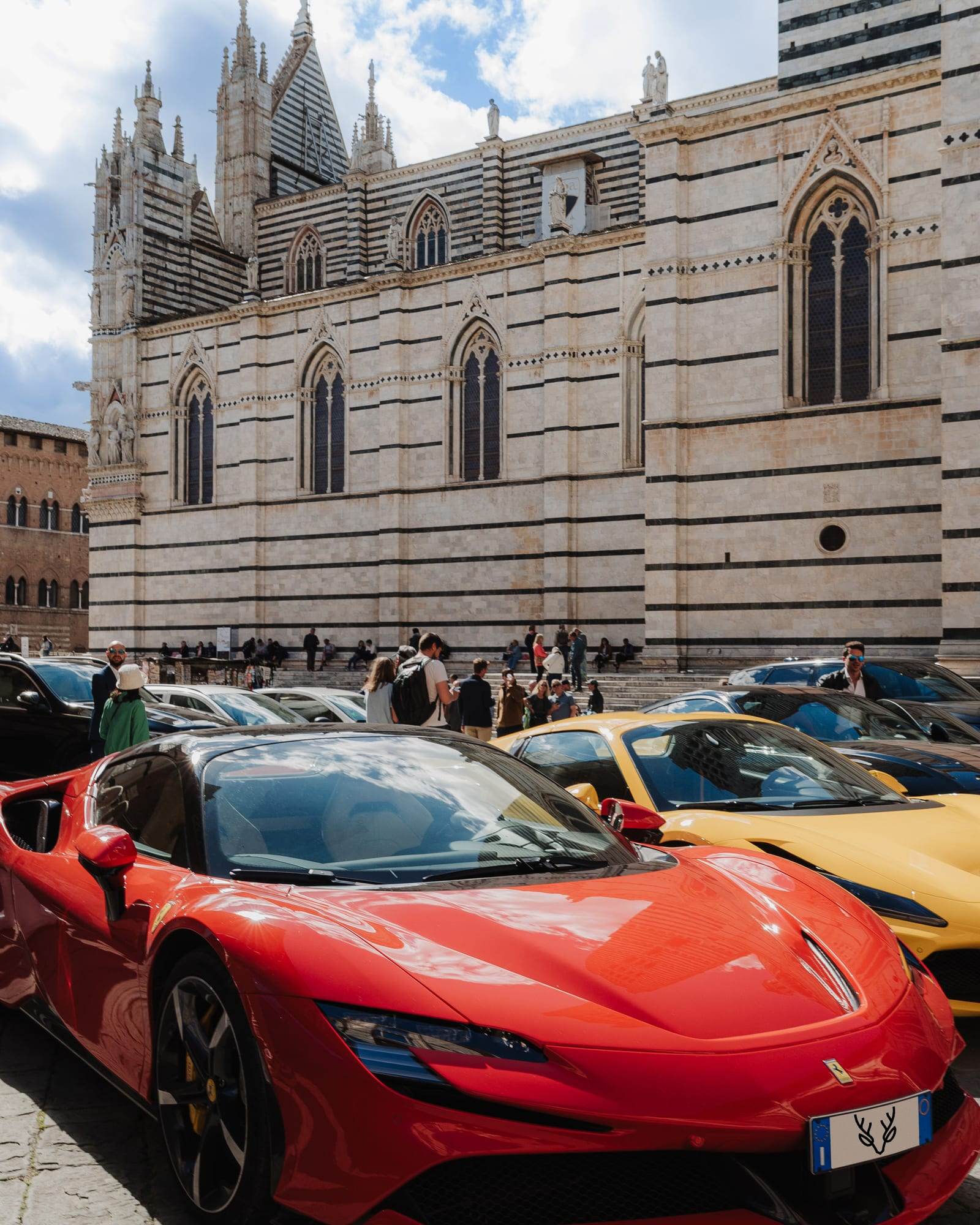
Walk a few minutes uphill to Piazza del Duomo. The cathedral, striped in white and dark marble inside and out, is the center of a group of sites run by the Opera della Metropolitana, which sells a combined ticket, the Opa Si Pass. Book it on the official site before you travel and check there for opening times on the day you visit. Cover shoulders and knees, and travel light.
Inside, look down first. The inlaid marble floor, designed over several centuries by many artists, is fully uncovered only for set periods each year; the rest of the time much of it is protected. Then see Nicola Pisano's octagonal pulpit, carved between 1265 and 1268, and the Piccolomini Library, a room of bright frescoes by Pinturicchio telling the life of Pope Pius II.
Outside the church, the baptistery below the apse has a font with bronze panels by Jacopo della Quercia, Lorenzo Ghiberti and Donatello. The cathedral museum keeps Duccio's Maestà, the great altarpiece that once stood on the high altar, and leads to the top of the Facciatone, the wall of a much larger cathedral begun in the fourteenth century and never finished. The view from its narrow walkway is one of the best in Siena. Plan two to three hours for the whole complex.
Two smaller visits are easy to overlook. The crypt, rediscovered in modern times beneath the cathedral, keeps thirteenth-century wall paintings with unusually fresh colors. And on certain dates a separate guided route, the Porta del Cielo or Gate of Heaven, takes small groups along walkways under the roof of the cathedral. It is not always part of the standard pass, so check the official site if it interests you.
A sensible order: the cathedral and the library while you are fresh, then the crypt and the baptistery, then the museum, ending on the Facciatone with the view. If you are short of time, keep the cathedral and the library; they take about an hour.

More things to do in Siena: museums, saints and walls
Most visitors stop at the Campo and the cathedral. If you have a second day, or simply prefer quieter rooms, these four places show other sides of the city.
Santa Maria della Scala
Opposite the cathedral, one of the oldest hospitals in Europe. For centuries it sheltered pilgrims on the Via Francigena, the poor and abandoned children, and its great hall is still covered with fifteenth-century frescoes of hospital life. Today it is a museum complex with the original Fonte Gaia panels and an archaeological museum.
Pinacoteca Nazionale
Siena's picture gallery has occupied two Gothic palaces, Palazzo Buonsignori and Palazzo Brigidi, since 1932. It is the place to understand the Sienese school, from Duccio and Simone Martini to the painters of the fifteenth century. Some rooms are occasionally closed, so check the official site first.
San Domenico and Saint Catherine
Catherine of Siena, one of the patron saints of Italy, is everywhere in her city. The large brick basilica of San Domenico keeps her head in a reliquary in a frescoed chapel, and her family home in the Fontebranda district is now a sanctuary of loggias and oratories.
The Fortezza Medicea
The fortress was built for Cosimo I de' Medici between 1561 and 1563, after Florence took Siena. Its walls are now a public park, with a tree-lined walk along the top and wide views. It is about a quarter of an hour on foot from the Campo, and a good place for a late-afternoon walk.
What to do in Siena between the sights
The contrade are the reason Siena does not feel like a museum. Each of the seventeen districts has its name, colors, animal emblem, church, small fountain and fierce loyalties. Leave the main streets, the Banchi di Sopra and Banchi di Sotto, and look for the flags and the plaques that mark where one contrada ends and the next begins. The lanes running down toward the walls are quieter and greener.
Walk down to Fontebranda, a medieval fountain under brick arches near the city gate of the same name. It is still fed by the Bottini, the network of underground aqueducts that brought water into Siena in the Middle Ages. Sections of the Bottini can be visited with a guide by reservation only, which is worth arranging well ahead if tunnels and engineering interest you.
Then eat as the Sienese do. Look for pici, the thick hand-rolled pasta of southern Tuscany, and dishes made with Cinta Senese, the local breed of pig. Siena is also a city of sweets: panforte, dense with nuts, candied fruit and spices, and ricciarelli, soft almond biscuits, are sold in bakeries all over the center and travel well in a suitcase.
Finally, come back to the Campo at the end of the day, when the low light warms the brick of the palace and families sit on the slope of the square. If you stay overnight, return after dinner: the day visitors have gone, and you see why the city still treats the square as its living room.

The Palio: when to come, and when not to
Twice a year, on July 2 and August 16, ten of the seventeen contrade race horses ridden bareback around Piazza del Campo. The race lasts a few minutes, but the days before it are filled with trial races, processions and contrada dinners, and the whole city is involved.
Watching from the center of the square is free, but it means hours packed into the summer sun with no way out until the race is over. Seats in the stands and on balconies must be booked well in advance. If the Palio is not the reason for your trip, avoid those dates: the square is closed off and hotels fill up. On any other day you can still see the contrade, their flags and their museums.
Beyond the walls: a private tour from Siena
Siena is the most practical base for southern Tuscany. Monteriggioni, the walled village on its hill, is a short drive north. The Val d'Orcia, a UNESCO landscape of cypress roads, Pienza and San Quirico d'Orcia, starts about an hour to the south. Montalcino, home of Brunello, and Montepulciano, home of Vino Nobile, are each about an hour away, and Chianti Classico begins just north of the city.
Buses connect some of these towns, but rarely in one day, and wine tastings at estates are by appointment and need a driver who is not drinking. Do not drive into Siena's historic center either: it is a limited traffic zone and cars without a permit are fined. Park outside the walls if you rent a car.
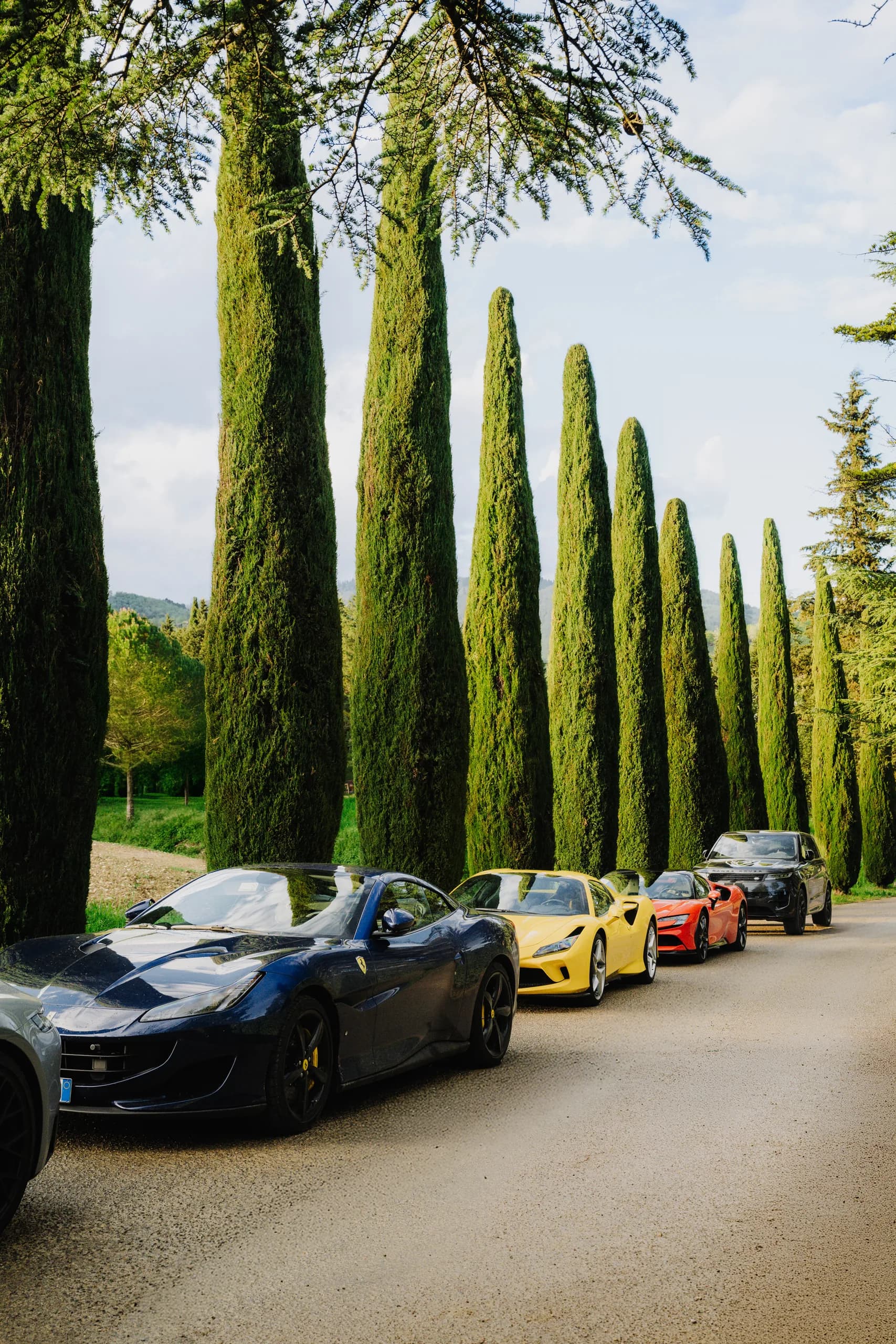
Decide first what kind of day you want. If the drive itself is the point, the roads south of Siena, through the Crete Senesi and into the Val d'Orcia, are some of the most rewarding in Tuscany, and being at the wheel is the experience. If wine is the point, someone else should drive: the legal limit for drivers in Italy is lower than many visitors expect, and estates expect you to taste properly.
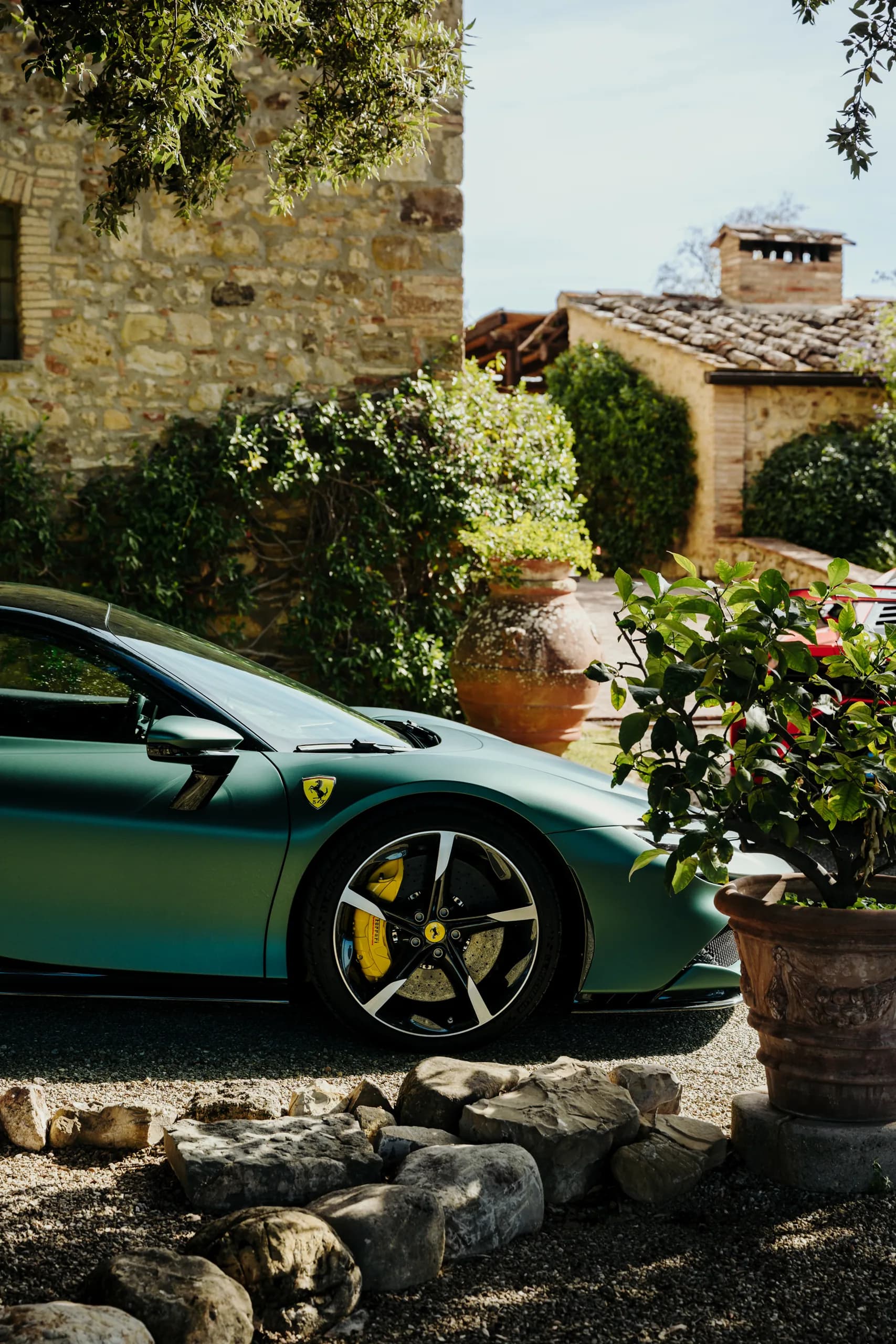
This is where a Siena private tour makes sense. Rocca d'Italia runs several private days that start in Siena: Medieval Tuscany, in a classic car you drive through Monteriggioni, the Val d'Elsa and San Gimignano; The Roads of Val d'Orcia, at the wheel of a supercar; and chauffeured wine days to Brunello at Casanova di Neri or to Vino Nobile at Boscarelli. Each runs about seven hours, for your group only.
How many days in Siena?
One day covers the Campo, the Palazzo Pubblico, the cathedral and a walk through the contrade. Two days add Santa Maria della Scala, the Pinacoteca and the evenings, which are the best part. A third day belongs to the countryside. Tell us your dates and where you are staying, and Rocca d'Italia will send a proposal with the estimate within about 48 hours.
Questions about things to do in Siena
What is Siena best known for?
Piazza del Campo, the shell-shaped main square; the striped marble cathedral; the Palio horse race run on July 2 and August 16; and its medieval center, a UNESCO World Heritage Site since 1995. It is also the gateway to Chianti and the Val d'Orcia.
Is one day in Siena enough?
One day is enough for the main sights: Piazza del Campo, the Palazzo Pubblico or the Torre del Mangia, and the cathedral complex. Two days let you add the museums and see the city in the evening, when it is calmest.
What is the Opa Si Pass in Siena?
It is the combined ticket for the cathedral complex, sold by the Opera della Metropolitana. It covers the cathedral, the Piccolomini Library, the baptistery, the crypt, the cathedral museum and the panorama from the Facciatone.
Can you climb the Torre del Mangia?
Yes. The climb is long and narrow, with no elevator, and the number of people allowed up at one time is limited. It closes in bad weather, so book ahead in high season and check the official site for opening times.
Can you drive into Siena?
Not into the historic center, which is a limited traffic zone where cars without a permit are fined. Park in one of the car parks outside the walls and walk in.
Is there a private tour from Siena into the countryside?
Yes. Several private days start in Siena: a classic car day to Monteriggioni and San Gimignano, a supercar day in the Val d'Orcia, and chauffeured wine days to Montalcino or Montepulciano. Each runs about seven hours, for your group only.