The best things to do in Pienza fit in a few hours: stand in Piazza Pio II, the Renaissance square at the heart of town; step into the cathedral; visit Palazzo Piccolomini and its hanging garden; then walk the lane along the walls for the view over the Val d'Orcia. Add a short walk down to the old parish church of Corsignano and you have seen the essentials.
Pienza is tiny, and that is its point. Its historic center has been a UNESCO World Heritage Site since 1996, recognized as an early application of Renaissance ideas about the planned town. Knowing why it was built makes everything you see make sense.
A pope rebuilds his birthplace
Before it was Pienza, the village was called Corsignano. Enea Silvio Piccolomini was born there, and when he was elected pope in 1458, taking the name Pius II, he decided to turn his birthplace into an ideal town. The architect Bernardo Rossellino carried out the work, and the core of the new center went up in only a few years, around 1459 to 1462. The town took its new name from the pope.
The result is unusual: a whole Renaissance square designed as one composition, inside a medieval hill village. The pope did not live to see the project grow further, which is partly why Pienza stayed so small and so intact.
Things to do in Pienza: Piazza Pio II and its buildings
Start in the square. It is small and slightly trapezoidal, and every building around it was part of the plan. Stand at the center and look around before going into anything.
The cathedral
The Cathedral of Santa Maria Assunta closes one side of the square, with a Renaissance facade and a bell tower rising above the roofs. Pius II had traveled widely north of the Alps, and the church mixes its Renaissance shell with Gothic ideas he brought back. Behind it, the ground drops away, which you will notice from the walls.
Palazzo Piccolomini
The pope's own residence, Rossellino's best-known work, stands to one side of the cathedral. Its museum shows the papal apartments, but the highlight is the hanging garden at the back, open on one side to the valley: from there you look out across the Val d'Orcia toward Monte Amiata.
Palazzo Borgia and the town hall
Opposite Palazzo Piccolomini stands the palace that Pius II gave to Cardinal Rodrigo Borgia, the future Pope Alexander VI. Facing the cathedral is the Palazzo Comunale, the town hall, completing the square.
The walk along the walls
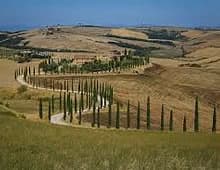
Pienza's best free pleasure is the lane that runs along the southern walls, at the foot of the cathedral. The houses are on one side, the open valley on the other, and the view goes on for miles: rolling fields, cypresses, isolated farmhouses and, on a clear day, the mass of Monte Amiata.
The lane is short, flat and easy, and it is the place to come back to at the end of the afternoon, when the light gets low and the colors of the Val d'Orcia deepen. The landscape you are looking at is itself a UNESCO World Heritage Site, inscribed in 2004.
Inside the walls, take time for the side streets too. They are narrow and quiet once you leave the main street, with small shops selling the local pecorino. Pienza is well known for its cheese, and on the first Sunday of September the town holds a fair dedicated to it.
Just outside town: Corsignano and the countryside
A short walk downhill from the center leads to the Pieve di Corsignano, the old parish church of the village that Pienza replaced, with roots that go back many centuries and an unusual cylindrical bell tower. It is plain and quiet after the polish of the piazza, and it shows you what was here before the pope.
If you have more time, the countryside around Pienza is good walking country. A longer walk or a short drive reaches Monticchiello, a small fortified village with its own walls and a fine view back toward Pienza.
How long to spend in Pienza
Two to three hours covers the square, the cathedral, Palazzo Piccolomini and the walls without hurry. Half a day lets you add the Pieve di Corsignano and a long lunch. Staying overnight is worth it if you want the town after the day visitors leave, and the walls at sunset.
Pienza is about an hour's drive from Siena and around twenty minutes from Montepulciano, with San Quirico d'Orcia and Bagno Vignoni close by. The historic center is pedestrian, so park outside the walls and walk in. Check the official sites for museum opening times before you go, as they change with the season.
Pienza as part of a day in the Val d'Orcia
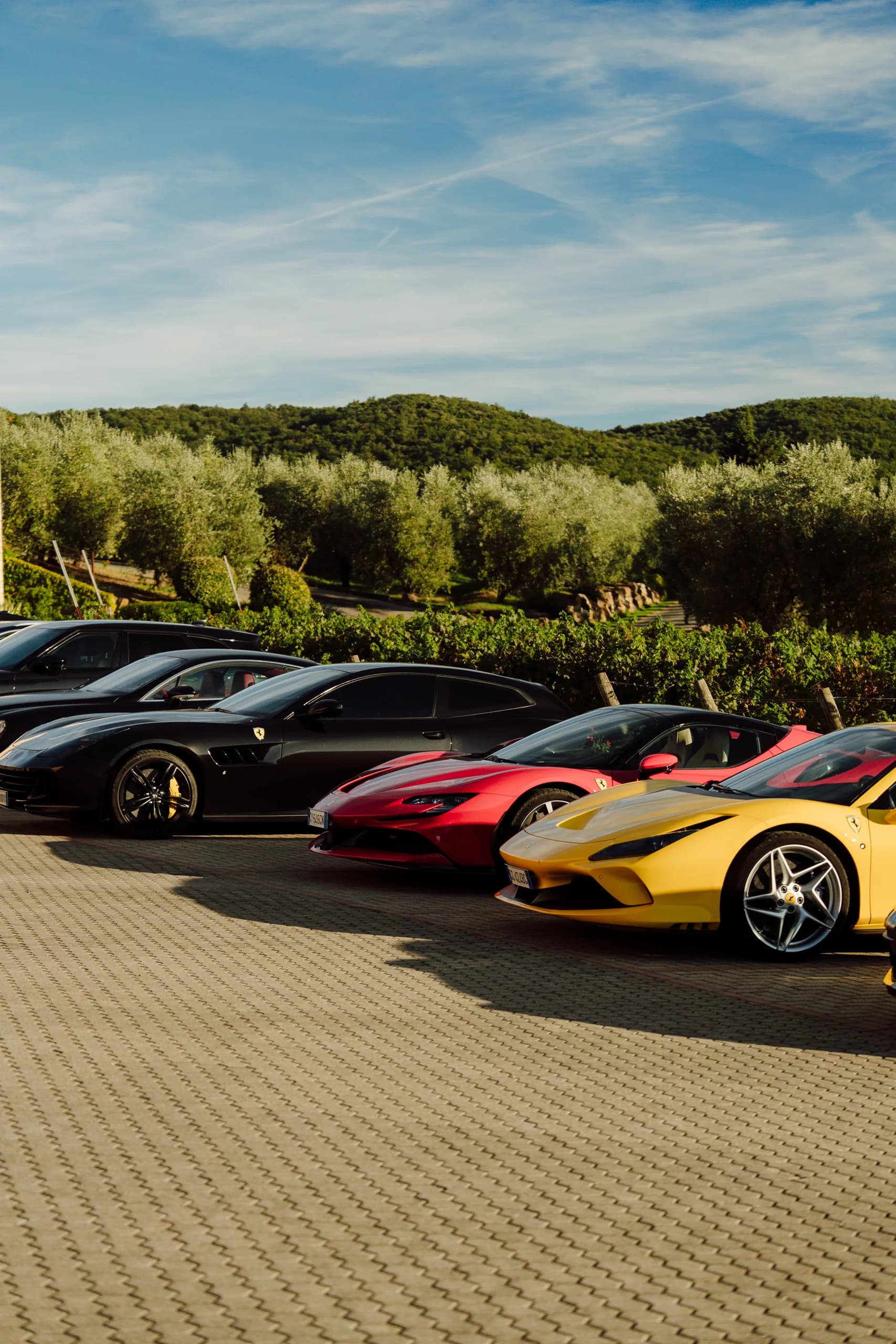
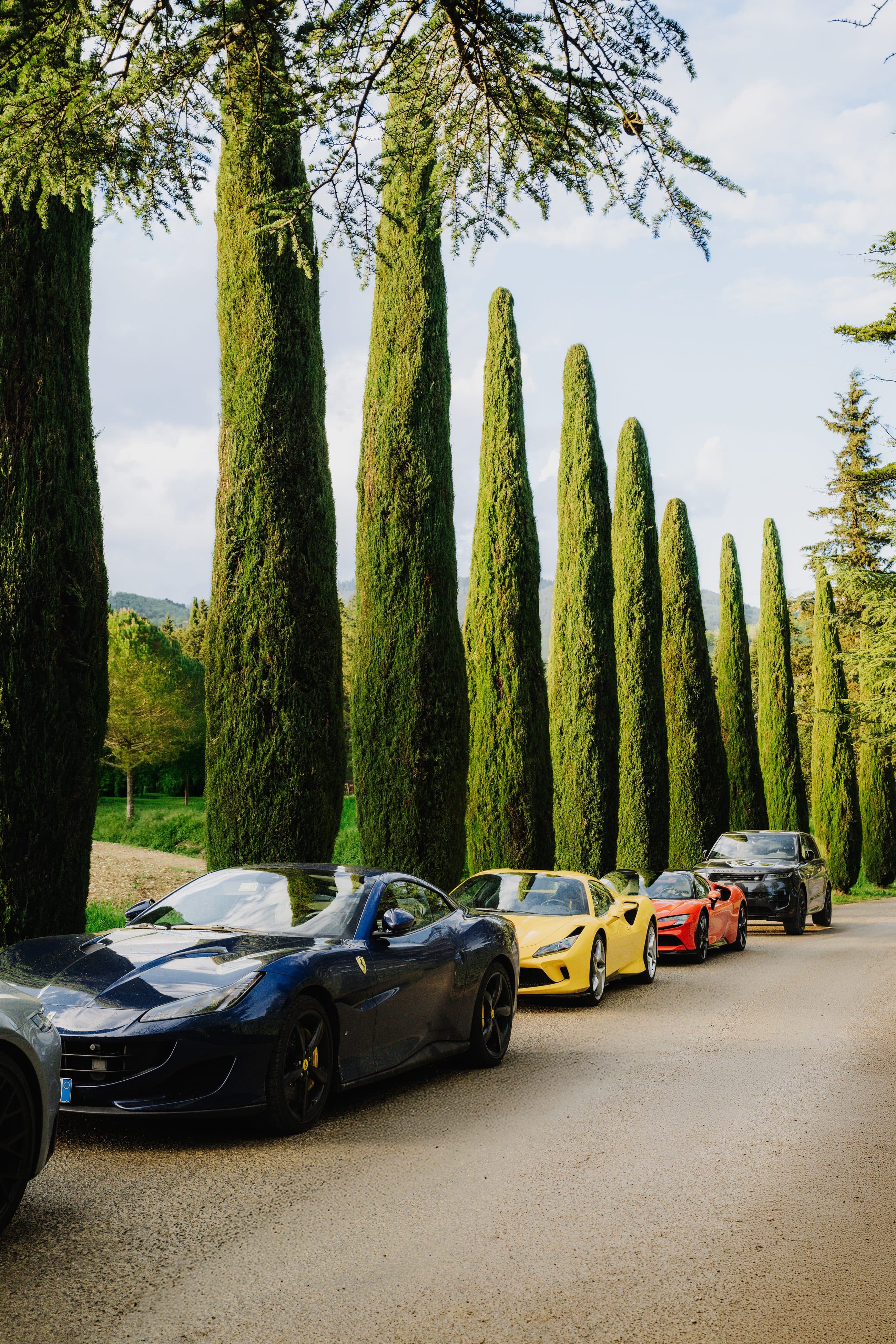
Pienza works best as one stop in a wider day: San Quirico d'Orcia, Pienza for the square and the walls, and Bagno Vignoni, where the village square is a pool of thermal water. Rocca d'Italia runs that loop from Siena as a private driving day, in a supercar or a classic car, with you at the wheel on the roads of the valley.
Questions about things to do in Pienza
Is Pienza worth visiting?
Yes. It is a small but remarkable Renaissance town, planned by Pope Pius II and listed by UNESCO in 1996, with one of the best views over the Val d'Orcia from its walls.
How much time do you need in Pienza?
Two to three hours is enough for Piazza Pio II, the cathedral, Palazzo Piccolomini and the walk along the walls. Allow half a day if you want to add the Pieve di Corsignano and lunch.
What is Pienza famous for?
For its Renaissance center, built for Pope Pius II by Bernardo Rossellino, for its views over the Val d'Orcia, and for pecorino cheese, celebrated with a fair on the first Sunday of September.
Can you drive into Pienza?
The historic center is pedestrian. Park outside the walls and walk in; the town is small and flat inside, and nothing is far.
When is the best time of day to visit Pienza?
Early morning or late afternoon. The square is calmer before the day visitors arrive, and the walk along the walls is at its best in the low evening light, when the colors of the Val d'Orcia deepen.
Why is Pienza called the ideal city?
Because it was rebuilt as a planned Renaissance town. Pope Pius II, born in the village of Corsignano, had the architect Bernardo Rossellino design a new center around Piazza Pio II, and the town was renamed after him.
What is near Pienza?
Montepulciano is around twenty minutes away, and San Quirico d'Orcia, Bagno Vignoni and Monticchiello are close by. Montalcino is further west across the valley.