The best things to do in Montepulciano are simple: walk the main street up to Piazza Grande, look out from the edges of the ridge, go down into one of the old cellars beneath the palaces, and finish outside the walls at the church of San Biagio. Half a day covers the essentials; a full day lets you add a nearby village or an estate visit.
Montepulciano sits on a narrow ridge between the Val d'Orcia and the Val di Chiana, about an hour by car south-east of Siena. It is famous for its wine, Vino Nobile, but the town itself is the reason most people stay longer than planned. This guide treats wine as one part of the visit, not the whole of it.
The climb: from the lower town to Piazza Grande
Montepulciano is a town you walk uphill. The main street runs along the ridge from the lower gate toward the highest point, lined with palaces, churches and shops, and it climbs the whole way. Take it slowly. The point is not to reach the top quickly but to notice what changes as you go: the side lanes that drop away toward the valleys, the courtyards glimpsed through open doors, the views that appear between buildings.
The streets are steep and paved in stone, and some are worn smooth. Comfortable shoes with grip are not optional, and anyone who struggles with slopes should plan to be dropped higher up rather than walk from the bottom.
Piazza Grande, the top of the town
Piazza Grande is the civic and religious heart of Montepulciano, at the highest part of the ridge. The cathedral and the town hall face onto it, alongside the palaces of the families who shaped the town. It is the place to stop, sit and take in the proportions of a square designed to be looked at.
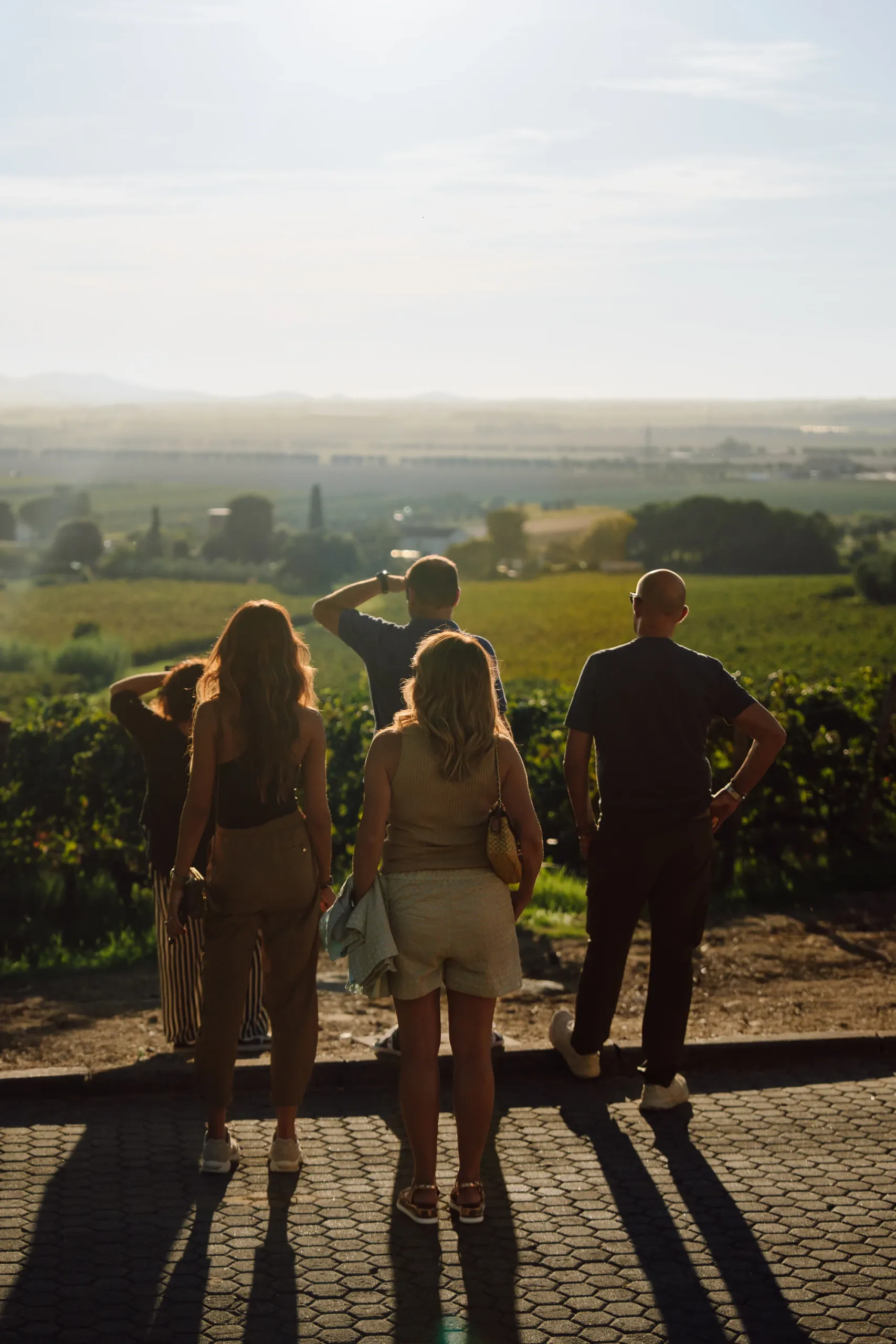
From the edges of the upper town, the views open in both directions: west toward the Val d'Orcia, the landscape inscribed by UNESCO as a World Heritage Site in 2004, and east toward the flatter Val di Chiana. Late afternoon is the best time for it, when the light softens and the day visitors start to leave.
Opening times
Churches, towers and museums in Montepulciano keep their own schedules, which change with the season and with religious services. Check the official sites for opening times before you plan the day around a particular interior.
Underground: the historic cellars
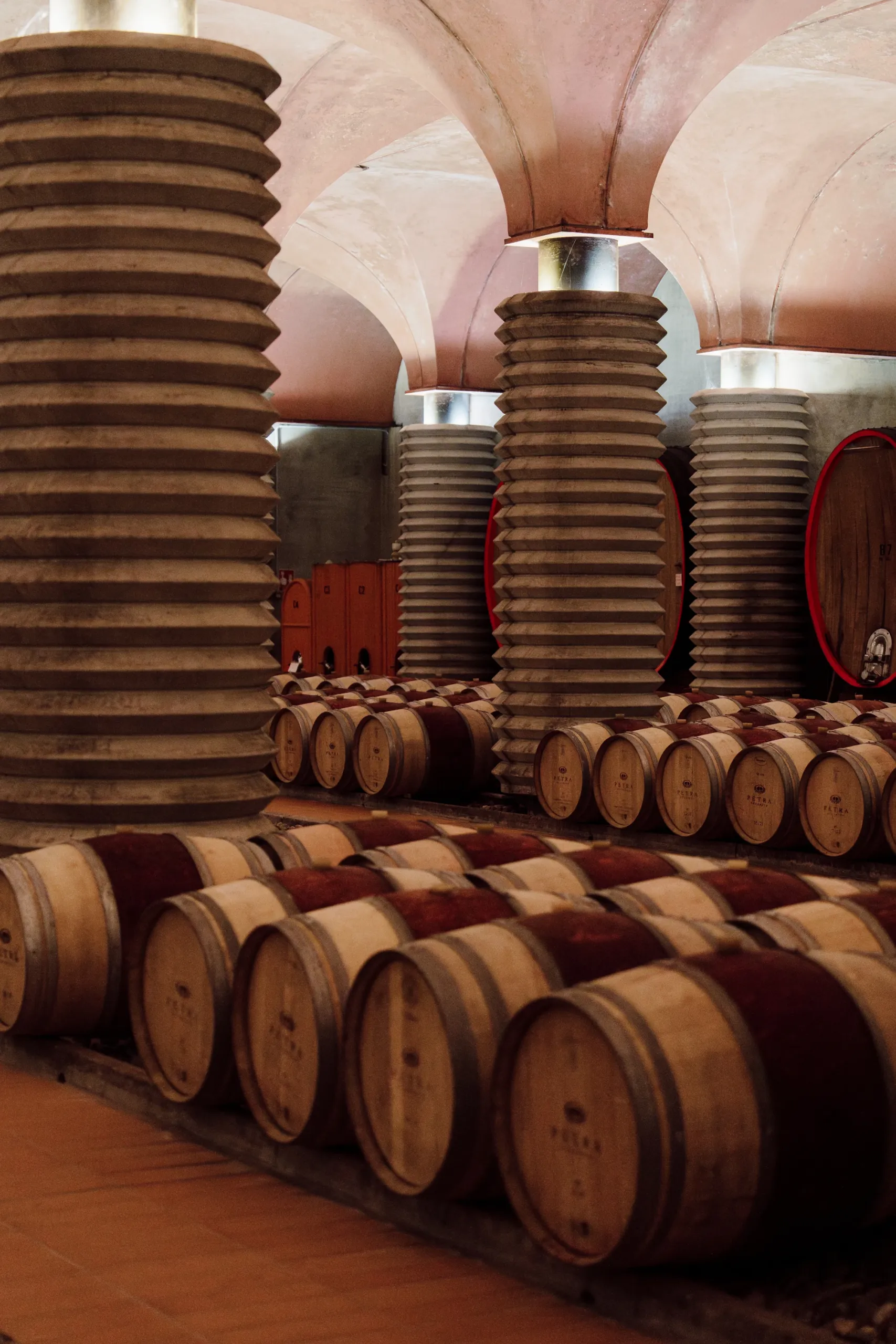
One of the more unusual things to do in Montepulciano is go beneath it. The palaces of the old town were built over cellars cut into the rock, and several are still working cellars where Vino Nobile ages in large oak casks. Some are open to visitors.
Cantina De' Ricci lies beneath Palazzo Ricci, down a staircase into a vaulted underground hall that people often compare to a cathedral. Cantina Contucci, on Piazza Grande itself, belongs to one of the families associated with Vino Nobile since the eighteenth century. Even if you do not drink much wine, the spaces are worth seeing. Book ahead in high season.
If you do taste, a little context helps. Vino Nobile di Montepulciano is a red made mostly from Sangiovese, known locally as Prugnolo Gentile, and it received the DOCG in 1980. It has nothing to do with Montepulciano d'Abruzzo, which is a different grape from a different region; here, Montepulciano is simply the name of the town.
San Biagio, below the walls
Leave time to walk down outside the walls to the church of San Biagio, which stands on its own on a terrace beneath the town. A large church alone on the hillside, with nothing built around it, is one of the images that stays with visitors. It is a short walk down and a steeper one back, so some people arrange to be collected there.
Seen from San Biagio, the town above makes more sense: a line of walls and palaces along the crest of the ridge, which is exactly why the streets inside climb the way they do.
Nearby stops worth adding
Montepulciano pairs naturally with Pienza, around twenty minutes away, the small Renaissance town built around a single planned square. The road between them, the SP146, continues to San Quirico d'Orcia and is one of the more scenic drives in the area, with the open, rolling landscape that people picture when they think of southern Tuscany.
Monticchiello, a small fortified hamlet in the municipality of Pienza, is close to both towns and makes a quiet stop on the way, with views from its walls and none of the crowds. And many wine estates around Montepulciano receive visitors by appointment only, so a visit to one is something to book rather than a spontaneous detour.
Getting there and making a day of it
Montepulciano is about an hour by car from Siena and around an hour and a half to two hours from Florence. The railway station that carries the town's name is down in the valley, not in the old town, so a car or a driver is far more practical. Park outside the walls and walk in.
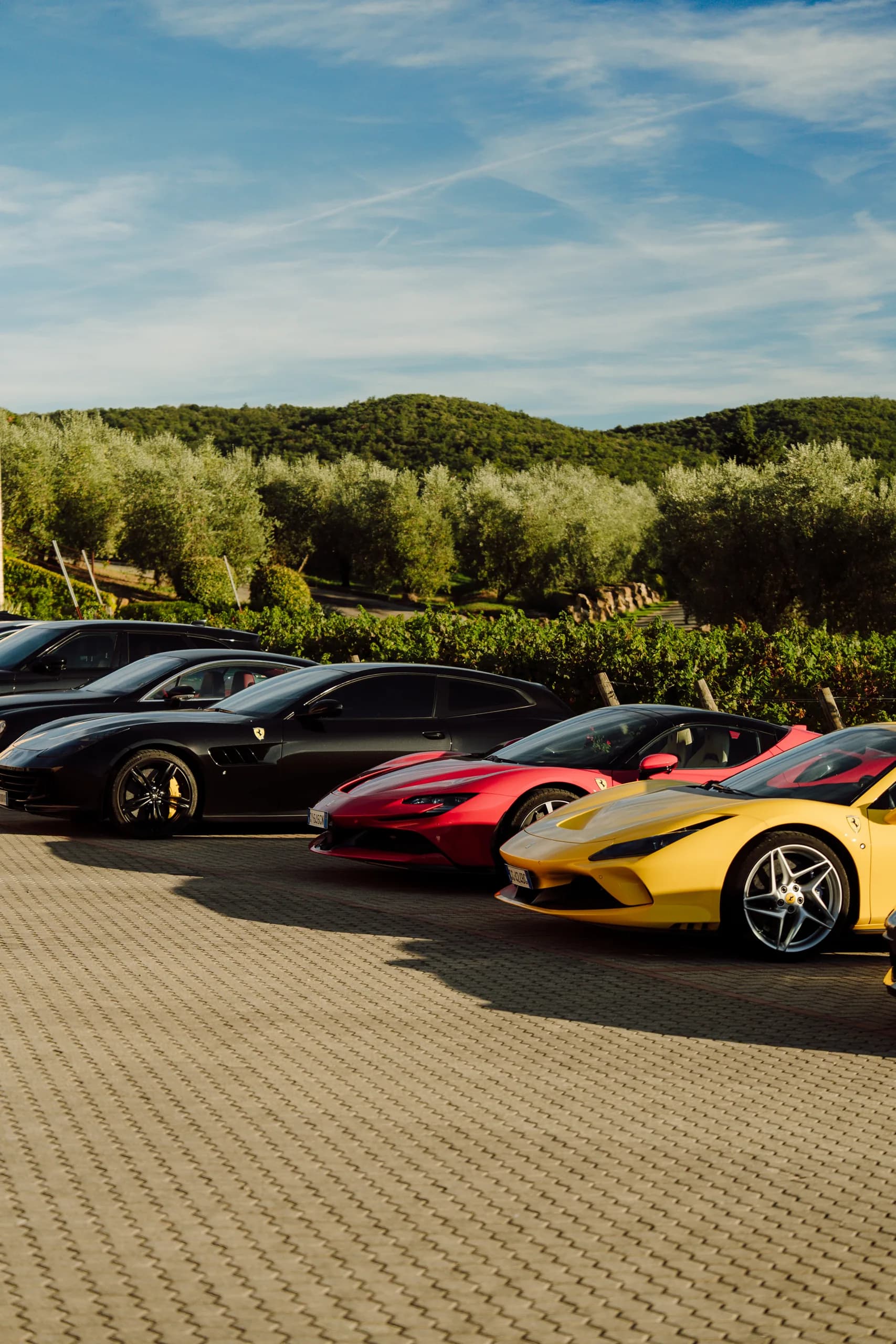
Rocca d'Italia runs two private days in this corner of Tuscany from Siena. Boscarelli & Vino Nobile is a chauffeured wine day with a tasting at the Boscarelli estate and time in Montepulciano itself. The Roads of Val d'Orcia is a driving day, with you at the wheel of a supercar through San Quirico d'Orcia, Pienza and Bagno Vignoni.
Questions about things to do in Montepulciano
Is Montepulciano worth visiting?
Yes. It is one of the most complete Renaissance hill towns in southern Tuscany, with a fine main square, cellars carved under its palaces and wide views over the Val d'Orcia and the Val di Chiana. It also pairs easily with Pienza.
How much time do you need in Montepulciano?
Half a day covers the walk up to Piazza Grande, a cellar visit and the church of San Biagio. A full day lets you add Pienza, Monticchiello or an estate tasting nearby.
Is Montepulciano hard to walk?
It is steep. The main street climbs the length of the ridge on stone paving, so wear shoes with good grip, and consider being dropped near the top if slopes are difficult for anyone in your group.
How far is Montepulciano from Siena and Florence?
About an hour by car from Siena and around an hour and a half to two hours from Florence. The train station is in the valley below town, so a car or driver is the practical choice.
Is Montepulciano wine the same as Montepulciano d'Abruzzo?
No. Vino Nobile di Montepulciano is made mostly from Sangiovese around the Tuscan town of Montepulciano. Montepulciano d'Abruzzo is made from a different grape in a different region.