The best things to do in Lake Como are easy to list: walk the gardens of a lakeside villa, cross the water between Bellagio, Varenna and Menaggio, ride the funicular above Como, walk a stretch of the old shoreline paths, and drive the road along the shore. The hard part is fitting them together. The lake is long, its roads are slow, and the boats set the rhythm of the day, so the useful question is not only what to do in Lake Como but which things belong on the same day.
This guide covers the villas, the villages, the boats, the walks and the roads, arranged by part of the lake, with practical notes on what needs booking and what does not. It is written for a first visit of two to four days. Opening days and seasons change every year, so check each official site before you plan a day around it.
How the lake is laid out
Lake Como is about 46 kilometers long and shaped like an upside-down Y. It is more than 400 meters deep at its deepest point, among the deepest lakes in Europe, and the mountains drop almost straight into the water. That shape explains most of what follows: flat land is scarce, the roads cling to the shore, and the villages sit wherever a stream or a headland gave them room.
The south-western arm ends at the city of Como, the south-eastern arm at Lecco, and the northern lake runs up towards Colico. Where the three meet is the central lake: Bellagio on the tip of its promontory, Varenna on the eastern shore, Menaggio and the Tremezzina on the western one. Most first visits are spent here, and most Lake Como things to do sit within one short boat ride of this triangle.
Como is the other pole. It is the easiest part of the lake to reach from Milan by train and it has a real city to walk, but it is a long boat ride from the central lake. Choose a base in one or the other, and treat the second as a day out.
Things to do in Lake Como: villas and gardens
The villas are the reason many people come, and they are not all visited the same way. Some open house and garden, some only the garden, and one is a hotel. These are the ones worth planning a day around.
Two villas in a day is plenty. Pair them by shore: Villa Carlotta and Balbianello are both in the Tremezzina, a few kilometers apart, while the gardens of Villa Melzi and Villa Monastero face each other across the short ferry crossing between Bellagio and Varenna. Most gardens are at their best in spring and close or open less in winter.
Villa del Balbianello, Lenno
A villa and terraced garden on a wooded point of land at Lenno, on the western shore. The explorer Guido Monzino left it to FAI, the Italian National Trust, when he died in 1988, and his expedition collections are still inside. Film fans know it from Star Wars: Attack of the Clones and Casino Royale. There is no road access for visitors: FAI says you arrive on foot, about a kilometer from Lenno with an uphill stretch, or by taxi boat from the Lido di Lenno. It does not open every day of the week, so check the FAI calendar first.
Villa Carlotta, Tremezzina
A museum and a botanical garden of about eight hectares, facing Bellagio across the water. The garden is best known for its rhododendrons and azaleas, more than a hundred and fifty varieties, which make spring the season to go. Inside, the collection includes sculpture by Antonio Canova and Francesco Hayez's painting of the last farewell of Romeo and Juliet. Allow at least two unhurried hours.
Gardens of Villa Melzi, Bellagio
Built between 1808 and 1810 for Francesco Melzi d'Eril, vice-president of Napoleon's Italian Republic. The villa still belongs to the family and is not open, but the English-style gardens along the water south of Bellagio are, in season. It is an easy walk from the village and a good first stop after the ferry.
Villa Monastero, Varenna
A former convent turned lakefront villa, owned today by the Province of Lecco, with a house museum and a botanical garden that runs for almost two kilometers along the shore. It is a short walk from Varenna's ferry landing and station, which makes it one of the easiest villas to visit without a car.
Villa Serbelloni park and Villa d'Este
The park of Villa Serbelloni, on the promontory above Bellagio, is visited only with a guided tour in small groups, so book ahead with the Bellagio tourist office. Villa d'Este in Cernobbio has been a hotel since 1873: its park is not open to casual visitors, and you see it as a guest of the hotel or its restaurant.

Villages and towns worth walking
Each village has its own pace, and the best plan is two of them in a day with time to sit down, rather than five seen from the landing stage.
Bellagio
Lanes and stepped streets climb steeply from the waterfront between shops and cafés, with Villa Melzi to the south and the Serbelloni park above. It is the most visited village on the lake, so arrive early in the day in summer or stay overnight and enjoy it once the day visitors have gone.
Varenna
A compact village of colored houses, with a walkway along the water and Villa Monastero next to the landing. A footpath climbs to Castello di Vezio, a medieval watchtower above the village with falconry displays and wide views. South of Varenna, the Fiumelatte is a stream of about 250 meters, often called one of the shortest rivers in Italy; Leonardo da Vinci wrote about it in the Codex Atlanticus.
Tremezzina and Isola Comacina
Along the western shore, Tremezzo, Lenno and Ossuccio hold Villa Carlotta, Balbianello and the only island on the lake. Isola Comacina, reached by a short boat ride from Sala Comacina or Ossuccio, keeps the ruins of the basilica of Sant'Eufemia and of a settlement destroyed in the twelfth century. Above Ossuccio, a path of chapels climbs to the Sacro Monte, part of the UNESCO-listed Sacri Monti of Piedmont and Lombardy.
Menaggio
A lakefront town on the western shore and a stop on the car ferry loop, which makes it a practical base: Bellagio and Varenna are a short crossing away, and the road north and south starts at the door.
Como
A walled old town with its cathedral, a long lakefront and, by the water, the Tempio Voltiano, a small museum devoted to Alessandro Volta, the Como-born physicist who invented the battery. The Silk Museum explains the industry that made the city rich. The funicular to Brunate, running since 1894, climbs to the village in about seven minutes for the view over the first basin of the lake. Walk west along the shore to the park of Villa Olmo.
The northern lake
Quieter and wider. On the Olgiasca peninsula near Colico, the Abbazia di Piona is a Romanesque priory with a thirteenth-century cloister, still home to a community of Cistercian monks. Combine it with a slow afternoon on the eastern shore on the way back south.

Getting around on the water
The public boats of Navigazione Laghi are the backbone of a Lake Como visit. There are three kinds: slow boats that call at most villages, faster hydrofoils that carry a supplement, and the car ferry that loops between Bellagio, Varenna, Cadenabbia and Menaggio and carries foot passengers as well as cars. On the central lake, crossings take around fifteen minutes, and the boats are a pleasure in themselves.
From Como to the central lake is a different matter: the hydrofoil takes around an hour, the slow boat much longer. Timetables change with the season and thin out in winter, so look at the Navigazione Laghi timetable for your date rather than relying on last year's. Tickets are sold at the landing stages.
Most villages also have private taxi boats for hire, which are the easiest way to reach Balbianello from the water or to see the shore from a little distance. Agree the route and the time before you leave the dock.
Walks with a view
The lake looks best from slightly above it, and several of the best walks need no special gear, only shoes that can handle cobbles and steps.
The Greenway del Lago di Como runs for about ten kilometers on the western shore, from Colonno to Griante near Cadenabbia, through Sala Comacina, Ossuccio, Lenno, Mezzegra and Tremezzo. It is mostly gentle, with a few climbs, and you can walk any section and come back by bus or boat. On the eastern shore, the Sentiero del Viandante follows an old mule track north from Abbadia Lariana, walked in stages; the section around Varenna is the one most visitors try.
Shorter options: the climb from Varenna to Castello di Vezio, the paths that start from the top of the Brunate funicular above Como, and the lakeside walk from Bellagio to the gardens of Villa Melzi. None of them needs a guide, but carry water and check the boat or bus back before you set off, especially outside the summer season.
Driving the lake road
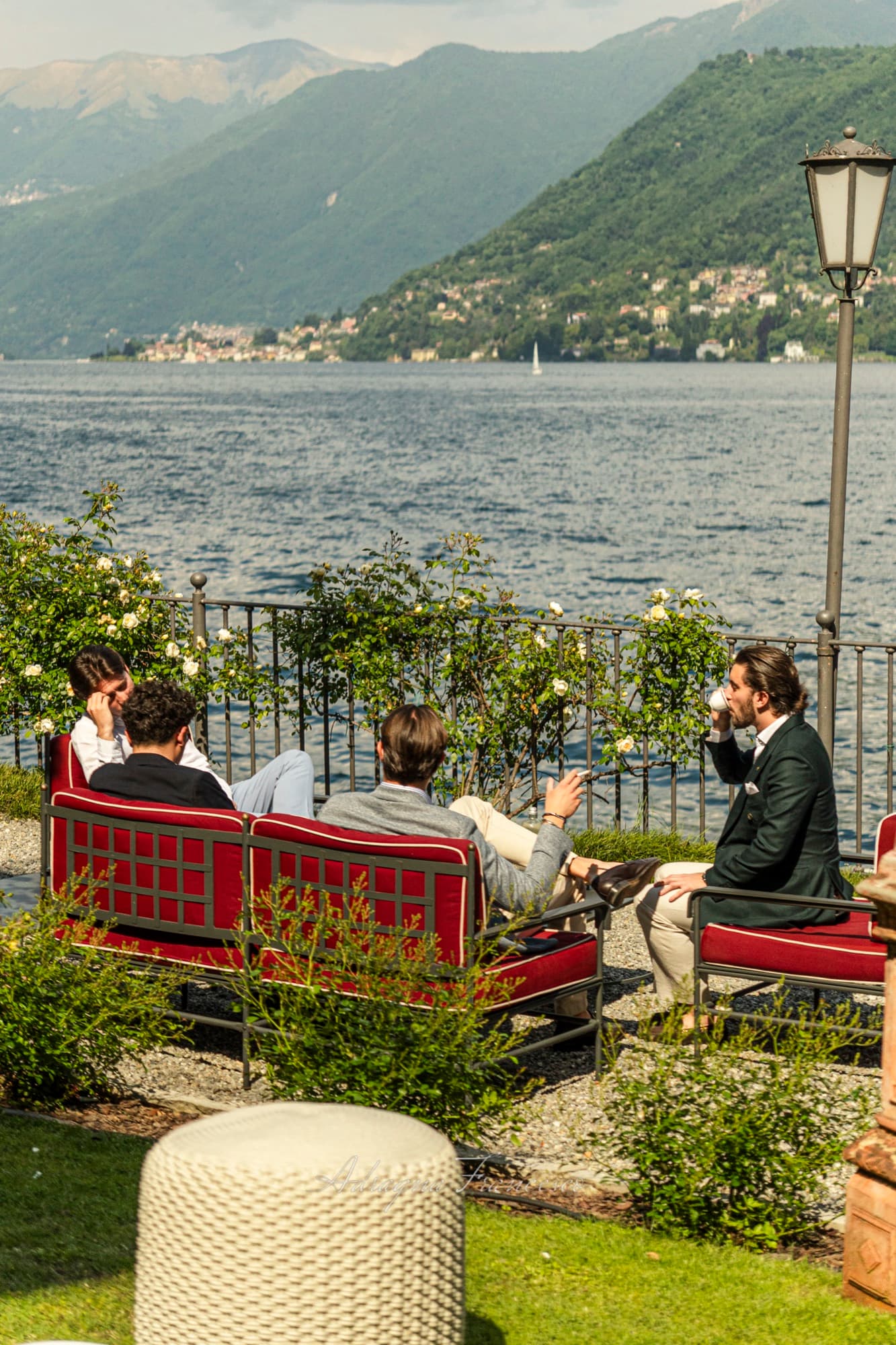
The roads around Lake Como are narrow, and on the western shore the Via Regina passes between houses with little room to spare. In high season they are slow, and parking in the villages is scarce, especially at weekends. The car ferry lets you cross the central lake with the car instead of driving around it. Driving here is a pleasure when the road is the point of the day and you are not trying to catch a boat or a garden opening.
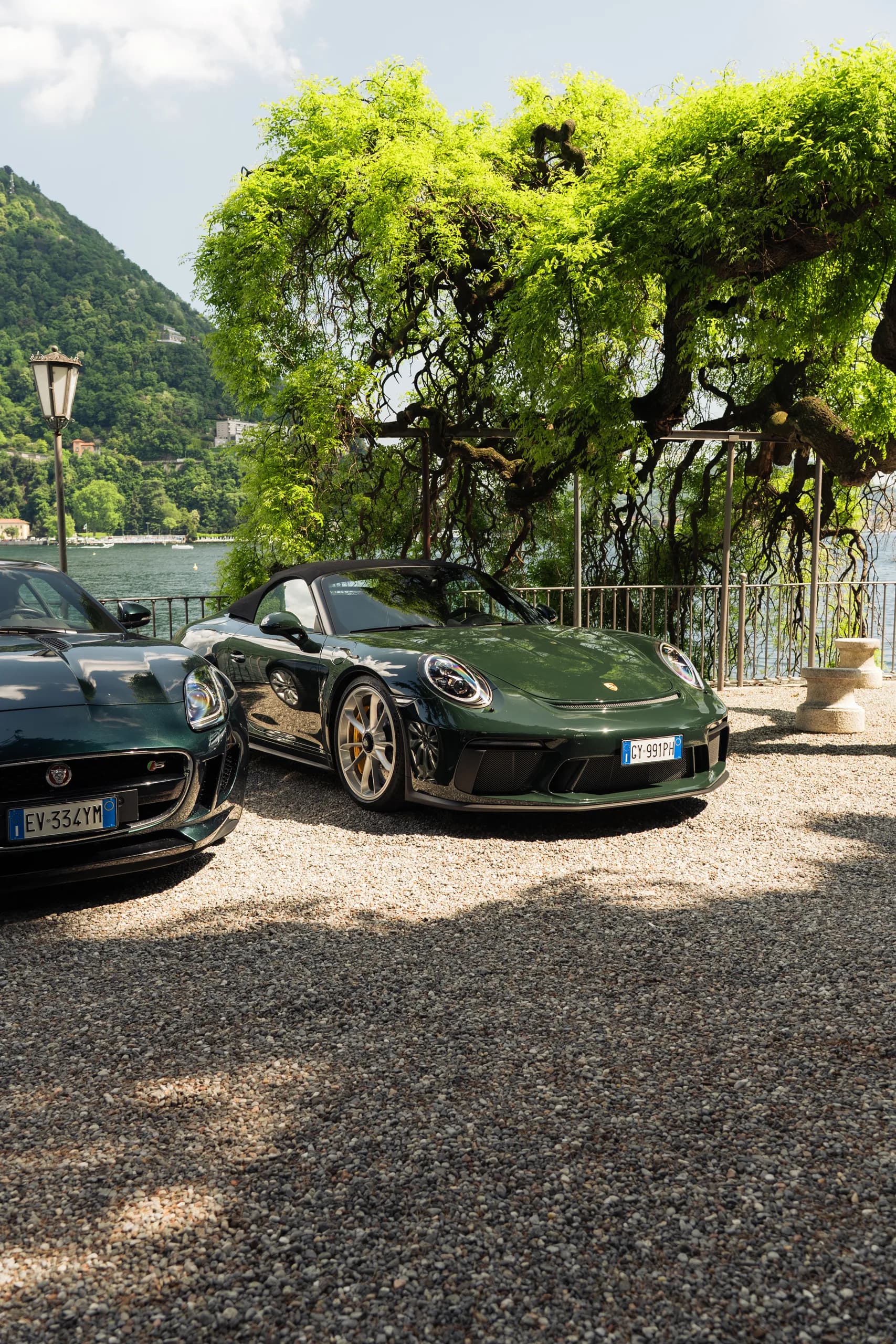
That is the idea behind Lake Como Shores, our private day along the western shore. You drive a supercar yourself, chosen with you from our fleet of Ferrari and Porsche models based on availability, with pickup in Como, in Milan or at your hotel: Lezzeno, Bellagio and the gardens of Villa Melzi, Villa Flori and Villa d'Este along the way. It runs about seven hours from Como, longer from Milan, for your group only. It is not a boat tour and not a stay at Villa d'Este. Drivers from outside the EU need an International Driving Permit with their license.

Putting the days together
With two days, give one to the central lake by boat, Varenna, Bellagio and either Villa Carlotta or Balbianello, and one to Como, its old town and the funicular. With three or four, add a walk on the Greenway with Isola Comacina, a day on the road, or a quieter afternoon on the northern lake.
Spring is the season for the azaleas and the gardens; May, June and September are the most comfortable months; July and August are the busiest, on the boats as well as the roads. In winter some villas close and the timetables shrink, but the lake is quiet. If you are coming only for a day, our guide to a Lake Como day trip from Milan shows what fits.
Questions about things to do in Lake Como
What is the best thing to do in Lake Como?
For a first visit, cross the central lake by ferry between Varenna, Bellagio and Menaggio and spend time in one villa garden, such as Villa Carlotta or Villa del Balbianello. That single day shows the lake at its best.
How many days do you need in Lake Como?
Two days cover the central lake and the city of Como. Three or four leave time for a walk on the Greenway, Isola Comacina, the northern lake or a day of driving along the shore.
Do you need a car at Lake Como?
No. Trains reach Como and Varenna from Milan, and the public boats link the main villages. A car is useful for the northern lake or when driving the shore is the point of the day, but roads are narrow and parking is scarce in summer.
Can you drive to Villa del Balbianello?
No. According to FAI, visitors reach the villa on foot, about a kilometer from Lenno with an uphill stretch, or by taxi boat from the Lido di Lenno. It does not open every day, so check the FAI calendar first.
Where should I stay for the first time at Lake Como?
Bellagio, Varenna or Menaggio for the central lake, where the ferries make every village easy to reach. Como suits travelers who want a city base and quick trains to Milan.
Is there a private driving tour of Lake Como?
Yes. Lake Como Shores is a private day by supercar along the western shore, which you drive yourself, with pickup in Como, Milan or at your hotel. It runs about seven hours from Como and is not a boat tour.