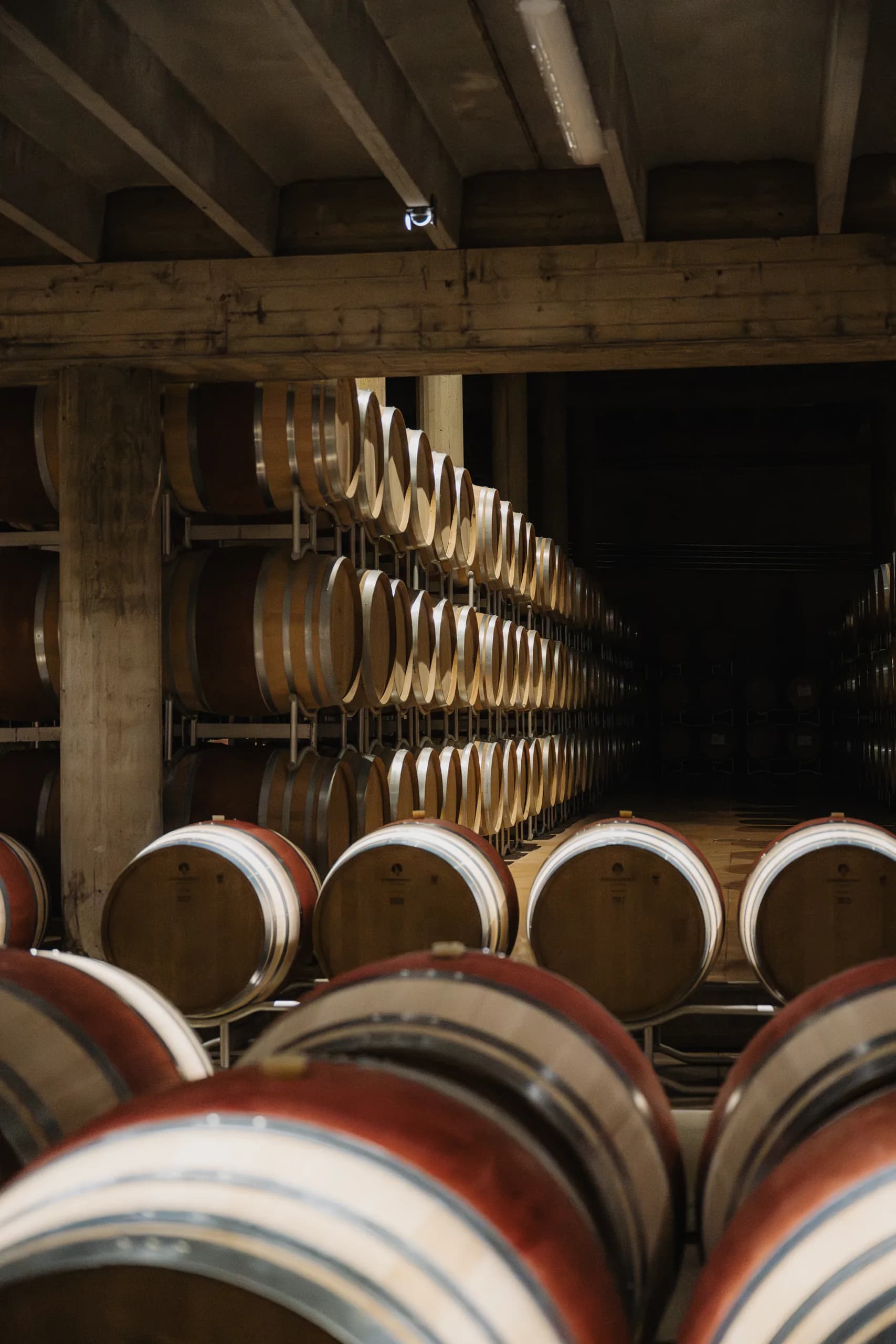
The difference between Rosso di Montalcino vs Brunello comes down to time. Both are made from Sangiovese grown within the municipality of Montalcino, often from the same vineyards, but Brunello must age for years before release while Rosso di Montalcino can be sold from September 1 of the year after the harvest. The result is a fresher, fruitier, earlier-drinking Rosso and a deeper, more structured, longer-lived Brunello.
That is why Rosso is often called the baby Brunello. The nickname is fair but incomplete: Rosso is not a lesser Brunello so much as a different expression of the same place. Here is what the rules say, how the two wines taste, and when each is the right bottle.
One territory, one grape, two wines
Montalcino is a hill town south of Siena, and its wine zone is the territory of the municipality itself. Both wines are made only from Sangiovese, the grape that Montalcino traditionally calls Brunello. Producers may use the same vineyards to make both wines, choosing which grapes become Brunello, destined for long aging, and which become Rosso, a younger wine.
In practice, many estates direct their best plots and their best vintages to Brunello and use the rest, often younger vines or lighter lots, for Rosso. Others make Rosso from dedicated vineyards with its own style in mind. In a weak year, a producer can choose to declassify grapes that might have gone into Brunello into Rosso instead.

Rosso di Montalcino vs Brunello: the rules
Brunello di Montalcino is a DOCG, the highest tier of Italian wine classification, which it received in 1980. By the production rules, it must spend at least two years in oak and at least four months in bottle, and it cannot be released until January 1 of the fifth year after the harvest. The Riserva needs at least six months in bottle and is released a year later.
Rosso di Montalcino is a DOC, recognized in 1983. It can be released from September 1 of the year after the harvest, and the rules set no minimum time in wood. The permitted yield in the vineyard is also slightly higher than for Brunello.
What that means on the shelf
In any given year, the Brunello on sale is several vintages older than the Rosso next to it. A Rosso from a recent harvest and a Brunello from about five years earlier can easily sit side by side on the same wine list.
Yields in the vineyard
The production rules set a maximum of 80 quintals of grapes per hectare for Brunello and 90 for Rosso. Lower yields generally mean more concentrated grapes, which is one reason the best fruit tends to go to Brunello.
Not to be confused with
Rosso di Montepulciano is a different wine from a different town: it is the younger sibling of Vino Nobile di Montepulciano, east of Montalcino. The word Rosso simply means red, so always read the town name that follows it.
How they taste and when to drink them
Rosso di Montalcino is the fresher of the two: red cherry, raspberry, violet and herbs, with lively acidity and tannins that are firm but approachable. It is made to be enjoyed young, usually within a few years of the vintage, although good examples can age.
Brunello is fuller and more complex, with darker cherry and plum, spice, leather, tobacco and earthy notes, a dense tannic structure and a long finish. It improves with age, and good vintages can be kept for ten years or much longer. A young Brunello is often tight and benefits from time in the bottle or a decanter.
Which one to order on a wine list
Order Rosso di Montalcino for a weeknight dinner, a lunch of pasta or pizza, or a table that wants something easy to share. It is also the smart choice when the list only offers very young Brunello vintages, which may not be ready yet.
Order Brunello for a special occasion, with roasted or braised red meat, game or aged cheese, and ideally from a vintage that has had some years to settle. If the list is long, a Brunello from a producer whose Rosso you already like is a safe way to step up.
The best test is to taste both from the same producer. The family resemblance is obvious, and so is the extra depth that time gives the Brunello.
Tasting both in Montalcino
Most estates in Montalcino pour their Rosso and their Brunello in the same tasting, often next to each other, which is the quickest way to understand the difference. Seeing the vineyards and cellars where the choice between the two wines is made helps even more.
Rocca d'Italia's Montalcino wine days are private, with a chauffeur from Siena: Two Faces of Brunello visits Col di Lamo and Casanova di Neri, and Brunello at Casanova di Neri focuses on one estate. We reply to every request with a proposal within about 48 hours.
Questions about Rosso di Montalcino vs Brunello
Is Rosso di Montalcino the same as Brunello?
No. Both are made from Sangiovese in the municipality of Montalcino, often from the same vineyards, but Brunello is aged far longer before release and is a DOCG, while Rosso is a younger DOC wine.
Why is Rosso di Montalcino called baby Brunello?
Because it comes from the same grape and the same territory as Brunello but is released much earlier, from September 1 of the year after the harvest. It is fresher and meant for drinking younger.
How long is Brunello di Montalcino aged?
At least two years in oak and four months in bottle, and it cannot be released before January 1 of the fifth year after the harvest. The Riserva needs six months in bottle and comes out a year later.
Does Rosso di Montalcino age in oak?
It often does, but the rules set no minimum time in wood. Each producer decides, and many keep the aging short to preserve the wine's fresh fruit.
How long can you keep Rosso di Montalcino?
It is usually at its best within a few years of the vintage, though good examples from strong years can age longer. Brunello, by contrast, is built to last ten years or more.