Whether you should rent a car in Tuscany depends on what you plan to do with your days. For exploring the countryside between towns, a car is the most flexible option. For days built around wine tasting, or for travelers who dislike unfamiliar roads, a private chauffeur is usually the better choice. Many visitors end up combining the two.
This is not a guide to Italian traffic rules. It is a decision guide: four questions that matter most, and three ways of getting around, judged honestly on each of them.
Rent a car in Tuscany: the case for and against
The case for a rental car is freedom. Much of what makes Tuscany special lies between the towns: farm roads lined with cypresses, small villages, a restaurant that is not on any bus route. Trains and buses link the main cities well, but they will not take you to a hilltop estate in Chianti or a viewpoint in the Val d’Orcia.
The case against is everything that happens when you stop. Historic centers are closed to ordinary traffic, parking near the sights is limited, and the most popular activity in the region, tasting wine, does not combine with driving. A rental car is a tool; whether it is the right one depends on the day.
Four questions to decide
Before choosing, answer these four questions for each day of your trip, not for the trip as a whole.
Will you taste wine?
Italy’s legal blood alcohol limit for most drivers is 0.5 grams per liter, and zero for drivers in their first three years of holding a license. Tasting at two estates and driving between them is not a good plan. If wine is the point of the day, someone else should drive.
Will you enter towns?
Florence, Siena and most Tuscan hill towns have a ZTL, a limited traffic zone, with cameras at the entrances. Unauthorized entry brings an automatic fine, often sent through the rental company months later. Park outside the walls and walk in.
Where will you park?
Parking at popular towns fills up quickly in high season, and the closest lots are often at the bottom of a steep climb. Factor in time to find a space, and keep the number of stops per day realistic.
How much stress will it add?
Narrow roads, gravel farm tracks, roundabouts and assertive local drivers are part of the experience. Some people enjoy it; others spend the day watching the road instead of the landscape. Be honest about which you are.
Self-drive, chauffeur or a guided day at the wheel
A self-drive rental suits travelers staying in the countryside who want to explore at their own pace, visit small villages and eat where they like. It works best on days without wine, and for drivers comfortable with manual transmissions, which are still common in Italian rental fleets unless you request an automatic.
A private chauffeur suits wine days, arrival and departure transfers, and travelers who simply want to look out of the window. You are picked up at your hotel, dropped at the door of each estate, and nobody has to think about ZTLs or parking. The trade-off is less spontaneity and a day planned in advance.
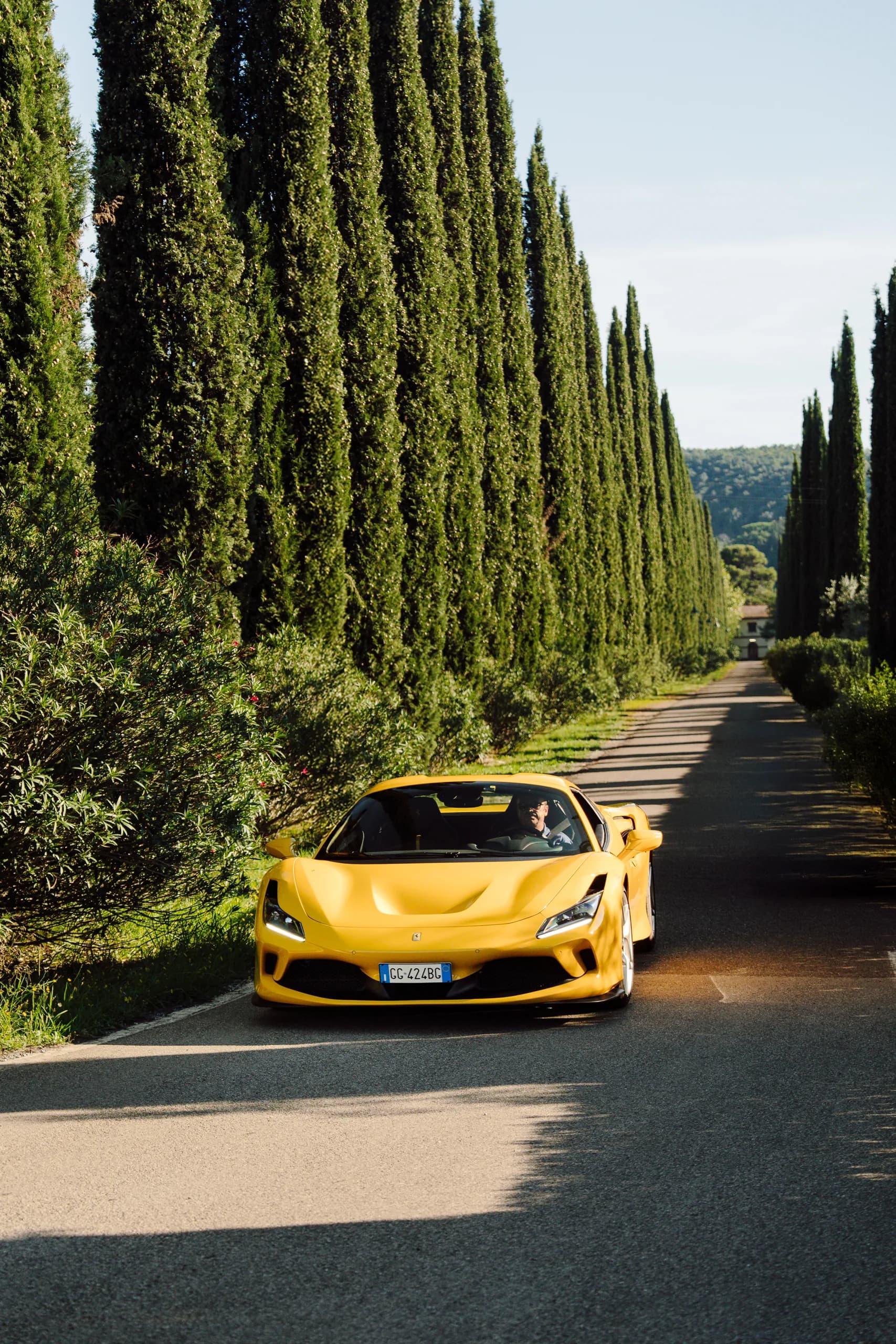
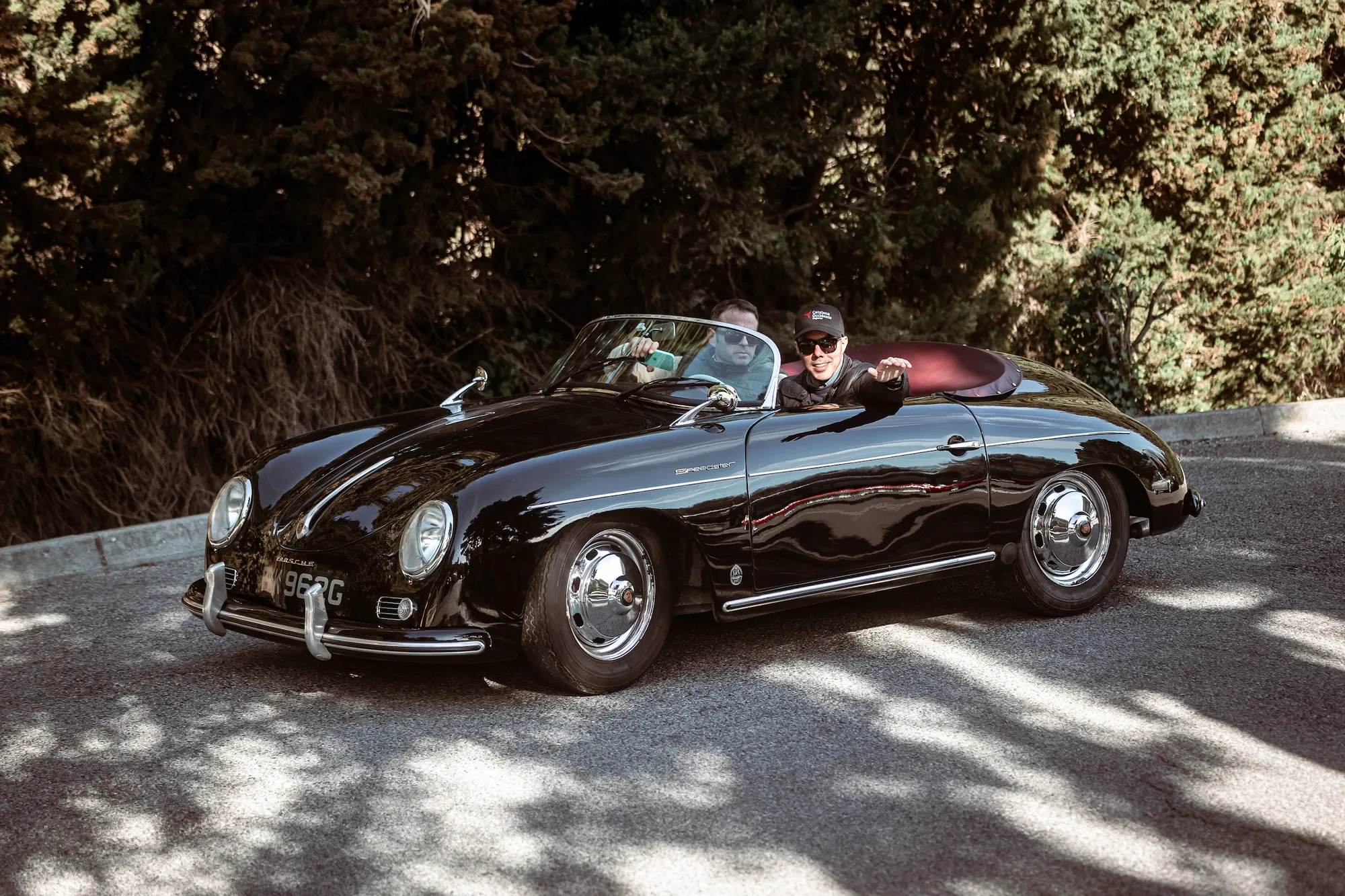
A guided driving day sits in between. You drive a car chosen for the pleasure of driving, on a route designed for it, with the planning handled for you. It answers the wish to drive in Tuscany without the logistics of a rental, and it is a single day rather than a week-long commitment.
In practice, the right choice changes from day to day. A countryside day exploring villages favors a rental. A day of tastings favors a chauffeur. A day when you want the drive itself to be the experience favors a car chosen for the road. Thinking day by day, rather than for the whole trip, usually produces the best plan and the fewest regrets.
Paperwork for US drivers
If you do rent, US drivers need a valid license and an International Driving Permit, which is issued in the United States by AAA and the American Automobile Touring Alliance. Get it before you leave; it cannot be obtained in Italy. Rental desks do not always ask for it, but police may during a check.
Read the rental contract for the deposit, the insurance cover and the fuel policy, inspect the car for damage before leaving, and keep the paperwork in the glove box. Most fines, from speed cameras to ZTLs, will reach you through the rental company after you return home.
Tuscany also has many strade bianche, unpaved white gravel roads that lead to farms, estates and villas. They are part of the landscape, but they are dusty, slow and hard on low cars. Check whether your accommodation is reached by one before choosing the size and type of car.
A mixed plan often works best
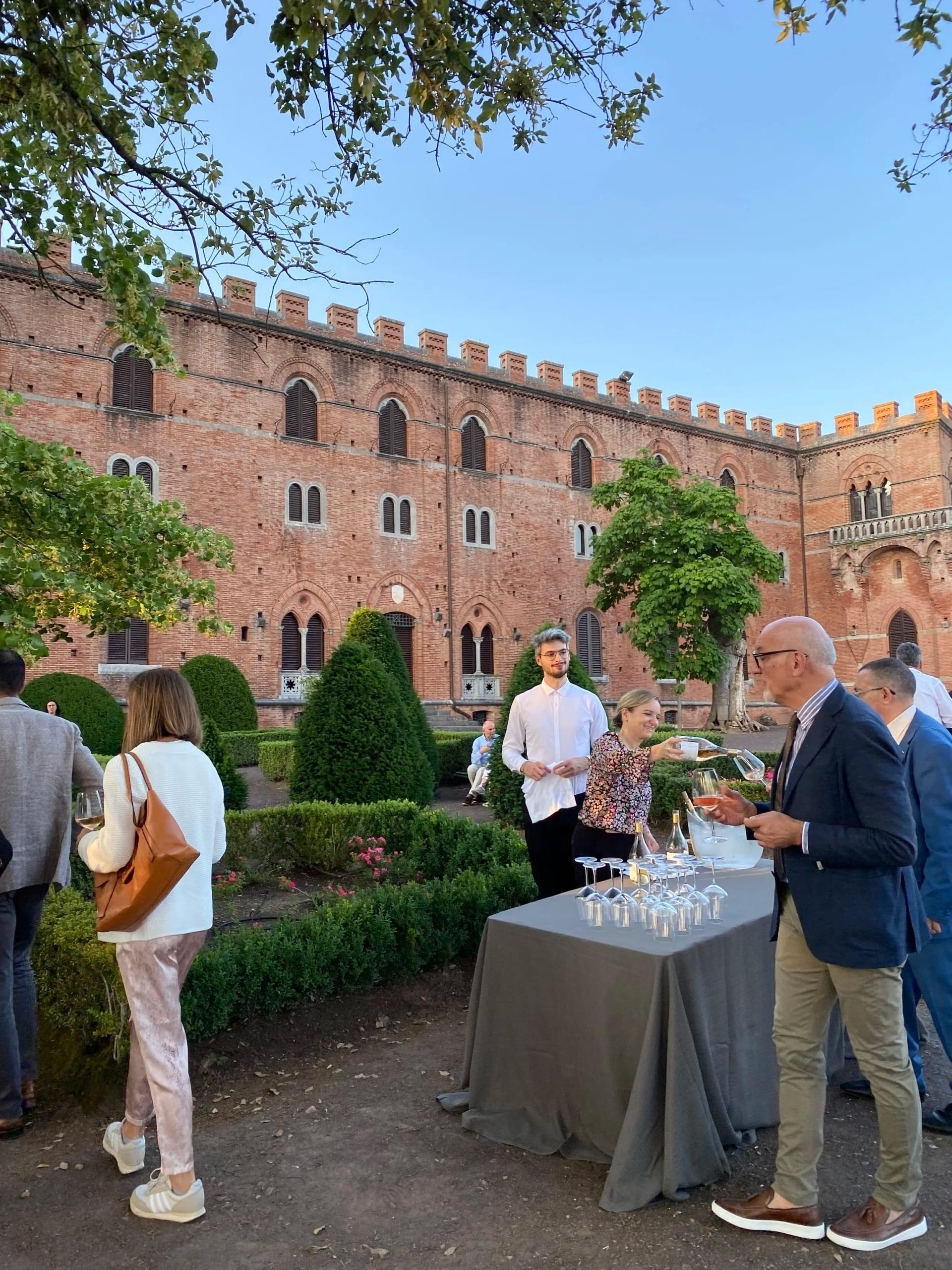
For most visitors, the answer is a mix: a rental car for the days spent exploring villages and countryside, and a chauffeur for the wine days. Rocca d’Italia does not rent cars, but it organizes private chauffeur wine days to Castello di Brolio and Chianti Classico estates from Florence or Siena, and the Heart of Chianti day, where you drive a supercar through Gaiole, Radda and Castellina. Each is private, and we reply with a proposal and an estimate within about 48 hours.
Questions about renting a car in Tuscany
Do I need a car in Tuscany?
Not for the cities, which are well connected by train and bus. For the countryside, villages and wine estates, a car or a private driver makes the trip far easier.
Is it hard to drive in Tuscany?
Country roads are generally manageable, but towns are harder: narrow streets, limited traffic zones and scarce parking. Most stress comes from arriving in towns, not from the open road.
Can I drive after a wine tasting in Tuscany?
The legal limit for most drivers is 0.5 grams per liter, and zero for newly licensed drivers. After a tasting, the safest choice is not to drive, which is why many visitors book a driver for wine days.
What is a ZTL in Tuscany?
A limited traffic zone in a historic center, enforced by cameras. Driving in without authorization brings an automatic fine, so park outside and walk in.
Should I rent an automatic car in Italy?
If you are not comfortable with a manual transmission, yes. Request an automatic explicitly when booking, since manual cars are still common in Italian rental fleets.
Do Americans need an International Driving Permit in Italy?
Yes. US drivers need an International Driving Permit along with their license. In the United States it is issued by AAA and the American Automobile Touring Alliance, before departure.