This one day in Siena itinerary starts early in Piazza del Campo, climbs the Torre del Mangia or visits the Palazzo Pubblico, spends the middle of the day in the cathedral complex, and ends with a slow walk through the contrade, the city's historic districts, before an evening back in the square. Everything is on foot; the historic center is compact, steep and closed to most traffic.
Siena's historic center is a UNESCO World Heritage Site, and it rewards a full day far more than a quick stop on a bus tour. The order below keeps the busiest sights at their quietest moments and saves the best light for the end.
Before you start
Arrive early and park outside the walls, or come by bus or train from Florence. The center is a limited traffic zone, and the streets are steep: wear comfortable shoes with grip, because the stone paving can be slippery.
Book the two ticketed visits in advance. The cathedral complex sells a combined pass, the Opa Si Pass, which covers the cathedral, the Piccolomini Library, the baptistery, the crypt, the cathedral museum and the panorama from the unfinished facade. The Torre del Mangia has a limited number of climbers at a time and closes in bad weather. Check the official sites for opening times on the day you visit.
Morning: Piazza del Campo and the Torre del Mangia
Start in Piazza del Campo before the day visitors arrive. The square slopes gently down toward the Palazzo Pubblico like an open shell, and it is the stage of the Palio, the horse race run around its edge on 2 July and 16 August. In the morning you see it as the Sienese do: a place to cross, sit and talk.
At the top of the square stands the Fonte Gaia, a marble fountain; the original panels by Jacopo della Quercia are kept in Santa Maria della Scala, and the fountain in the square is a copy.
Then choose one of two visits in the Palazzo Pubblico. Climb the Torre del Mangia, about four hundred steps with no lift, for the view over the rooftops and the countryside; or visit the Museo Civico inside the palace, where the frescoes by Ambrogio Lorenzetti on good and bad government are among the most important secular paintings of the Middle Ages. Doing both is possible but uses most of the morning.
Midday: the cathedral complex
Walk uphill from the Campo to Piazza del Duomo, a few minutes away. The cathedral, striped in white and dark marble, is the centerpiece of this one day in Siena itinerary, and it deserves at least two hours.
The cathedral and its floor
Inside, the striped pillars, the pulpit and the inlaid marble floor are the highlights. The floor is fully uncovered only for a few weeks each year, usually in summer and early autumn; at other times many panels are protected. Check the Opera della Metropolitana site for the current dates.
The Piccolomini Library
Off the nave, a room painted with bright frescoes by Pinturicchio telling the life of Pope Pius II. It is one of the most vivid interiors in Tuscany and takes only a short time to see.
The Facciatone
The cathedral museum leads to the top of the facciatone, the wall of a vast new cathedral begun in the fourteenth century and never finished. The narrow walkway at the top has one of the best views in the city.

Lunch and the flavors of Siena
Leave the cathedral square for lunch; a few streets away, the crowds thin out. Look for pici, the thick hand-rolled pasta of southern Tuscany, often served with a garlic and tomato sauce or with ragù, and for dishes made with Cinta Senese, the local breed of pig.
Siena is also a city of sweets. Panforte, dense with nuts, candied fruit and spices, and ricciarelli, soft almond biscuits, are sold in bakeries all over the center. Buy them to take home; they travel well.
Opposite the cathedral, Santa Maria della Scala, once a hospital for pilgrims and now a museum, is worth an hour after lunch if you still have energy for indoor visits.

Afternoon: the streets of the contrade
Siena is divided into seventeen contrade, historic districts with their own names, colors, animal emblems, churches and fierce loyalties. Ten of them run in each Palio. Walking through them is how you see the city's life rather than its monuments.
Wander away from the main streets, the Banchi di Sopra and Banchi di Sotto, and you start to notice the flags and the small plaques that mark where one contrada ends and the next begins. The lanes running down toward the walls are quieter and greener, with glimpses of gardens and the countryside beyond.
Finish back in Piazza del Campo in the late afternoon, when the light warms the brick of the palace and the square fills with people sitting on the stone. It is the best moment of the day, and the reason to stay rather than catch the first bus back.
If you have a second day
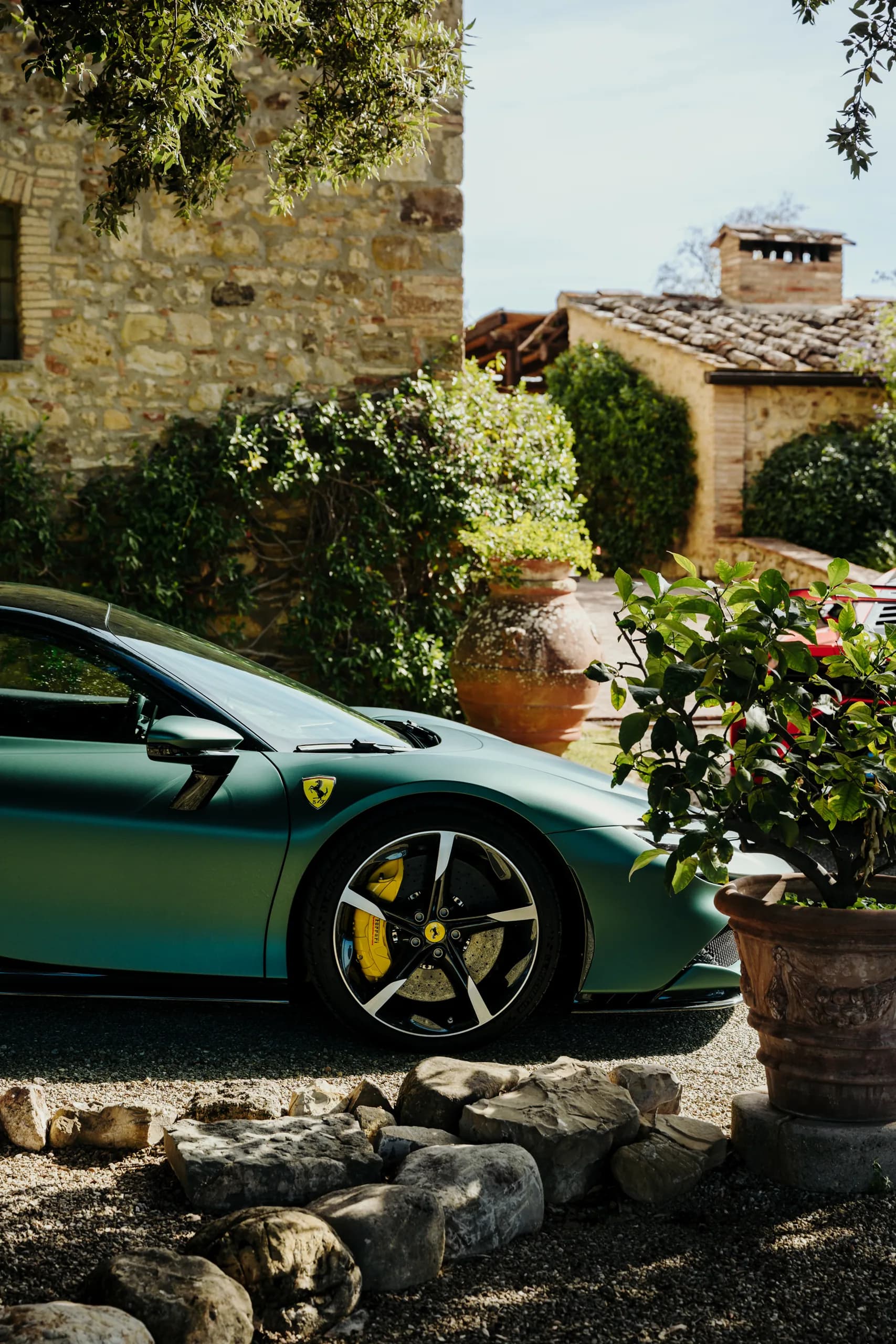
One day covers the essentials of the city; a second lets you see what surrounds it. Rocca d'Italia's Medieval Tuscany day leaves from Siena in a classic car you drive yourself, through Monteriggioni, the Val d'Elsa and San Gimignano, for your group only.
Questions about one day in Siena
Is one day in Siena enough?
One day is enough for the main sights: Piazza del Campo, the Palazzo Pubblico or the Torre del Mangia, the cathedral complex and a walk through the contrade. Staying overnight lets you see the city in the evening and early morning, when it is at its calmest.
What should I not miss in Siena?
Piazza del Campo, the cathedral with the Piccolomini Library, and the view from either the Torre del Mangia or the top of the Facciatone. Leave time to walk the quieter streets of the contrade.
Do I need to book the Torre del Mangia in advance?
It is wise. The number of people on the tower at one time is limited, and it closes in bad weather. Check the official site of the Comune di Siena for how to book and for opening times.
What is the Opa Si Pass in Siena?
It is the combined ticket for the cathedral complex. It covers the cathedral, the Piccolomini Library, the baptistery, the crypt, the cathedral museum and the panorama from the Facciatone. Buy it from the official site of the Opera della Metropolitana.
When is the Siena cathedral floor uncovered?
Only for a few weeks a year, usually in summer and early autumn. The dates change each year, so check the Opera della Metropolitana site before you plan around it.