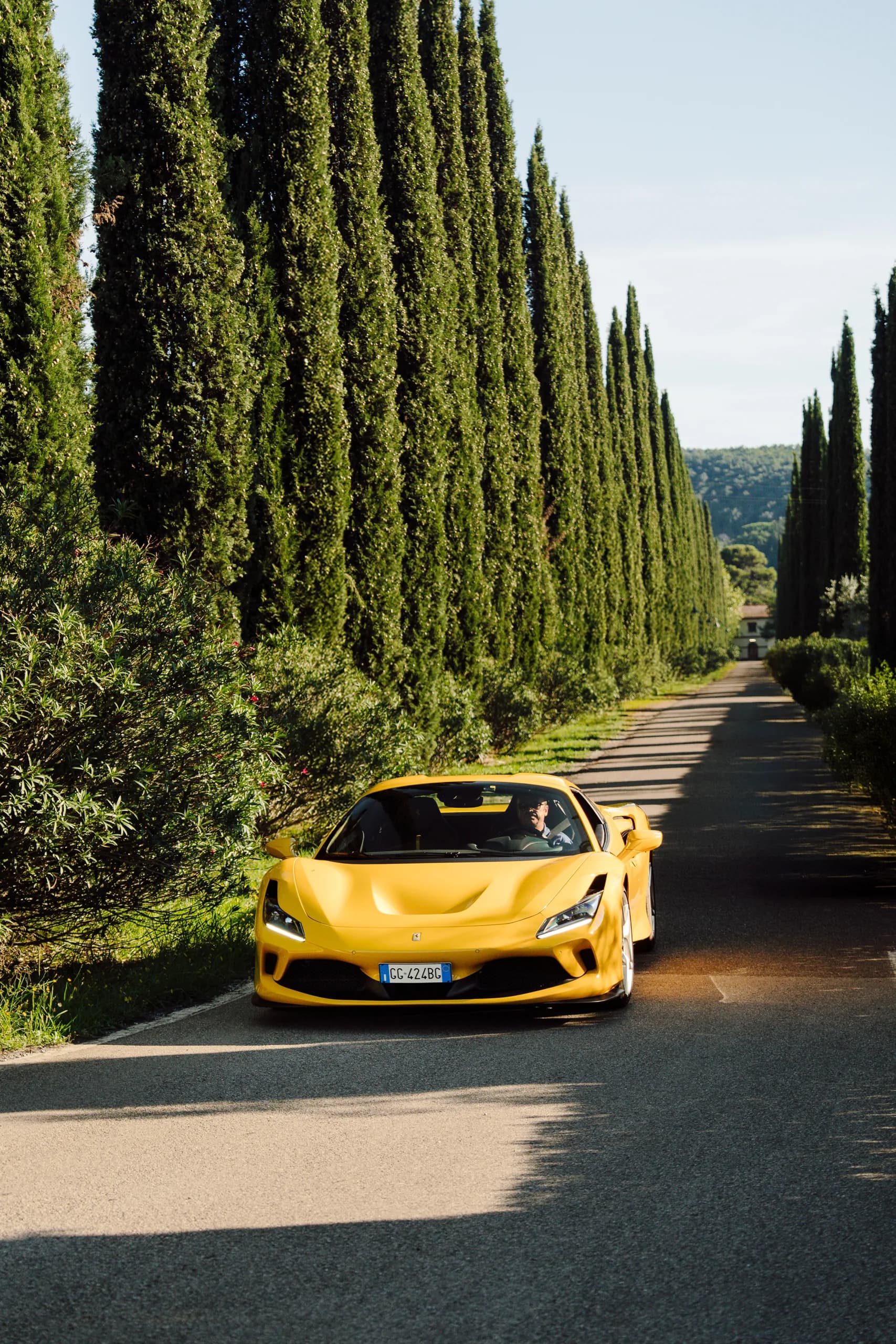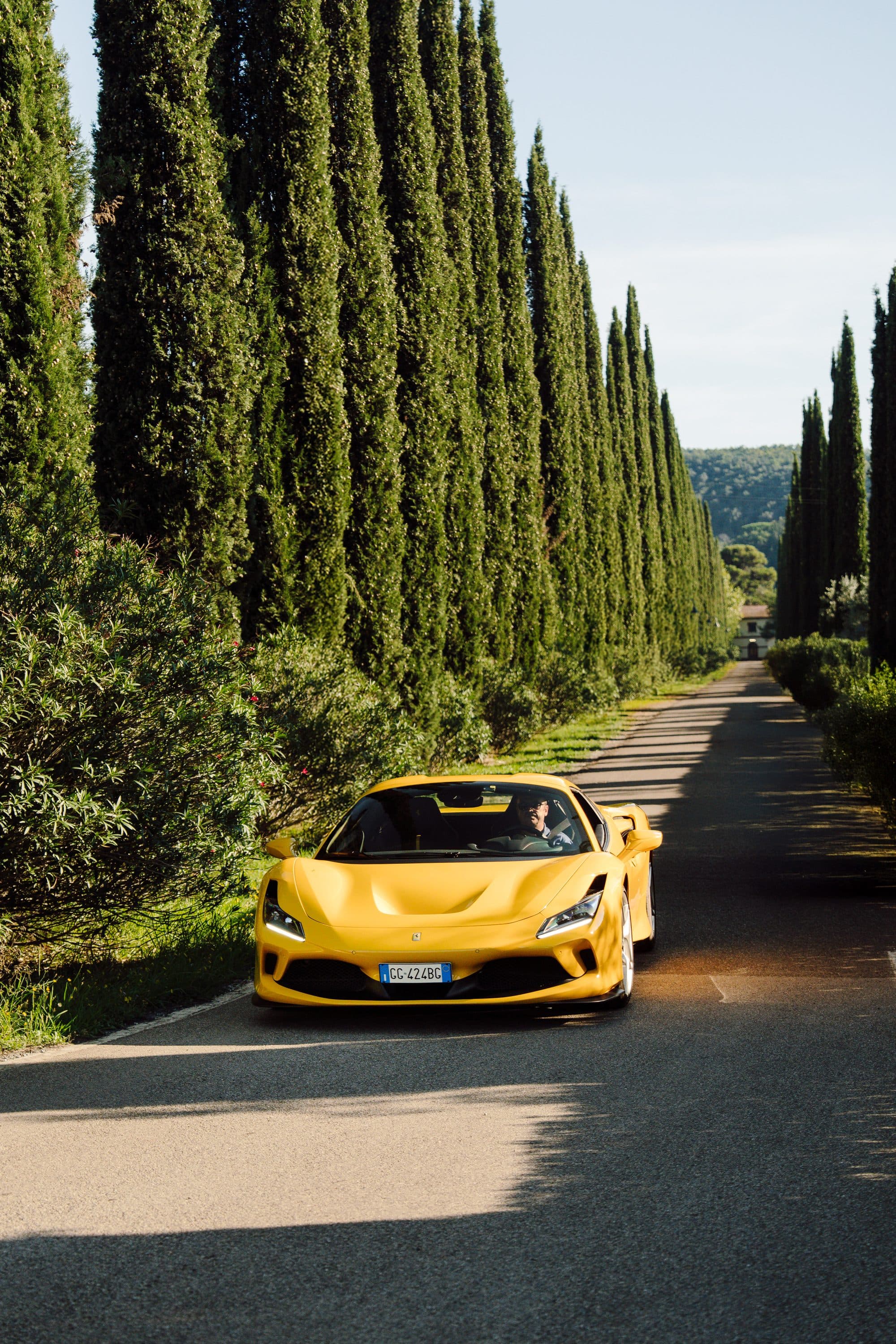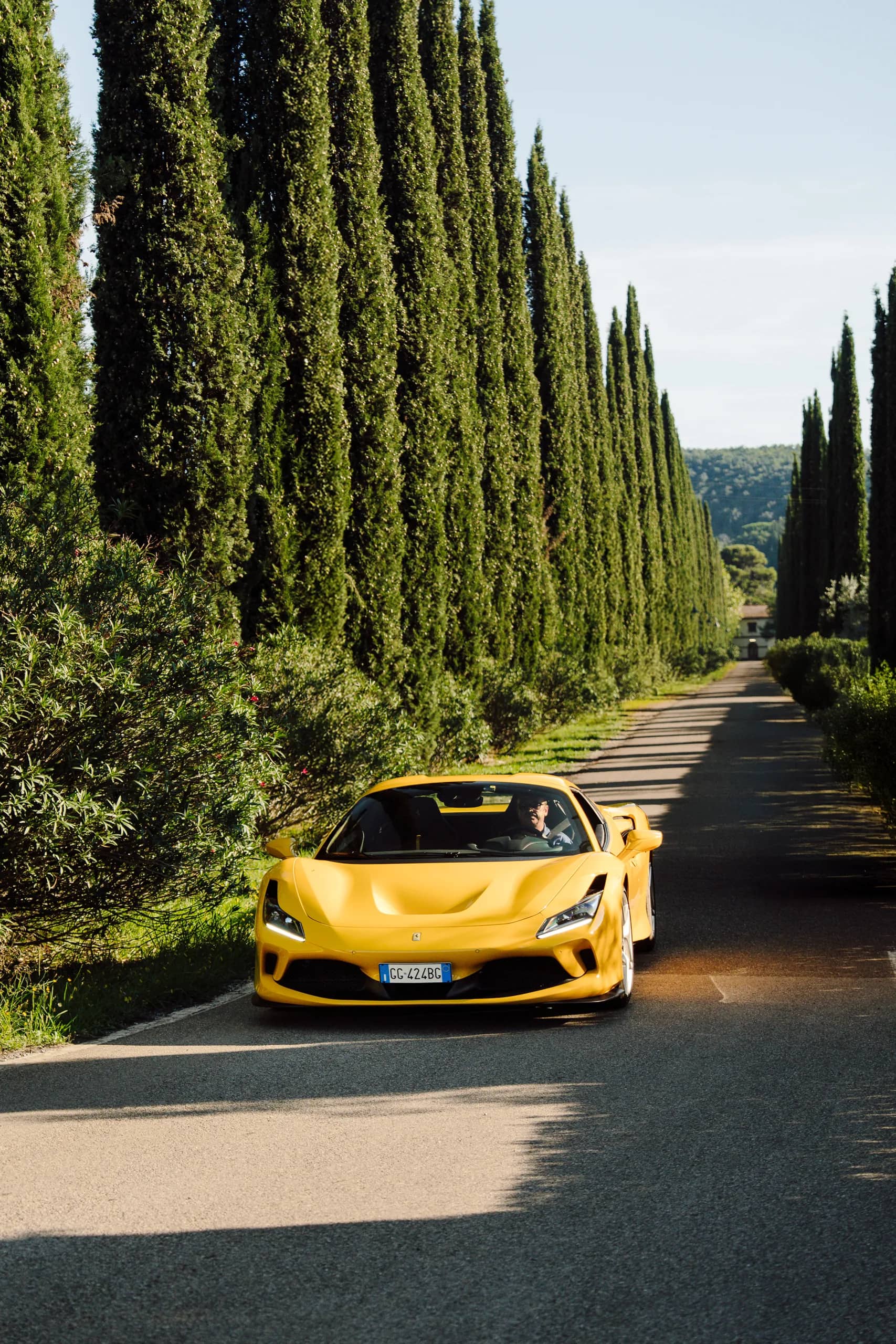
Driving from Florence to Chianti is easier than most visitors expect: the classic route is the SR222, the Chiantigiana, which leaves the southern edge of Florence and runs through the hills to Siena, passing Greve in Chianti, Panzano and Castellina on the way. Greve, the first real village, is under an hour's drive from the city. The road is narrow and full of bends, so the pleasure is in the drive itself, not in the speed.
What takes more thought is everything around the road: getting out of Florence without a fine, choosing two or three villages instead of six, parking once you arrive, and deciding who drives after a tasting. This guide covers each of those in turn, for a self-drive day from Florence.
The SR222 Chiantigiana, village by village
The Chiantigiana runs for roughly 70 kilometers from Florence to Siena. The northern half is the busier, more open stretch; south of Greve the road climbs, the woods close in and the vineyards appear in patches on the slopes.
Greve in Chianti is the gateway. Its triangular, arcaded piazza is the obvious first stop for a coffee and a walk. Panzano is a few miles further south on the same road, a smaller hilltop village with a church at the top and views across the valley known as the Conca d'Oro. The stretch between Greve and Castellina, with vineyards and woods on both sides, is the part of the SR222 most worth taking slowly.
Castellina in Chianti sits where the Chiantigiana meets roads heading east and west, and its history as a contested outpost between Florence and Siena shows in its fortress and walls. From Castellina you can carry on south to Siena, or turn east toward Radda in Chianti and Gaiole in Chianti, the quieter villages on the far side of the hills.
Faster alternatives and smart loops
If you want to reach the southern half of Chianti quickly, the four-lane road between Florence and Siena, known locally as the Firenze-Siena or the raccordo, runs west of the hills and has exits toward San Casciano, Tavarnelle and Poggibonsi, from which country roads climb east into Chianti. It is not scenic, but it saves time, and it is a sensible way to get home at the end of the day when you are tired and the light is going.
A good self-drive loop takes the SR222 south through Greve and Panzano to Castellina, crosses east to Radda, and returns north on the faster road. That gives you the best of the Chiantigiana in daylight and a straightforward drive back. The Chianti Classico area spreads across several municipalities between Florence and Siena, so trying to see all of it in one day only means more time in the car.
Two villages, not six
Greve and Panzano in the morning, lunch, then Castellina or Radda in the afternoon is a full day. Add a winery visit and drop a village.
Gaiole and Brolio
Gaiole and the Castello di Brolio estate lie on the eastern edge of the area. They pair well with Radda, less well with Greve on the same day.
Leaving Florence and parking in the villages
The first hazard is not in Chianti at all. The historic center of Florence is a ZTL, a limited traffic zone watched by cameras, and rental cars that drive in without authorization are fined by mail, often months later. If your hotel is inside the zone, ask it in writing whether it can register your plate. Otherwise pick up the car at a location outside the center and leave the city on the ring roads.
In the villages, park in the marked lots at the edge of the center and walk in. Most Italian towns use the same color code: blue lines are paid parking, white lines are usually free, and yellow lines are reserved for residents or permit holders. Pay at the machine or with the local parking app and leave the ticket on the dashboard. Greve and Castellina get busy on summer weekends, so arrive early.
Wine and driving: the honest part
Chianti is wine country, and that creates a real problem for a self-drive day. The legal blood alcohol limit for most drivers in Italy is 0.5 grams per liter, and for drivers who have held a license for less than three years it is zero. A full tasting at an estate, followed by lunch with a glass, can put an ordinary visitor over the limit.
There are three practical answers. The designated driver tastes and spits, which most estates are used to. You split the day, driving in the morning and tasting only at the last stop near your hotel. Or you leave the car behind on the tasting day and book a driver, keeping the self-drive for a separate day of roads and villages. Whichever you choose, decide before you set off, not at the second cellar.
One more thing for American drivers: Italy expects drivers from outside the EU to carry an International Driving Permit together with their home license. Rental desks do not always ask for it, but the police can.

If you would rather someone else planned it
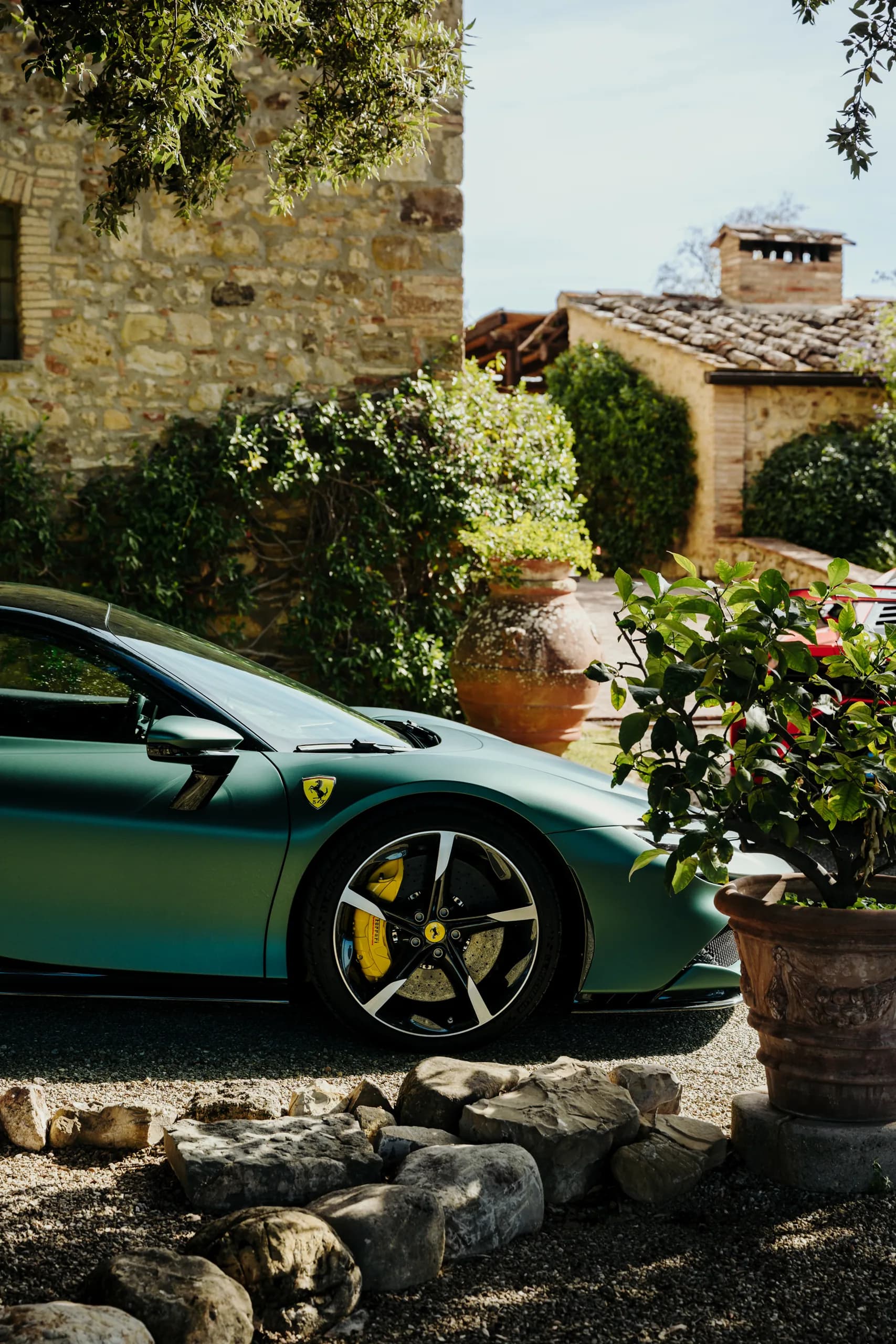
Driving the Chiantigiana yourself is one of the great simple pleasures of a Tuscan trip, and with the notes above most visitors manage it well. If you want the same roads without the logistics, Rocca d'Italia runs private driving days from Florence or Siena: on Heart of Chianti you drive a supercar via Castello di Brolio, Gaiole, Radda and Castellina, and Dolce Vita in Chianti covers similar roads in a classic car. Both run about seven hours, for your group only.
Questions about driving from Florence to Chianti
How long does it take to drive from Florence to Chianti?
Greve in Chianti, the first main village on the SR222, is under an hour from Florence by car. The full Chiantigiana to Siena is roughly 70 kilometers of winding road, so allow most of a morning if you stop along the way.
Is the Chiantigiana a difficult road?
It is a two-lane country road with many bends, some narrow stretches and cyclists at weekends. It is not technically hard, but it rewards a calm pace and full attention.
Do I need a toll pass to drive to Chianti?
No. The SR222 is an ordinary regional road, and the faster four-lane road between Florence and Siena has no toll booths. You only meet tolls if you join the A1 motorway.
Can I drive into Florence with a rental car?
Not into the historic center without authorization: it is a camera-controlled ZTL. Ask your hotel whether it can register your plate, or collect the car outside the zone.
Can I drink wine if I am driving in Chianti?
The limit is 0.5 grams per liter for most drivers and zero for those licensed less than three years. In practice the driver should spit at tastings, or the group should book a driver for the wine day.