A Bolgheri wine tour takes you to the Tuscan coast, south of Livorno, where the reds are built mostly on Cabernet Sauvignon, Merlot and Cabernet Franc rather than Sangiovese. From Florence or Siena it is a full day: count on roughly an hour and a half to two hours each way by car, and on estates that receive visitors by appointment only.
This guide covers the practical side: the distances, how visits work, what to book and in what order, and why the village of Suvereto, a little further south, pairs naturally with Bolgheri in the same day.
What makes Bolgheri different
Bolgheri is a small appellation in the municipality of Castagneto Carducci, on the plain and low hills between the Mediterranean pine woods and the inland slopes. Its modern story starts with Sassicaia, a Cabernet planted in the 1940s by Mario Incisa della Rocchetta on land nobody thought suited to great wine. The first commercial vintage was 1968, and the wines that followed were among those the world came to call Super Tuscans.
The Bolgheri DOC rules allow a wide range of grapes, Cabernet Sauvignon, Merlot, Cabernet Franc, Syrah and Sangiovese among them, which is why the wines vary so much from estate to estate. Sassicaia itself has had its own appellation, Bolgheri Sassicaia DOC, since 2013. The producers’ consortium was founded in 1995.
Then there is the landscape. The avenue of cypresses that runs straight for about five kilometers from the Oratorio di San Guido to the village of Bolgheri, made famous by the poet Giosuè Carducci, is the way most visitors arrive. Drive it slowly; it is a road people come for.
Getting there from Florence or Siena
From Florence the drive takes roughly an hour and a half to two hours, mostly on fast roads toward the coast and then south. From Siena the distance is shorter, but the route crosses the hills on state roads rather than motorway, so the time is similar or longer. Either way, a Bolgheri wine tour is a day trip, not an afternoon add-on to a Chianti visit.
Public transport does not really work for this. The nearest railway stations are on the coastal line, and the estates are spread across the countryside, several kilometers apart. If you are tasting, you also should not be the person driving back: Italy’s blood alcohol limit for drivers is low, and the roads home are long. A private driver is the simplest solution.
Booking a Bolgheri wine tour: how estates receive visitors
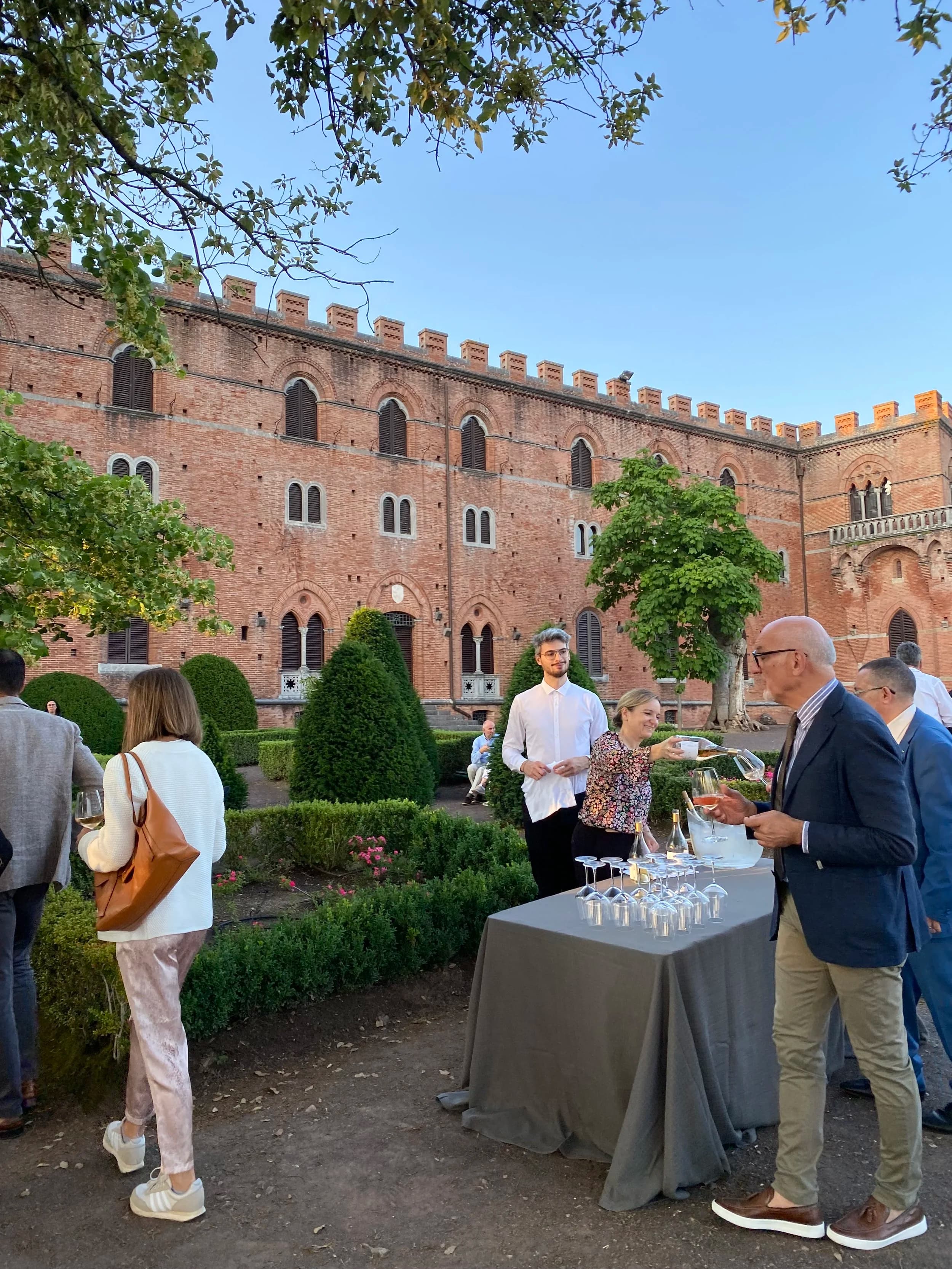
Most wineries in Bolgheri are visited by appointment. Some open their doors regularly for tastings, others only on certain days, and a few of the most famous names do not receive visitors at all. The consortium’s website lists its member estates, which is a good place to start; then write to the estates you choose directly.
Book early, especially for spring and early autumn, and confirm the language of the visit. Two estates in a day is the comfortable maximum, with lunch between them. Three becomes a schedule, and you will remember the car more than the wine.
What a visit usually includes
A walk through the vineyard or the cellar, an explanation of how the estate works, and a seated tasting of several wines. Some estates offer lunch; ask when you book.
What to ask before you go
Whether the visit is private or shared, how long it lasts, whether the older vintages are poured, and whether children are welcome. Check opening times and closing days directly on the estate’s site.
Pairing Bolgheri with Suvereto
Suvereto is a walled medieval village a little south of Bolgheri, in the Val di Cornia, and it has its own wine appellation, Suvereto DOCG. You reach it by following the coast south and turning inland at Venturina. Its wines share the coastal climate and many of the same grapes, so tasting there after Bolgheri shows how much the soil and exposure change a wine within a short drive.
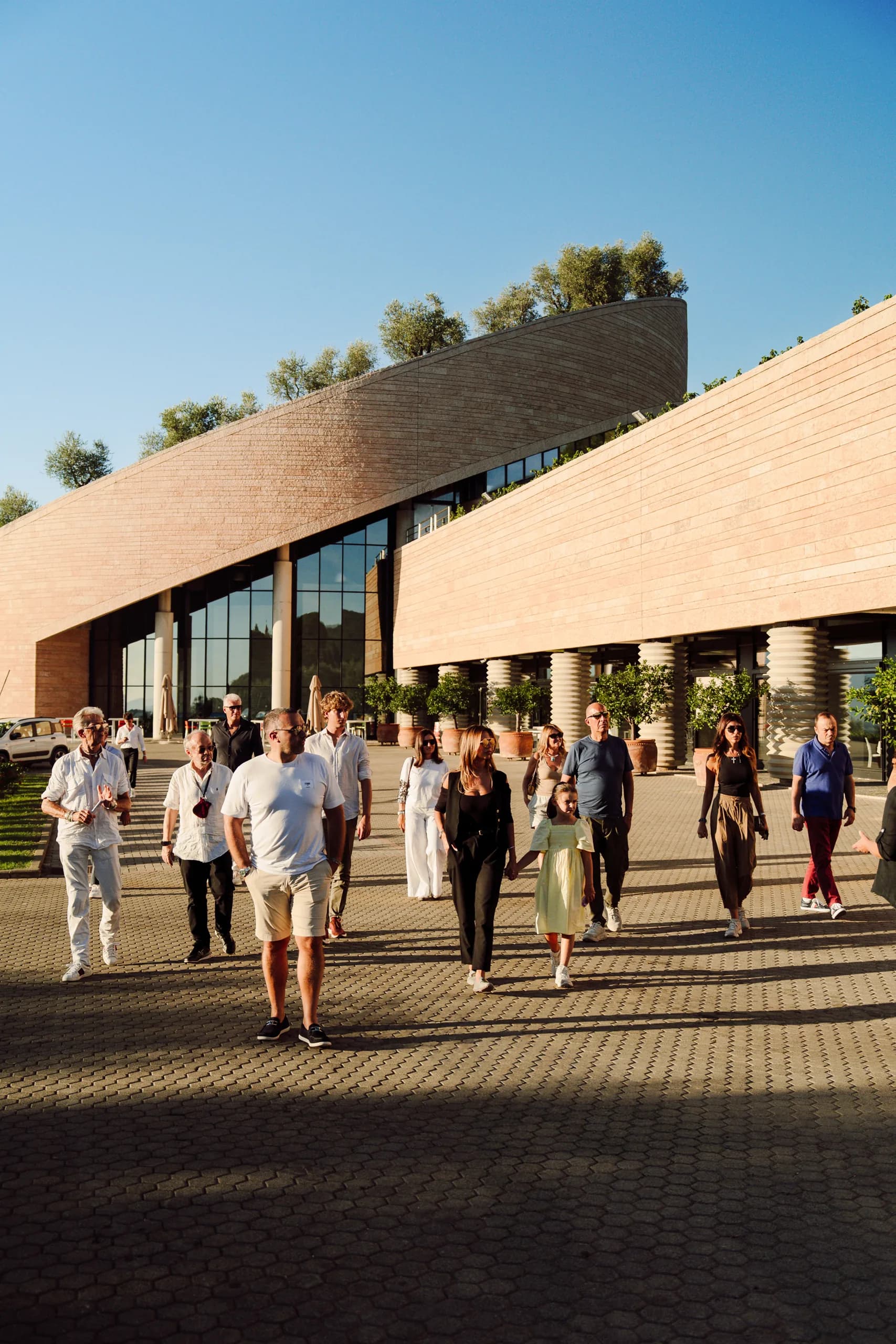
Suvereto is also a good place to walk after lunch: a compact old center inside its walls, with stone lanes that climb the hill. Just outside the village is Petra, an estate founded in the late 1990s whose cellar, designed by the Swiss architect Mario Botta, is cut into the hillside. It is worth seeing even for visitors who are not there for the wine.
When to go
Spring and early autumn are the easiest seasons. The vines are green or heavy with fruit, the light is soft, and the estates have time for visitors. The harvest itself, usually from late summer into autumn, is a busy moment in the cellars: some estates welcome guests during it, others prefer to keep visits short, so ask when you book.
In July and August the coast fills with beach traffic and the afternoons are hot, which makes a long day in the car less pleasant. Winter is quiet and some estates reduce their visits, but a sunny day on the Bolgheri coast in the low season can be the best of the year. Whatever the month, check the estate’s own site or write to it for visiting days and opening times.
Building the day
Leave early, arrive on the cypress avenue, taste at one estate in Bolgheri, have lunch, taste again in Suvereto, and start back in the late afternoon. That is a long day but an easy one when someone else drives. Rocca d’Italia runs it privately with a chauffeur from Florence, Siena or your hotel, at Petra and in Bolgheri; the proposal with the estimate arrives within about 48 hours of your request.
Questions about a Bolgheri wine tour
How far is Bolgheri from Florence?
Roughly an hour and a half to two hours by car, depending on traffic and where you start. From Siena the distance is shorter but the roads are slower, so the time is similar. Plan a full day.
Do you need reservations for Bolgheri wineries?
Yes, in almost every case. Most estates receive visitors by appointment, and some of the best known do not open to the public at all. Start from the consortium’s list of member producers and contact the estates directly.
What is the Bolgheri cypress avenue?
A straight road of about five kilometers lined with cypresses, running from the Oratorio di San Guido to the village of Bolgheri. The poet Giosuè Carducci wrote about it, and it is the classic way to arrive. Drive it slowly and do not stop on the carriageway for photos.
What grapes are used in Bolgheri wine?
Mostly Cabernet Sauvignon, Merlot and Cabernet Franc, with Syrah and Sangiovese also allowed. The rules give producers a lot of freedom, which is why Bolgheri wines differ so much from each other.
Can you combine Bolgheri and Chianti in one day?
Not well. They lie in different directions from Florence and Siena, and each deserves a full day. If you want both, plan two separate days.