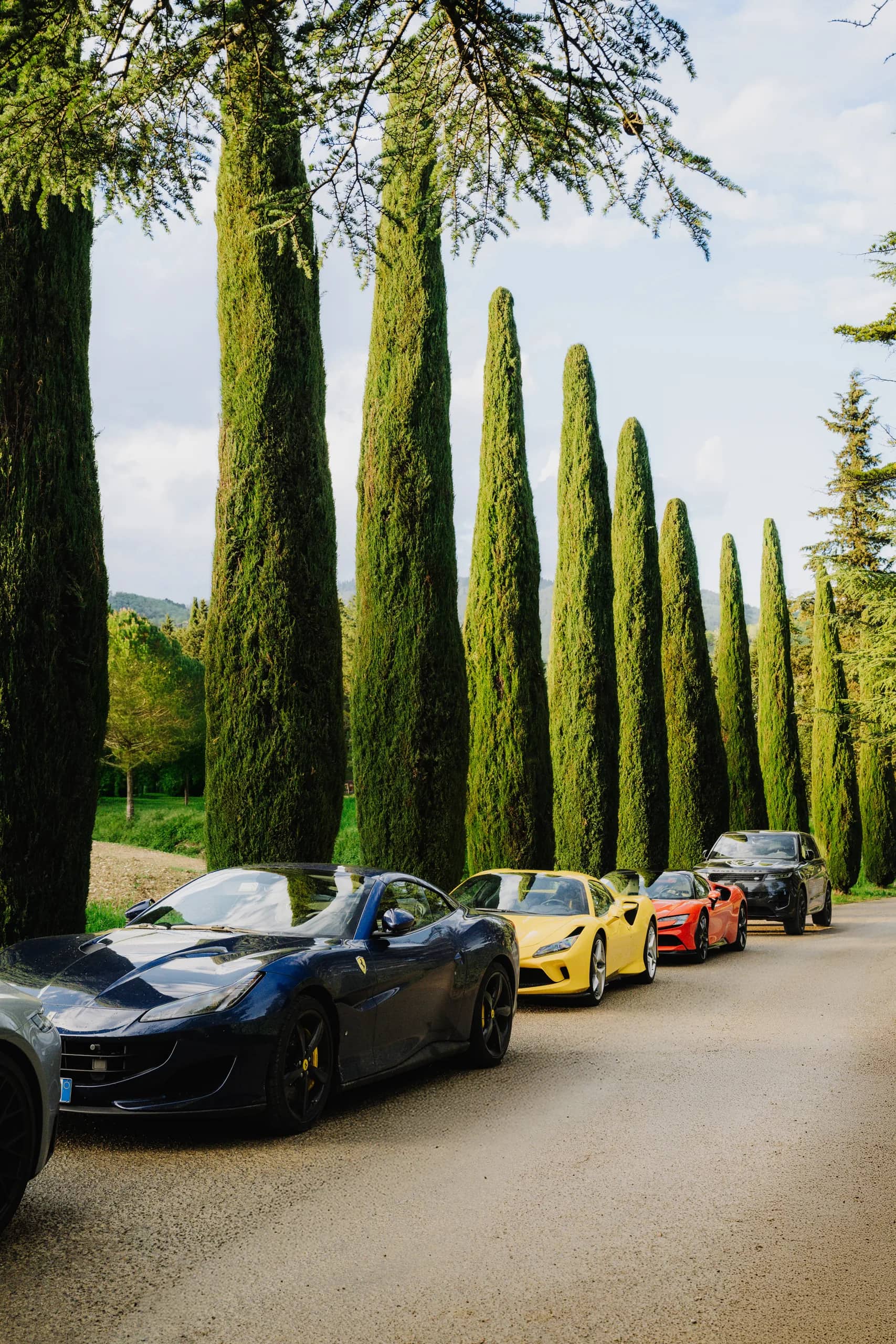
The Bolgheri cypress avenue, the Viale dei Cipressi, is a straight road about five kilometers long that runs from the little Oratory of San Guido, on the old Via Aurelia near the Tuscan coast, to the gate of the village of Bolgheri. It is lined on both sides by cypresses, more than two thousand of them by local counts, and it is one of the most photographed roads in Italy.
Its fame is literary before it is visual. The poet Giosuè Carducci, who spent part of his childhood in Bolgheri, made it the subject of Davanti San Guido, a poem every Italian schoolchild meets. This guide covers the history, the poem, the practical way to see the avenue and what to do once you reach the village.
Where the Bolgheri cypress avenue is
Bolgheri is a small village in the municipality of Castagneto Carducci, in the province of Livorno, on the stretch of coast that Tuscany calls the Etruscan Coast. It sits on the first rise of the hills, with the plain and the sea on one side and woods behind.
The avenue starts at San Guido, where a small oratory stands beside the Via Aurelia, the old Roman road that still follows the coast. From there it runs inland, perfectly straight, through vineyards and fields, until it reaches the medieval walls and the gate of Bolgheri. Both ends are easy to find: drivers simply leave the Aurelia at the oratory.
The road links two places only. It is not a loop or a scenic drive through the hills; its beauty is in the long perspective of trees, which you see best by slowing down rather than by covering distance. Many visitors combine it with the wider wine country and coast nearby, but the avenue itself asks for no more than an unhurried half hour.
History and Carducci's poem
The avenue belonged to the estates of the della Gherardesca family, the lords of Bolgheri, who had it lined with cypresses. The trees have been replaced and replanted over the generations, but the line of the road has stayed the same.
Carducci wrote Davanti San Guido in December 1874, and it appears in his collection Rime nuove. The poem opens with the cypresses that go from San Guido to Bolgheri in a double row, tall and straight, and imagines them calling the poet back as he passes on a train along the coast. It is a poem about returning to the places of childhood and finding that you cannot stay.
Carducci was later the first Italian to win the Nobel Prize in Literature, and the municipality itself carries his name. In Bolgheri you can see the house where he lived as a boy, and the area has a small network of places linked to his life.
How to see the avenue
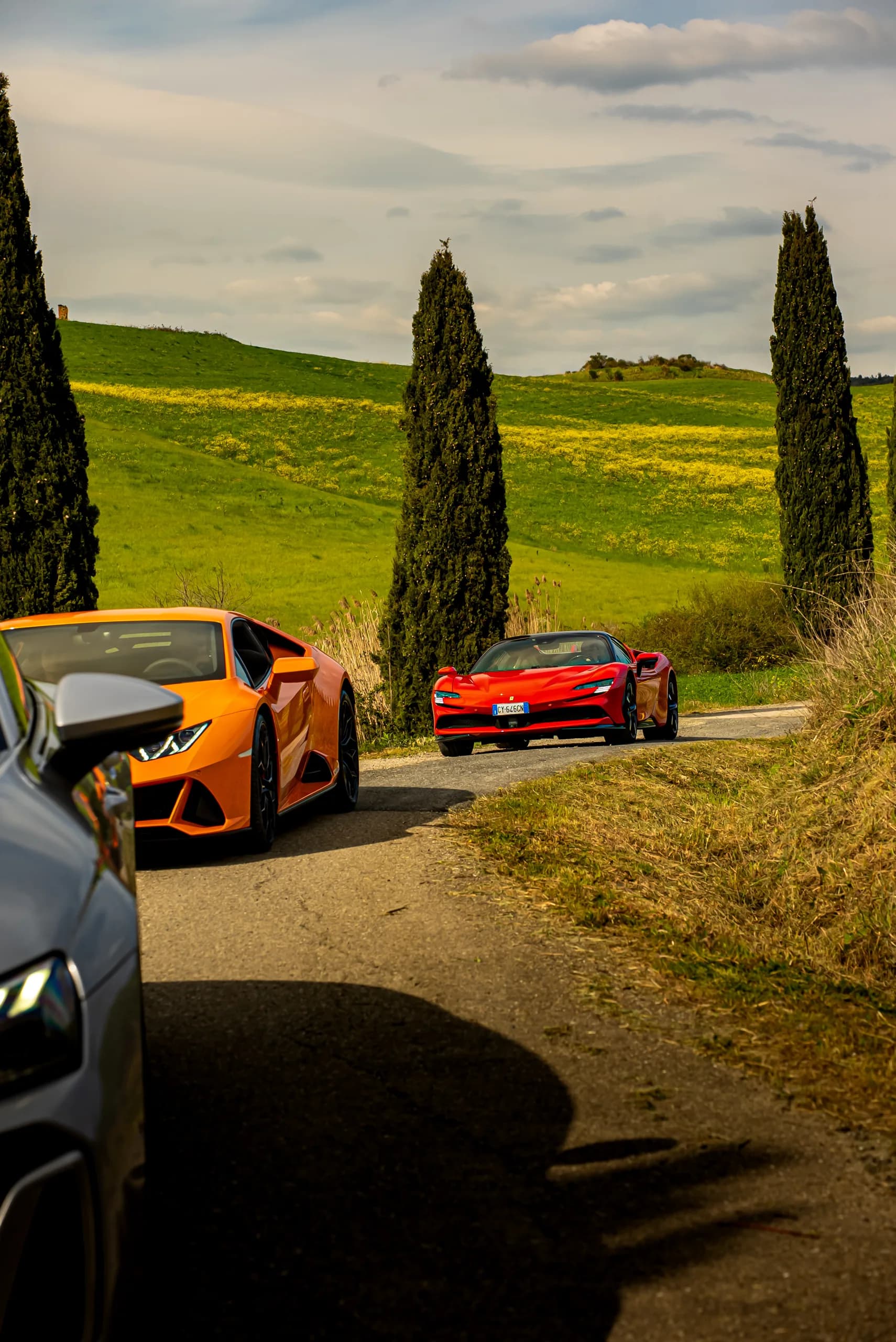
The Viale dei Cipressi is a working public road, with cars in both directions and no shoulder to speak of. Drive it slowly and do not stop on the road to take photos. The pull-offs at either end are the places to pause.
By car
The classic experience is to drive from the Aurelia toward the village, with the trees closing in on both sides and the walls of Bolgheri ahead. It takes only a few minutes. Most drivers then park outside the village and walk in, since the center is small and largely pedestrian.
On foot or by bicycle
Walking or cycling the whole avenue gives you time to take in the rows of trees and the vineyards beyond them. It is flat and straight, but there is traffic, so wear something visible and stay close to the edge.
When to go
Low sun, early or late in the day, sends long shadows across the road and makes the best photographs. Weekends in high season are busy; a weekday in spring or autumn is quieter.
What to do in Bolgheri village
Bolgheri grew around a medieval castle, and you enter the village through the gate in its walls. Inside are a few lanes, small squares, the parish church, the house associated with Carducci, and a handful of wine bars and restaurants. You can see it all in an hour; the pleasure is in lingering over lunch or a glass.
The village is also the namesake of the Bolgheri wine area, one of the most celebrated in Italy, known above all for its red blends. The estates are spread across the plain and the hills around the village, and many open for visits by appointment. Tenuta San Guido, the estate behind Sassicaia, takes its name from the same corner of land where the avenue begins.
For a longer day, the medieval villages of Castagneto Carducci and Suvereto are a short drive away, and the beaches of the coast are close at hand. Plan the avenue as the start of the day, the village for lunch, and an estate or another village for the afternoon.
Bolgheri with a driver
If you want to see the avenue and taste the wines it leads to, Rocca d'Italia's Petra & Bolgheri day takes you with a private chauffeur from Florence or Siena to the Petra estate in Suvereto and on to Bolgheri, so you can enjoy the road and the glass without worrying about who drives home.
Questions about the Bolgheri cypress avenue
How long is the cypress avenue in Bolgheri?
About five kilometers. It runs in a straight line from the Oratory of San Guido on the Via Aurelia to the gate of Bolgheri village.
Can you drive down the Bolgheri cypress avenue?
Yes. It is a public road open to traffic in both directions. Drive slowly, do not stop on the carriageway, and park at the ends or outside the village if you want to take photos or walk.
What poem is the Bolgheri cypress avenue famous for?
Davanti San Guido by Giosuè Carducci, written in 1874 and published in Rime nuove. It opens with the cypresses running from San Guido to Bolgheri in a double row.
Is Bolgheri worth visiting?
Yes, especially combined with a wine estate visit or nearby villages such as Castagneto Carducci and Suvereto. The village itself is small, so plan it as part of a day rather than a whole day on its own.
How far is Bolgheri from Florence?
Bolgheri is on the Tuscan coast south of Livorno, roughly a two-hour drive from Florence depending on traffic and route. It works best as a full day or as part of a stay on the coast.