The best time to visit Tuscany, for most travelers, is May and June or September and October. In those months the weather is warm without being punishing, the countryside is either green or turning gold and red, and the cities are busy but manageable. July and August are hot and crowded but long and lively; November to March is quiet, cooler and wetter, with real rewards for the right traveler.
That answer changes a little depending on where you are going. Florence and Siena are city trips with a countryside attached; the Val d'Orcia, Chianti and Montalcino are countryside trips with a few towns. Here is the year month by month, with the trade-offs stated plainly.
January to March: the quiet months
Winter is the low season. Days are short and can be cold and damp, especially in the hills, and some country hotels and restaurants close for a few weeks. In return the museums of Florence are at their calmest, and you can walk into Siena's Piazza del Campo and see the paving instead of the crowd.
In the countryside the vines are bare and the fields brown, and the Val d'Orcia can sit in morning mist. It is a beautiful, melancholy landscape for photographers and walkers; it is not the green postcard. Wine estates that receive visitors by appointment often still do, with more time for you, but check before you go.
March is the turning point. The first mild days arrive, the almond and fruit trees flower, and the country hotels begin to reopen toward the end of the month. Easter moves every year and brings the first busy weekend of the season, so check its date when you book.
April to June: green hills and the best time to visit Tuscany for the countryside
Spring is when Tuscany looks the way people imagine it. In April the wheat fields of the Val d'Orcia turn a strong green, the vines bud, and wildflowers line the roadsides. Expect some rain in April and early May; by late May the weather is usually settled and warm.
May and June are, for many, the ideal months: long days, comfortable temperatures and countryside still green. In Chianti and the hill towns, spring weekends bring local fairs and food festivals; check each town's calendar. Easter and the Italian holidays at the end of April and the start of June bring busy weekends, so book hotels early.
Best for
Driving the countryside, walking, photography, and pairing a city with the hills without wilting in the heat.
July and August: summer, heat and the Palio
High summer is hot. The countryside turns gold once the wheat is cut, the light is hard in the middle of the day, and Florence can feel stifling. Plan outdoor time for the morning and the evening, and keep the middle of the day for a cool cellar, a long lunch in the shade or a rest.
Summer is also when Tuscany is most alive with events. The Palio di Siena, the horse race around the Piazza del Campo, is held twice a year, on 2 July and 16 August, and the city fills for the days around it. Mid-August is the Italian holiday of Ferragosto: some small family businesses close for a week or two, while the coast and the most famous towns are at their busiest.
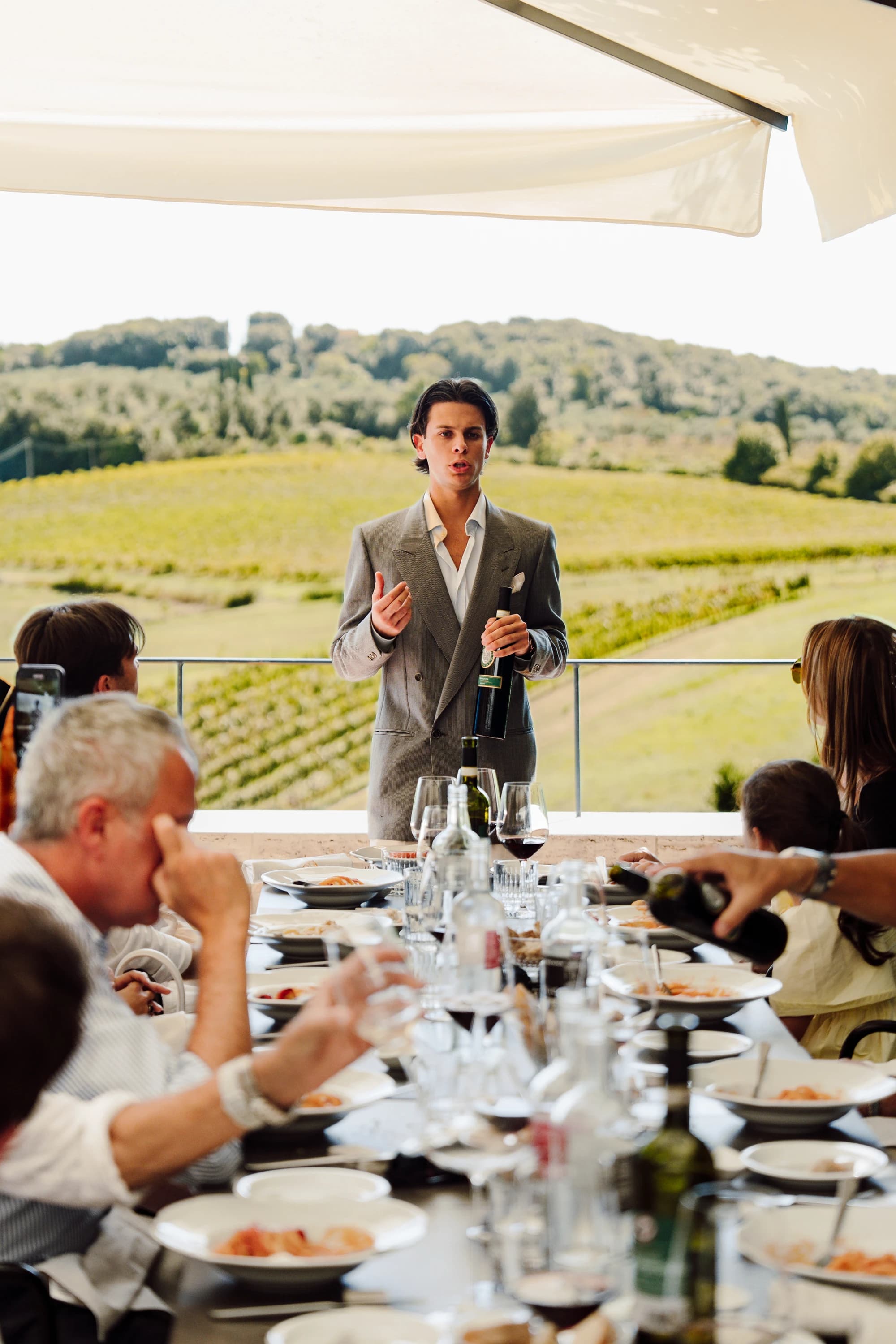
September and October: harvest and the colors of autumn
Autumn is the other great season, and for wine lovers the best of all. The grape harvest, the vendemmia, usually falls in September and October; the exact dates shift each year with the weather. The heat eases, the vineyards turn yellow and red from late September, and the light becomes soft again.
In Chianti, September brings the Expo Chianti Classico in Greve, usually on the second weekend, and Vino al Vino in Panzano later in the month. Booking tastings matters more now than at any other time: in the busiest weeks some estates focus on the grapes and limit visits. October is still warm by day, cooler at night, and often the most comfortable month of the year for driving.
November and December: olive oil and short days
November is the month of the olive harvest and the new oil, the olio nuovo, pressed from the autumn's olives and at its most peppery. It is also one of the wetter months of the year, with shorter days and the first cold nights. Crowds drop sharply after October, and the hill towns feel local again.
December belongs to the cities. Florence and Siena put up their Christmas lights and markets, while the countryside settles into winter. Many country properties close after the first days of January.
Summer or shoulder season: the honest trade-off
If you can choose, choose late May, June, late September or October: better weather for being outdoors, a greener or more colorful landscape, and fewer people. Summer is the right choice if your dates are fixed by school holidays or if you want the Palio and the long evenings; plan around the heat and it works. Rocca d'Italia runs its private days in Tuscany across the seasons, from a classic car in the Val d'Orcia to two Chianti Classico estates with a chauffeur.
Questions about the best time to visit Tuscany
What is the best month to visit Tuscany?
May, June, September and October are the strongest months for most travelers: warm weather, fewer crowds than in high summer, and the countryside either green or in autumn color.
Is Tuscany too hot in July and August?
It is hot, especially in Florence and in the middle of the day. Many travelers still enjoy it by starting early, resting at midday and spending the evening outside.
When is the grape harvest in Tuscany?
The harvest usually runs through September and October. The exact dates change every year with the weather, and estates are busiest during those weeks, so book visits well ahead.
Is it worth visiting Tuscany in winter?
Yes, for quiet museums, calm cities and misty landscapes. Expect shorter days, cooler and wetter weather, and some country hotels and restaurants closed.
Is October a good time to visit Tuscany?
Yes, it is one of the best months. Days are usually warm and nights cool, the vineyards turn color after the harvest, and the summer crowds have thinned. Bring layers and expect some rain later in the month.
When is the Palio di Siena?
The Palio is run twice a year, on 2 July and 16 August, in the Piazza del Campo. The city is extremely crowded in the days around each race.